What Is Depth in Art and How to Create It
Depth in art is all about creating the illusion of three-dimensional space on a flat surface. It helps make your artwork feel more realistic and engaging. By mastering depth, you can add a sense of space and distance that draws viewers into your scene.
You can create depth by overlapping objects and varying their size.
Using atmospheric perspective also works wonders—softening distant elements with lighter, desaturated colors makes them seem far away.
Try positioning objects lower on your canvas, and don’t forget to increase contrast and detail in the foreground. This helps establish a clear spatial hierarchy.
These simple techniques really bring your art to life, adding vividness and emotional impact. Give them a try and watch your visual storytelling get even stronger!
Key Takeaways
- Depth in art creates the illusion of three-dimensional space on a flat surface. This makes the artwork feel more real and interesting.
- Techniques like linear and atmospheric perspective help guide the viewer’s eye. They also simulate distance, making the scene look more believable.
- Layering elements into foreground, middle ground, and background sets up a clear spatial hierarchy. It’s like organizing the scene so everything has its place.
- Using size variation and object overlap shows which things are closer or farther away. This helps the viewer understand the relative distance and position of objects.
- Adjusting contrast, detail, and color saturation makes closer objects stand out more. At the same time, distant objects appear softer and less defined, creating a natural depth effect.
What Is Depth in Art: And Why It Matters

Although you’re working on a flat surface, depth in art helps you create the illusion of three-dimensional space, making your scenes feel more realistic and engaging. By mastering depth, you enhance spatial relationships between objects, allowing your viewer to perceive distance and size differences clearly.
Depth in art transforms flat surfaces into engaging, realistic scenes by enhancing spatial relationships and size perception.
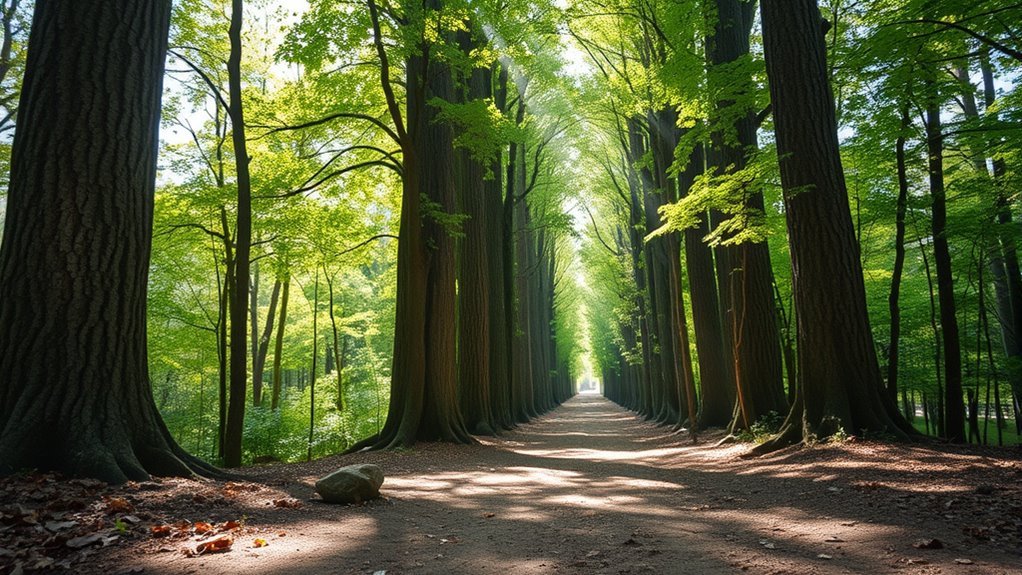
Techniques like linear perspective guide the eye through the composition, establishing foreground, middle ground, and background layers. Atmospheric perspective adds subtle shifts in color and clarity, reinforcing the sense of space and distance.
Creating depth isn’t just about realism—it also boosts visual interest, making your artwork more dynamic and emotionally compelling. Without it, your pieces risk looking flat and lifeless, lacking the immersive quality that draws viewers in.
Understanding how depth works means you can control perspective to lead the viewer’s eye naturally through your scene, strengthening storytelling and emotional impact. In short, depth transforms your art from flat images into vivid, engaging experiences.
6 Simple Ways to Add Depth to Your Art

When you want to make your artwork feel more three-dimensional, applying simple techniques can dramatically enhance depth. Start by overlapping objects, letting closer ones partially cover those behind to establish a clear spatial hierarchy.
Use size variation by drawing larger objects in the foreground and smaller ones in the background. This creates a sense of perceived distance that really pulls the viewer in. Atmospheric perspective helps too—soften, lighten, and desaturate colors for distant elements to mimic haze.
Position objects lower on the canvas for closer proximity and higher near the horizon line to enhance the illusion of space. Finally, add contrast and detail by making foreground elements darker, richer, and more detailed, while background elements stay lighter and simpler.
| Technique | Effect on Depth |
|---|---|
| Overlap | Creates clear spatial hierarchy |
| Size Variation | Enhances perceived distance |
| Atmospheric Perspective | Mimics haze for depth |
These methods bring your foreground and background to life, creating a compelling sense of depth. Give them a try and see how your art transforms!
Frequently Asked Questions
How Do You Create Depth in Art?
You create depth in art by overlapping objects and varying their sizes. Using atmospheric perspective also helps to add that sense of distance.
Positioning elements on the picture plane and applying perspective techniques like vanishing points make a big difference. These methods make your artwork feel three-dimensional and realistic.
How to Explain Depth in Art?
You explain depth in art by showing how objects overlap, change size, and shift in color or clarity. You use position and contrast to make some elements seem closer while others appear farther away, creating a three-dimensional feel.
It’s kind of like how things look in real life—closer things block parts of the ones behind them. Also, objects that are farther away often look smaller or less detailed.
What Are the Six Rules of Depth?
The six rules of depth are overlapping, scale, atmospheric perspective, spatial increments, positioning, and contrast. You use these by layering objects, adjusting size, softening colors, spacing elements, placing items thoughtfully, and varying light to create depth.
Basically, it’s all about how you arrange things to make your scene feel more real. Like, putting some things in front of others or making distant objects smaller and fuzzier. These little tricks help your artwork pop and feel three-dimensional.
How to Create a Depth Image?
You’ll instantly create a depth image by masterfully layering overlapping objects, varying their size, and softening distant colors.
Position your elements strategically, and apply bold shading—these tricks transform your flat canvas into a breathtakingly immersive three-dimensional world.
It’s all about creating that sense of space people can almost step into. Give it a try!
Conclusion
Now that you know what depth in art is and how to create it, you can make your work more engaging and realistic. Did you know that artworks with well-executed depth can hold a viewer’s attention 30% longer?
By using techniques like perspective, shading, and layering, you’ll instantly draw people into your pieces. These methods help add dimension and life to your artwork, making it more captivating.
Keep practicing these techniques, and you’ll see your art come alive in ways you never imagined! Mastering depth in art not only enhances realism but also creates a stronger emotional connection with your audience. So, keep experimenting with perspective, shading, and layering to make your work stand out and truly resonate.