7 Steps to Make Abstract Art
To make abstract art, start by adopting an open, intuitive mindset and ditch the fear of “wrong” marks. Embrace the freedom that comes with abstract expression and let your creativity flow without boundaries. Sketch loosely and choose a canvas size that suits your space and expression style.
Work boldly on large surfaces, using wet techniques to keep paint flowing and eyes fresh by stepping back often. This helps you see the bigger picture and avoid getting stuck in details.
Switch between pieces to stay inspired and avoid overworking your work.
If you want to discover deeper techniques and insights, keep exploring these creative steps. Remember, abstract art is all about personal expression and experimentation, so have fun with it!
Key Takeaways
- Begin with spontaneous, expressive marks using gestural lines and large tools to capture energy and emotion.
- Use wet techniques like diluted paint and spraying water to create fluid, blended layers with dynamic movement.
- Select canvas size based on desired expression—large for bold gestures, small for detailed marks and precision.
- Step back frequently to evaluate composition, adjust elements, and maintain overall perspective without overworking details.
- Embrace intuition, avoid fear of “wrong” art, and switch between pieces to foster creativity and prevent stagnation.
Get Into the Right Mindset for Abstract Art
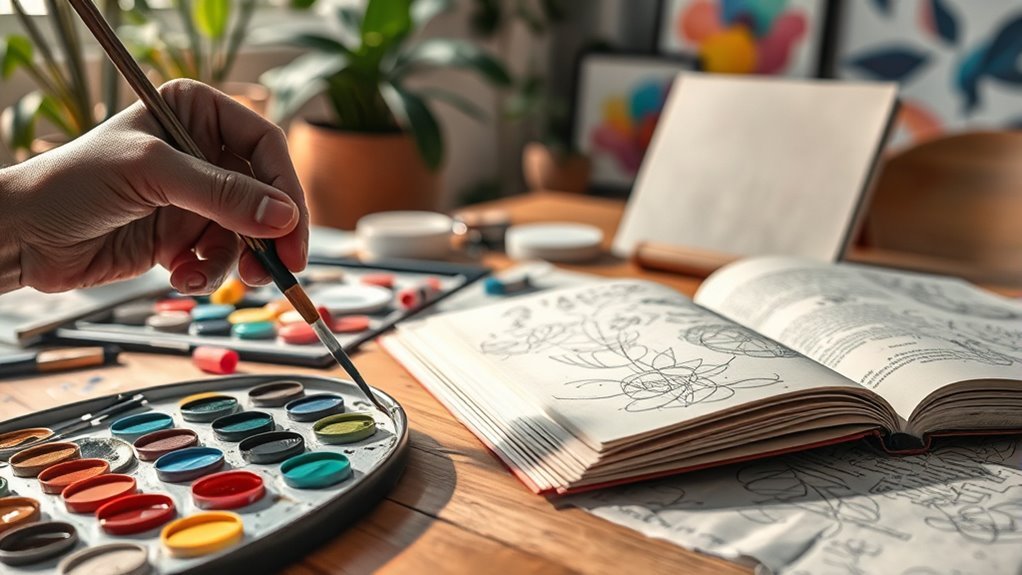
How do you prepare your mind for abstract art? You start by cultivating a mindset of openness and exploration. Let go of the fear that you might create “wrong” art—there is no fixed standard here.
Begin by embracing openness and exploration, releasing the fear of creating “wrong” art.
Embrace intuition as your guide, allowing spontaneous ideas to lead your brush. Write down personal creative principles, like “concentration in essentials” or “drawing from innocence,” and keep them visible to reinforce your open attitude.
When doubts or unexpected tangents arise, welcome them as valuable parts of your artistic growth rather than obstacles. Avoid labeling your work as “good” or “bad”; instead, focus on the uniqueness each piece holds.
Your mindset should celebrate unpredictability and persevere through challenges. By doing this, you’ll open yourself to a rich world of abstract expression where exploration and intuition drive the process, making your creative journey both freeing and rewarding.
Begin With Loose Sketches for Abstract Art
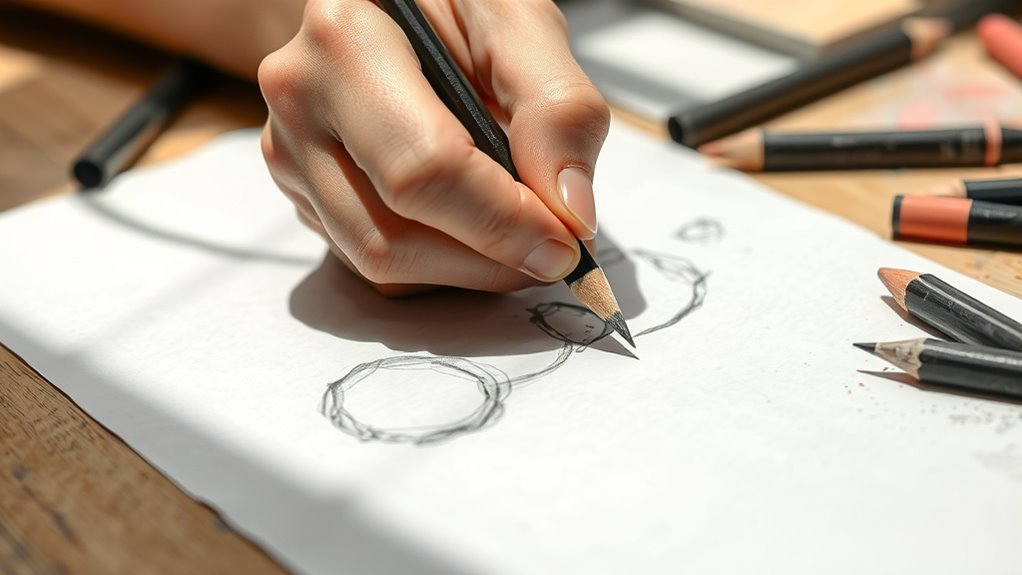
Start by making spontaneous marks without worrying about perfection. Let your hand move freely with gestural lines using charcoal, pencil, or ink to capture energy and emotion.
These loose sketches will help you explore form and inspire your abstract work. Give yourself permission to experiment and see where your creativity takes you!
Embrace Spontaneous Marks
Although it might be tempting to focus on details, you’ll get more dynamic results by making quick, loose sketches that capture spontaneous gestures. These expressive marks let your creativity flow freely without the pressure of precision.
Try using large tools like wide brushes or even your fingers to make bold, organic strokes that emphasize movement and energy. It really helps to loosen up and just go with the flow.
Keep your sketches minimal and gestural, focusing on the emotion behind each mark instead of realistic forms. These spontaneous gestures form the foundation for compelling abstract artworks.
| Tip | Benefit |
|---|---|
| Use wide brushes | Create bold, expressive marks |
| Sketch loosely | Capture natural gestures |
| Focus on energy & flow | Enhance dynamic composition |
Explore Gestural Lines
Building on spontaneous marks, you can bring more life to your abstract art by exploring gestural lines. Start with quick, loose sketches that capture energy and movement without overthinking details.
Use large, expressive arm movements instead of small wrist motions to create bold, spontaneous marks. Focus on continuous, flowing strokes that connect shapes, emphasizing rhythm and gesture within your composition.
Experiment with various tools—brushes, sticks, or even fingers—to vary line texture and quality. Keep your sketches intentionally simple and gestural, letting emotion and motion guide your mark making.
This approach enhances your abstract painting techniques, allowing you to build dynamic layers. By layering paint over these gestural lines, you add depth and complexity, making your artwork vibrant and full of life.
Choose Your Canvas Size and Scale
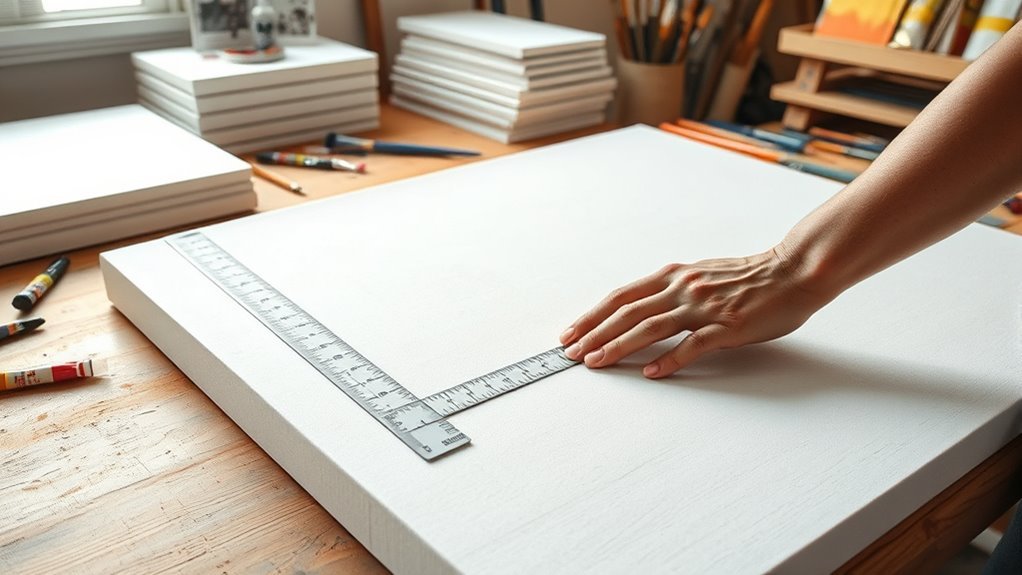
Choosing the right canvas size sets the foundation for your abstract art and shapes how your work will engage viewers. When you pick your canvas size and scale, think about the space where you’ll display your piece and the kind of impact you want.
Large-scale canvases invite bold expression and require bigger brushes or sweeping strokes, giving you room for spontaneity and freedom. In contrast, working on a small size encourages intimate, detailed marks and precision.
Also, select lightweight materials or stretchers that suit your chosen scale to keep your canvas stable and easy to handle. Remember, larger canvases often demand more time, paint, and resources, so factor that into your budget and schedule.
Work Large to Create Bold Abstract Art Gestures
Start by embracing a large surface to give your gestures room to breathe and stand out. Use bold brushwork with big brushes or rollers to create dynamic, sweeping strokes full of energy.
Pin your canvas to a wall so you can move freely. Let your body guide each powerful mark. It’s all about feeling the motion as you work.
Embrace Expansive Surfaces
Working on large surfaces like oversized paper or canvas lets you release bold, expressive gestures that define dynamic abstract art. When you embrace an expansive canvas, you engage physically, moving around freely to create spontaneous mark-making.
Using a large surface encourages gestural painting, letting your strokes flow with energy and openness. Start with a limited palette to keep focus on movement rather than color complexity. Tools like big brushes or rollers suit these broad, sweeping gestures perfectly.
This approach reduces overworking details and boosts instinctive creativity. It’s all about letting go and trusting your movements.
| Surface Type | Best Tools | Key Benefit |
|---|---|---|
| Expansive Canvas | Large Brushes | Bold gestural painting |
| Oversized Paper | Spatulas | Spontaneous mark-making |
| Mounted Canvas | Rollers | Freer physical movement |
| Large Surface | Mixed Tools | Dynamic expression |
| Expansive Canvas | Limited Palette | Visual coherence |
Utilize Bold Brushwork
Expansive surfaces invite you to move freely, and bold brushwork takes full advantage of that freedom. Working on a large scale lets you make sweeping, gestural marks that radiate energy and spontaneity.
Grab big brushes or palette knives to apply thick, confident strokes that capture movement and essence. These large canvases encourage instinctive painting, helping you break free from overthinking.
When you emphasize quick, dynamic gestures, your abstract art gains a powerful visual impact that highlights the physical act of creation. Bold brushwork on a big surface allows you to explore mark-making with greater freedom.
Each energetic stroke turns into a focal point. So, embrace this scale to make your abstract compositions vivid and alive through expressive gestures.
Use Wet Techniques to Keep Your Paint Flowing
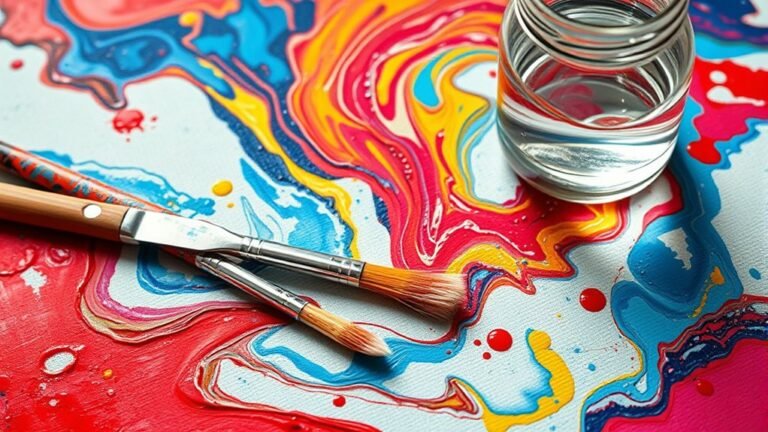
When you apply diluted, transparent layers of acrylic or watercolor onto a damp surface, the colors naturally flow and blend in unexpected ways. This wet-in-wet technique enhances the fluidity of your paint, allowing seamless blending and smooth progression.
To keep your acrylic paint moving, spray water lightly on the surface to encourage spontaneous bleeding and diffusion. Using tools like brushes, sponges, or rags while the paint is still wet helps you manipulate colors dynamically, creating organic shapes and effects.
Spritz water on wet acrylics and use brushes or sponges to shape colors into vibrant, flowing forms.
You can also use spray bottles or droppers to add water or ink directly onto wet paint, boosting the flow and movement. Keeping your surface moist throughout the painting process prevents premature drying, so the colors blend continuously without harsh edges.
Embracing these wet techniques gives your abstract art a lively, flowing quality that feels fresh and unpredictable. It’s a great way to keep your work feeling spontaneous and alive.
Develop Multiple Abstract Art Pieces to Stay Fresh
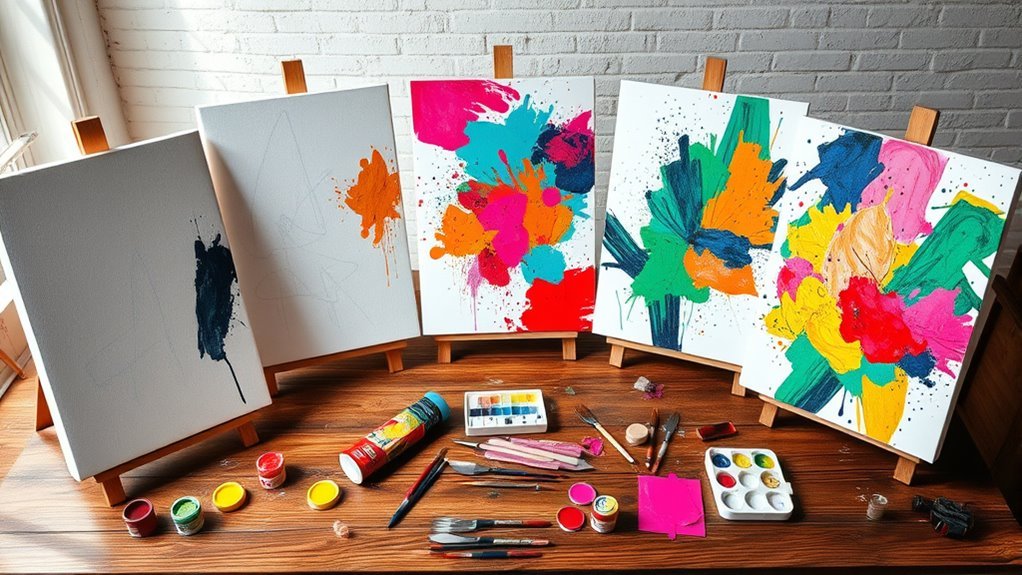
Although focusing on one piece can feel immersive, juggling multiple abstract artworks at once keeps your creativity sharp and fresh. Working on multiple pieces encourages spontaneity, letting you shift your attention and respond to each artwork’s unique development.
Try allocating short, 5-minute sessions per piece to make quick, intuitive decisions and avoid overworking any single work. This approach fuels a dynamic creative process, keeping you engaged and inspired.
Switching between artworks also helps you gain new perspectives, preventing creative stagnation and allowing your ideas to evolve naturally. Experiment with varied tools and techniques across different pieces to introduce new textures and effects, enriching your overall style.
Step Back Often When Creating Abstract Art
Balancing multiple pieces sharpens your perspective, making it easier to step back and evaluate each artwork with fresh eyes. When you step back, you gain an overview that reveals how your composition flows and whether the elements harmonize well.
Balancing artworks sharpens your perspective, helping you step back and see how elements harmonize.
Don’t hesitate to turn or flip your artwork; seeing it from different angles can uncover areas needing adjustment to improve harmony. Observing from a distance helps you assess how colors, shapes, and textures interact as a cohesive whole.
Regularly stepping back prevents you from getting stuck on tiny details or overworking parts of your piece. Taking breaks gives you fresh perspective, often sparking new ideas and showing where your abstract art can benefit from further development.
Making this a habit ensures you maintain clear perspective throughout the creative process, resulting in more dynamic, well-balanced abstract artworks that truly resonate.
Frequently Asked Questions
What Are the 5 Steps of an Abstract?
You start by choosing an emotional or conceptual focus, then create loose sketches.
Next, you build layers with different techniques.
Then, refine balance and contrast.
Finally, step back to evaluate and adjust for harmony and expression.
It’s all about letting your work breathe and making sure it really speaks to you.
What Are the 7 Elements of Abstract Art?
The seven elements of abstract art are line, shape, color, texture, value, form, and space. You’ll use these to create depth, movement, and emotion.
This makes your artwork visually engaging and balanced. It’s all about how these elements work together to catch the viewer’s eye and convey a feeling.
How to Do Abstract Art for Beginners Step by Step?
Did you know 70% of beginners feel stuck starting abstract art? Just grab a large surface and experiment with loose marks.
Layer colors boldly, and trust your instincts. You’ll create unique, expressive pieces without overthinking the process.
What Are the 5 Stages of Abstraction in Art?
The five stages of abstraction in art are representation, stylization, abstraction, non-representational, and pure or non-objective art.
You’ll move from realistic depiction to focusing purely on shapes, colors, and artistic expression. It’s like peeling layers away from reality to get to the essence of what the artist wants to convey.
Each stage takes you a bit further from how things actually look and closer to feelings or ideas expressed through art.
Conclusion
Now that you’ve got the steps, plunge into and let your creativity run wild—after all, abstract art is your playground, not a puzzle to solve. Remember, every bold stroke tells a story only you can share.
So don’t hold back; embrace the chaos, the colors, the flow. Step back, take it in, and watch your unique vision come alive.
Your masterpiece is waiting—go make it unforgettable! Dive into abstract art with confidence, knowing that each brushstroke adds to your creative journey. Let your imagination guide you, and enjoy the process of making art that’s truly your own.