How to Understand the Fundamentals of Art
To understand the fundamentals of art, it’s important to focus on mastering core skills like anatomy, perspective, and lighting. These basics form the building blocks of great artwork. With consistent, structured practice, you can gradually improve and gain confidence in your abilities.
Try breaking complex subjects down into simple shapes to make them easier to tackle. It also helps to track your progress over time and actively seek feedback.
This way, you sharpen both your accuracy and expressiveness, which are key to creating engaging art.
Building a strong foundation sets you up to create more dynamic and polished work. Keep developing these essentials, and you’ll discover new levels of creativity and skill that truly transform your art.
Stick with it, and enjoy the journey of growth!
Key Takeaways
- Break down subjects into basic shapes to simplify complex forms and improve visual comprehension. It really helps to see things in simpler parts before putting them all together.
- Practice anatomy, perspective, and lighting regularly to enhance accuracy and depth in artwork. The more you work on these, the more natural they’ll feel.
- Use structured exercises like value scales and gesture drawing to develop technical skills and muscle memory. These drills might seem repetitive, but they’re super effective.
- Track progress and seek feedback to identify strengths and areas needing improvement. Getting another perspective can make a big difference.
- Prioritize mastering fundamentals before tackling advanced projects for cohesive and polished art. Building a strong foundation always pays off in the long run.
Here’s Why Art Fundamentals Make All the Difference
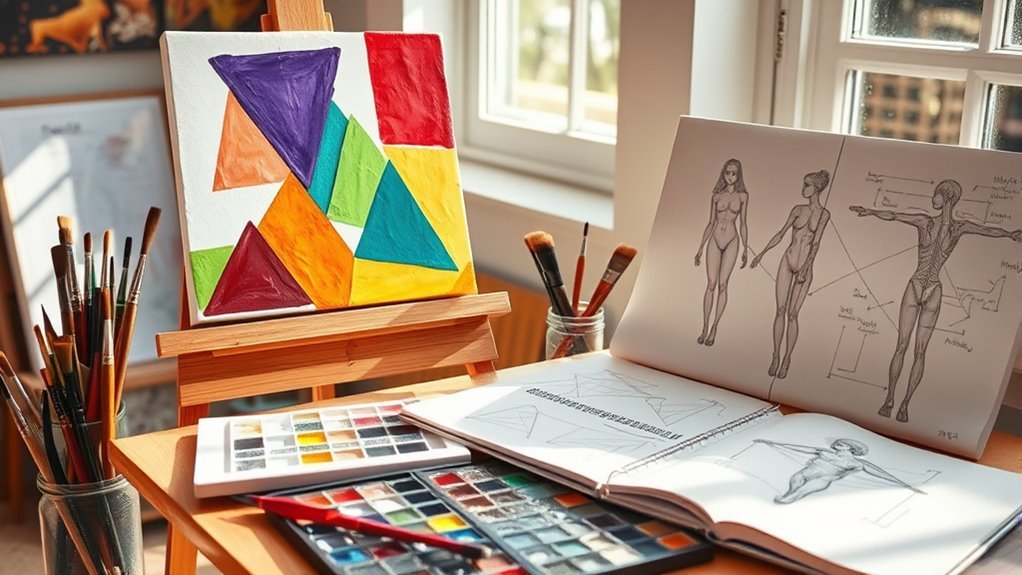
Although it might be tempting to jump straight into creating, mastering art fundamentals like anatomy, perspective, and lighting is what truly sharpens your accuracy and expressiveness. By focusing on foundational techniques such as breaking subjects down into basic shapes, you build a strong visual understanding that supports more complex compositions.
Mastering fundamentals teaches you how to balance light and dark effectively, enhancing depth and realism in your work. Without this knowledge, your drawings may suffer from stiff poses or flat compositions, limiting your creative potential.
Developing your drawing skills through consistent practice of the elements of art ensures you solve artistic challenges with confidence. Industry professionals agree that solid anatomy and perspective knowledge form the backbone of polished, cohesive art.
When you invest time in mastering these basics, you create a reliable framework that elevates every piece you make, enabling you to express ideas clearly and compellingly. So, don’t skip the fundamentals—they’re what really make your art stand out.
How to Practice Art Fundamentals and See Real Improvement

When you consistently dedicate time to practicing core skills like drawing shapes, shading, and perspective, you build muscle memory and sharpen your technical accuracy. Focused practice on the fundamentals of art helps you notice subtle shifts in form and values that lead to visual improvement.
Use structured exercises to target specific skills, promoting steady technique development. Tracking your progress over weeks highlights your growth, boosting confidence and guiding your next steps. It’s all about small, consistent efforts that add up over time.
To practice effectively:
- Break down complex subjects into basic forms before adding details
- Use value scales, gesture drawing, and shape simplification as structured exercises
- Seek regular feedback and adjustment from mentors or peers
- Keep a progress log to monitor improvements and adjust goals
Sticking with these habits can really make a difference in how you see your art evolve.
Frequently Asked Questions
How Do I Learn Art Fundamentals?
You learn art fundamentals by studying core principles and practicing regularly. Analyzing masterworks helps a lot, too.
Focus on one skill at a time to avoid feeling overwhelmed. And don’t forget to get feedback from mentors or communities. That way, you can improve and deepen your understanding.
What Are the 5 Fundamentals of Art?
You’ll find the five fundamentals of art are line, shape, form, value, and color. They’re your tools to build visuals—lines define edges, shapes create areas.
Forms add depth, value shows light, and color brings emotion. These basics are what help your artwork come alive and connect with people.
What Are the 7 Fundamentals of Art?
The 7 fundamentals of art are line, shape, form, value, color, texture, and space. You’ll use these elements to build structure, create depth, add emotion, and balance your artwork effectively.
These basics might sound simple, but they’re super powerful. Once you get the hang of them, your art will really start to come alive. Just take it one step at a time!
What Is the 70 30 Rule in Art?
The 70/30 rule in art means you’ll spend 70% of your time mastering core skills like anatomy and perspective, while 30% focuses on developing your unique style.
This balance builds strong, lasting artistic growth. It’s all about getting the basics down solid before letting your personal flair shine through.
Conclusion
Mastering art fundamentals boosts your skills more than you might expect—studies show that artists who focus on basics improve 40% faster than those who jump straight into complex projects. By practicing core techniques like shape, color, and composition regularly, you’ll see real progress and build a strong foundation for creativity.
So, keep honing those essentials, and you’ll discover your full artistic potential in no time. Don’t skip the basics—they truly make all the difference!
Remember, understanding the fundamentals of art is key to growing as an artist. When you focus on core elements like shape, color, and composition, you not only improve faster but also create more meaningful and balanced artwork. Keep practicing these basics consistently, and you’ll build the confidence and skills needed to tackle more advanced projects. In the end, mastering the fundamentals is what sets great artists apart, so embrace them fully and watch your creativity soar!