Why Is Art Important to Society?
You rely on art to connect you with your culture and history, keeping traditions and stories alive for future generations. Art is more than just decoration; it’s a vital part of society that shapes how we see the world and ourselves. It sparks your creativity, encouraging new ideas and fresh perspectives.
Art also fuels social change by raising awareness and inspiring action on important issues. It’s a powerful tool that helps people understand and empathize with different experiences.
Most importantly, art helps you build stronger communities, bringing people together through shared experiences and creative dialogue.
Explore more to see how art shapes and enriches every part of society. You’ll find it’s everywhere, influencing everything from education to social movements, and even the way we connect with each other.
Key Takeaways
- Art preserves cultural identity by connecting communities to their history, traditions, and heritage for future generations. It’s like a bridge that keeps our roots alive.
- It also fosters community pride and continuity by showcasing shared values and strengthening social bonds. When people see their stories reflected in art, it really brings them together.
- Art sparks creativity, inspiring innovative thinking and new perspectives in individuals and society. It encourages us to think outside the box and see the world differently.
- Plus, it drives social change by raising awareness, inspiring activism, and promoting dialogue on important issues. Art can be a powerful way to start conversations that matter.
- Finally, art builds strong communities through shared experiences, participation, and fostering understanding and engagement. It’s something that connects us all on a deeper level.
How Art Preserves Culture and Builds Strong Communities
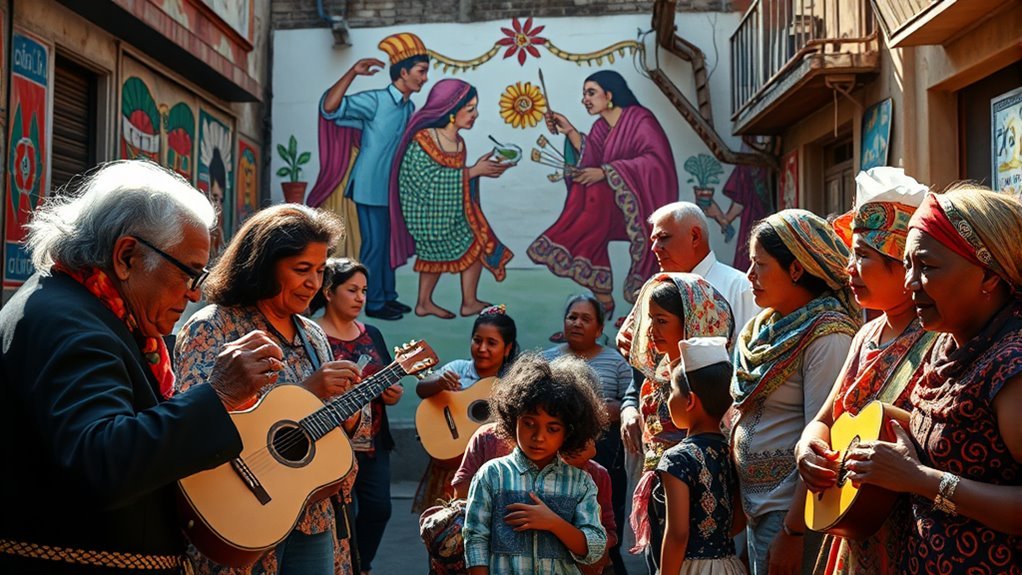
When you engage with art, you’re connecting with a community’s culture and history. Art preserves cultural identity by capturing traditions, stories, and beliefs that define a group’s unique heritage.
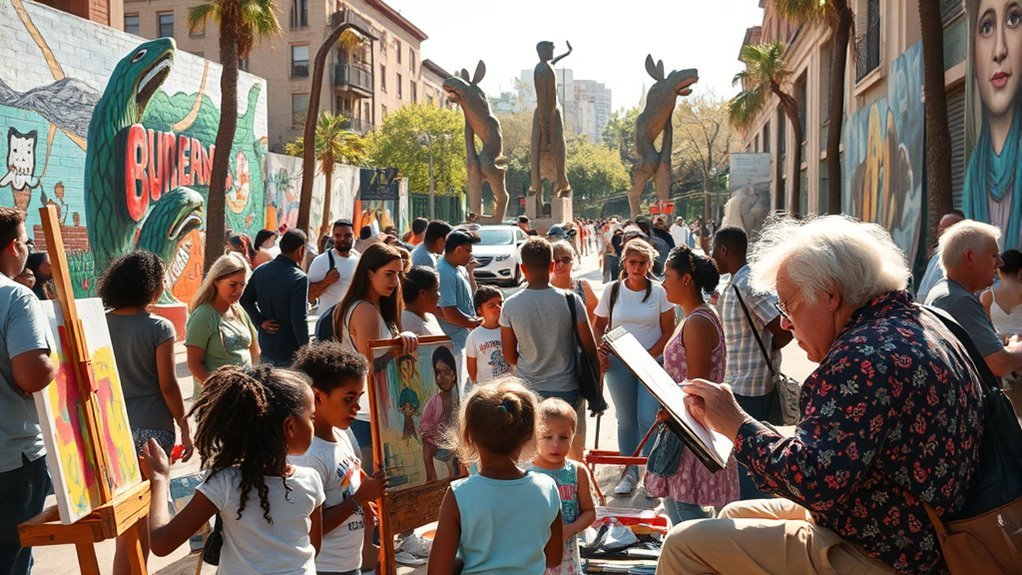
Public art, like murals and installations, celebrates cultural diversity and sparks community pride by showcasing artistic expressions that reflect shared values. Cultural artifacts and artworks act as tangible links to the past, nurturing a sense of belonging and continuity.
Through preservation efforts and art education, communities strengthen bonds by passing down cultural heritage to future generations. These creative forms serve as emotional and visual records of society’s evolution, helping you appreciate the richness of various traditions.
How Art Sparks Creativity and Fuels Social Change
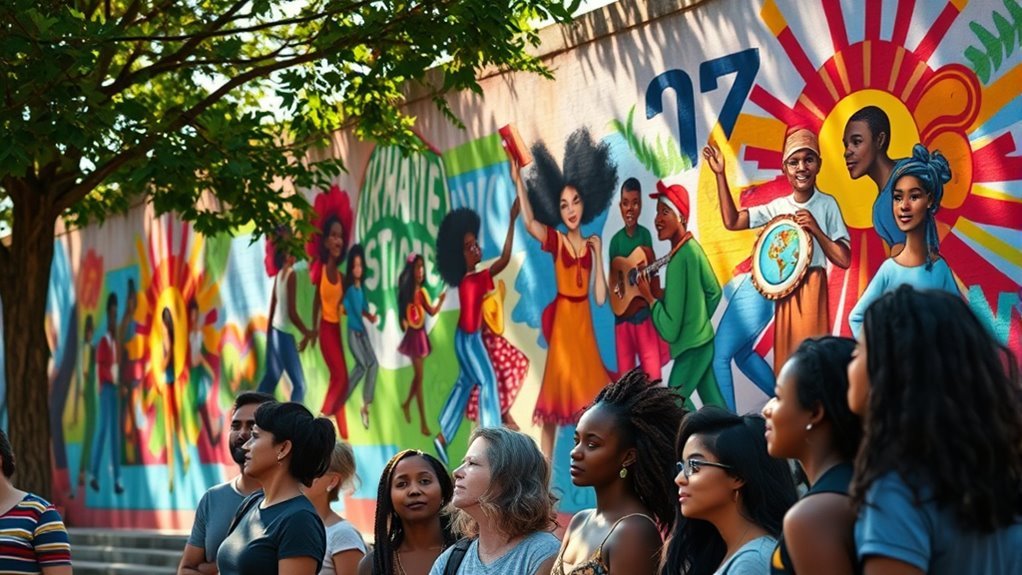
Art doesn’t just preserve culture—it ignites creativity and drives social change. When you engage with artistic expression, your brain’s creativity centers activate, sparking innovative thinking that helps solve social issues from fresh angles.
Engaging with art activates creativity, inspiring innovative solutions to social challenges.
Visual arts, like Picasso’s “Guernica,” have long been catalysts for change, raising social awareness and inspiring activism. By participating in art-based projects and murals, you contribute to community engagement that unites people and highlights important causes.
This active involvement enhances your creative skills, essential for societal progress. Art challenges you to see the world differently, making it a powerful tool for fueling social change.
When you embrace art, you don’t just witness creativity; you become part of a movement that transforms society, encouraging dialogue and action on critical social issues. Through artistic expression, you help build a more aware, engaged, and innovative community ready to tackle the challenges ahead.
Frequently Asked Questions
What Is the 5 Importance of Art?
The five importance of art are creativity, cultural preservation, social change, economic impact, and mental well-being. You’ll find art sparks innovation, keeps history alive, and promotes dialogue.
It also boosts economies and supports emotional health in powerful ways. Art really plays a huge role in so many parts of our lives!
What Is the 10 Importance of Art in Society?
You’ll find art boosts creativity and preserves culture. It also sparks social change, which is pretty powerful.
Art drives the economy and enhances well-being. Plus, it educates and inspires innovation in so many ways.
It helps build community and fosters empathy among people. And don’t forget, it promotes diversity—all essential for a thriving, connected society.
Can Society Exist Without Art?
You can’t fully imagine society without art because it shapes your culture, sparks creativity, and connects people emotionally.
Without it, you’d lose essential expressions that keep communities vibrant, innovative, and mentally healthy.
What Is the Role of Art and Culture in Society?
You can’t judge a book by its cover, and art and culture help you see society’s soul. They connect you, spark conversations, and preserve history.
They also inspire change, making your community richer and more vibrant every day. It’s like they bring life to the stories we share and the values we hold.
Conclusion
Art matters to you because it keeps culture alive and helps communities grow stronger. It sparks your creativity and inspires you to see the world differently, pushing for positive change.
When you engage with art, you’re not just observing—you’re participating in a shared human experience. So, why wouldn’t you embrace something that connects you to others and fuels your own imagination?
Art isn’t just important; it’s essential to who you are. It shapes your identity, reflects your values, and encourages empathy. By connecting people across different backgrounds, art strengthens society. It fosters creativity, promotes cultural understanding, and drives social progress.
In short, art plays a vital role in society by nurturing community, inspiring innovation, and preserving heritage. It’s more than just decoration—it’s a powerful force that influences how we think, feel, and interact with the world around us. Embracing art means embracing the very essence of humanity and the growth of society itself.