
What Do Art Therapists Do Step by Step
When you start art therapy, your therapist watches how you create artwork to understand your emotions and behaviors. This helps them see things you might not say out loud. They pay attention to symbols and themes in your art to get a clearer picture of what you’re feeling.
Next, they develop a personalized treatment plan with clear goals tailored just for you. During sessions, you get to use various media—like paint, clay, or drawing—to express feelings that might be hard to put into words. It’s a safe space to explore your emotions creatively.
Reflecting on your creations together helps uncover deeper thoughts and supports emotional growth. If you want to explore how this process promotes healing, there’s more to discover. Art therapy is a unique way to connect with yourself and work toward well-being.
Key Takeaways
- Assess clients by observing their art process, emotional cues, and symbolism. This helps understand their mental health and personal history.
- Develop personalized treatment plans with clear goals and measurable outcomes. These are based on what was learned during the assessment.
- Facilitate creative expression using diverse art media. This encourages emotional exploration and authentic self-expression.
- Guide clients in reflecting on their artwork to connect emotions with personal experiences. This helps enhance self-awareness.
- Support healing by using art to process emotions and foster growth. Also, develop tailored emotional regulation strategies that fit the client’s needs.
How Art Therapists Assess Clients and Develop Treatment Plans

When art therapists assess clients, they closely observe how you create art, noting your choices and reactions to uncover emotional states and behaviors. This initial assessment in art therapy focuses on your art-making process, identifying behavioral patterns and emotional cues that might not surface through traditional talk therapy.
During client evaluation, therapists analyze the symbolism, themes, and emotional intensity within your artwork, gaining insights into your personal history and presenting problems. They also use verbal and non-verbal techniques, such as discussing your artwork and reflecting on your experience, to deepen understanding.
These observations guide treatment planning, allowing therapists to develop individualized treatment plans tailored to your specific mental health needs. Each plan includes clear session objectives and measurable outcomes, ensuring that your progress is tracked effectively.
This personalized approach helps create a supportive environment where art therapy can address your unique challenges and foster healing. It’s all about making sure the therapy fits you perfectly.
Using Art Therapy to Help Clients Create and Reflect
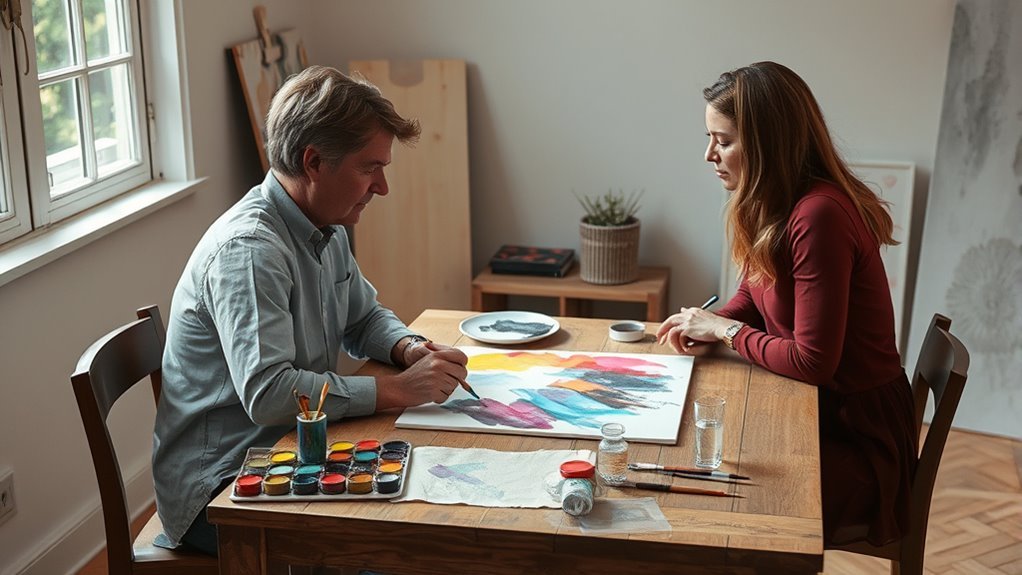
How do art therapists help you release emotions through creativity? In art therapy, clients engage in artmaking using various media, allowing spontaneous and authentic artistic expression.
This creative process encourages emotional exploration, giving you a safe space to express feelings that might be hard to verbalize. As you create, art therapists observe your choices—colors, composition, and techniques—using these visual elements for interpretation and deeper insight into your emotional state.
Afterward, you’re invited to reflect on your artwork and the emotions or memories it brings up. This reflection promotes self-awareness and helps you connect your personal experiences with the images you’ve created.
Through guided discussions, the therapist supports you in uncovering subconscious thoughts and developing coping strategies. Using art therapy, you not only express yourself creatively but also gain valuable understanding of your inner world, fostering healing and growth through the power of art.
Frequently Asked Questions
What Are the Steps to Become an Art Therapist?
You start by earning a bachelor’s degree. Then, you complete a master’s in art therapy, gaining supervised experience along the way.
Next, you get certified and pursue licensure if needed. After that, it’s all about keeping up with continuing education and practice to stay current in the field.
What Are the Steps of Art Therapy?
Like opening a hidden door, you’ll create art, express feelings, and reflect on your work with the therapist.
Together, you’ll explore emotions, gain insight, and heal—step by step, embracing your personal journey through creative expression.
What Do Art Therapists Actually Do?
You create art to express feelings while the therapist observes your process and artwork. They guide you, interpret symbols, and tailor sessions to your needs.
This helps you explore emotions, reduce stress, and promote healing through creativity. It’s all about using art as a way to understand yourself better and feel more balanced.
Do You Talk During Art Therapy?
Sometimes you’ll talk, sharing feelings and thoughts about your art.
Other times, silence lets your creativity speak.
You’re in control, choosing when words flow or when quiet expression feels right for your healing journey.
Conclusion
As an art therapist, you guide clients through self-expression and healing, step by step. For example, imagine working with a teenager struggling with anxiety—you’d assess their needs and create a personalized plan.
Then, you use art to help them explore feelings they can’t put into words. By encouraging reflection on their creations, you help them gain insight and build coping skills.
Your role is essential in turning art into a powerful tool for growth and recovery. Art therapy helps people express emotions, process trauma, and develop resilience.
Through creative activities, you support mental health and emotional well-being in a meaningful way. Ultimately, as an art therapist, you facilitate healing by connecting art with personal growth, making a real difference in your clients’ lives.