How to Create Abstract Art in 10 Essential Steps
To create abstract art in 10 essential steps, start by gathering your supplies and choosing a sturdy surface to work on. Planning a composition with off-center focal points helps make your piece more interesting and dynamic. These basics set the foundation for your creative journey into abstract art.
Next, apply dark paint on a white background to build strong contrast. Layer contrasting shapes using stencils or freehand techniques to add complexity. Don’t be afraid to mix light and dark colors; this adds depth and dimension to your work.
Incorporate dynamic lines and expressive marks to give your art energy. Refine edges to strengthen the overall structure, then connect elements to create a sense of movement.
Finally, finish with pencil details to emphasize and highlight key forms.
Keep experimenting and have fun! You’ll soon discover how these steps bring your abstract art to life in unique and exciting ways.
Key Takeaways
– Start by preparing a clean, receptive surface and gather diverse materials like charcoal, ink, and acrylics for varied textures.
It’s great to have different tools on hand because they add interesting effects to your work.
– Create a strong foundation by applying dark paint on white with spontaneous, gestural strokes using large brushes or palette knives.
Don’t worry about being perfect—just let your movements flow freely.
– Design dynamic compositions with off-center focal points, balanced visual weight, and shapes that guide the viewer’s eye.
Think about how you want people to look at your painting and arrange elements to lead their gaze around.
– Build depth and contrast through layering light and dark colors, using glazing and varied media for texture and movement.
Layering is key—it brings your artwork to life with richness and dimension.
– Add expressive lines and marks with pencils or brushes to emphasize forms, connect shapes, and unify the composition.
These little touches can really pull everything together and make your piece feel complete.
Gather Supplies and Choose Your Surface for Abstract Painting
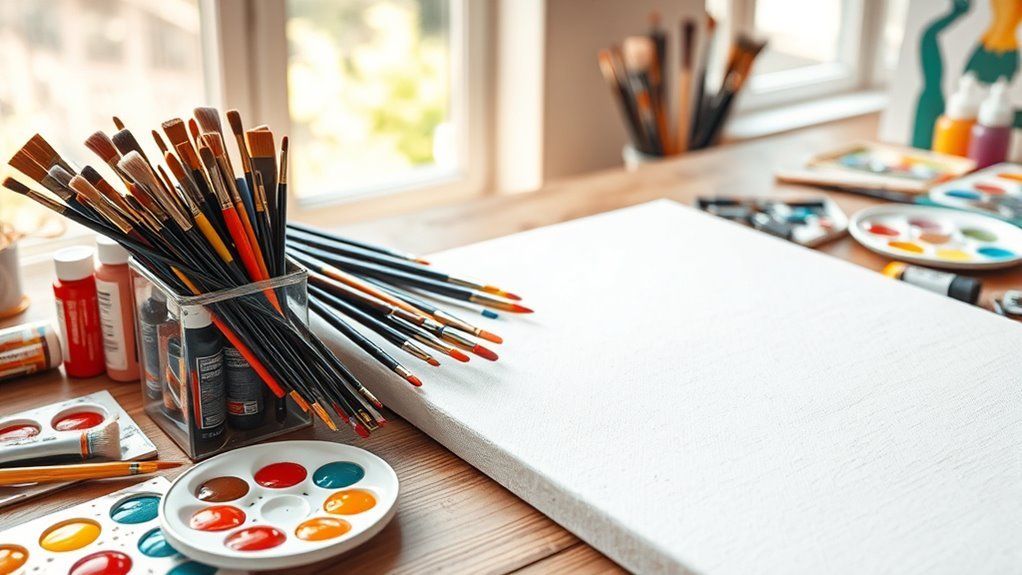
Before you begin creating abstract art, gather your supplies and choose a sturdy, receptive surface like watercolor paper, acrylic canvas, or mixed media paper. This surface should support spontaneous application and layering, so pick one that’s dry and free of coatings like gesso or any wetness to guarantee smooth, uninhibited mark-making.
Larger canvases or papers work great if you want to encourage loose, expressive gestures. Next, gather a variety of materials such as charcoal, ink, oil bars, or Neocolors to introduce diverse textures and effects into your piece.
Organize your workspace for easy access to these materials—this setup lets you work quickly and fluidly, making adjustments as your creativity flows. By preparing your surface and materials thoughtfully and setting up an efficient workspace, you’re setting yourself up for a dynamic, enjoyable abstract painting experience.
Plan Your Abstract Painting Composition Around Off-Center Focal Points
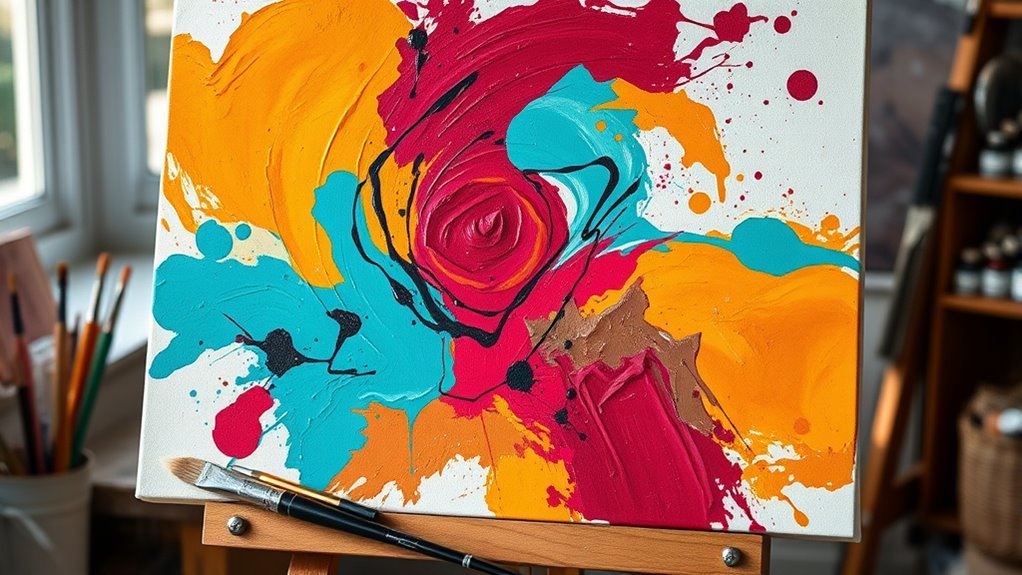
Once you’ve gathered your materials and prepared your surface, think about how you want to arrange your composition. Position your off-center focal point slightly away from the middle to create a more dynamic and engaging piece.
Start by placing your focal point just off-center to make your composition more dynamic and engaging.
Use contrasting colors or shapes around this focal area to naturally draw the viewer’s eye. To maintain visual balance, carefully distribute the visual weight of elements on either side of the focal point without relying on symmetry.
Incorporate surrounding shapes and marks that guide the eye toward your chosen area, enhancing the flow of your composition. Keep the space around the off-center focal point less detailed or more subdued to emphasize its importance.
This approach not only adds interest but also guarantees your abstract painting feels harmonious and well-planned. By thoughtfully planning your composition around an off-center focal point, you’ll create a compelling artwork that captures attention and holds it.
Start Your Abstract Painting With Dark Paint on White
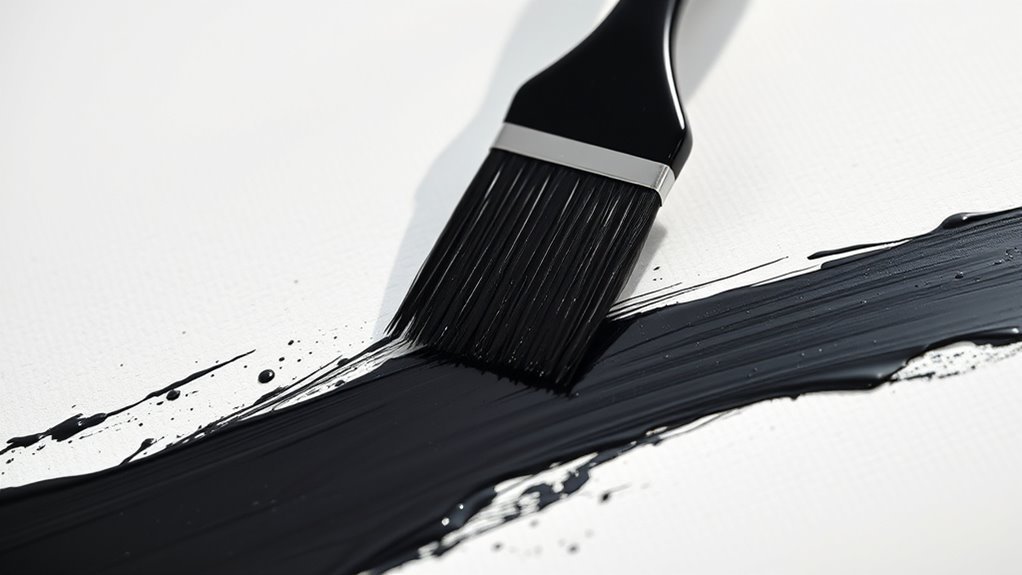
Start your abstract painting by applying dark paint directly onto a clean, white surface to create striking contrast from the very beginning. This contrast immediately grabs attention and helps the eye navigate your composition.
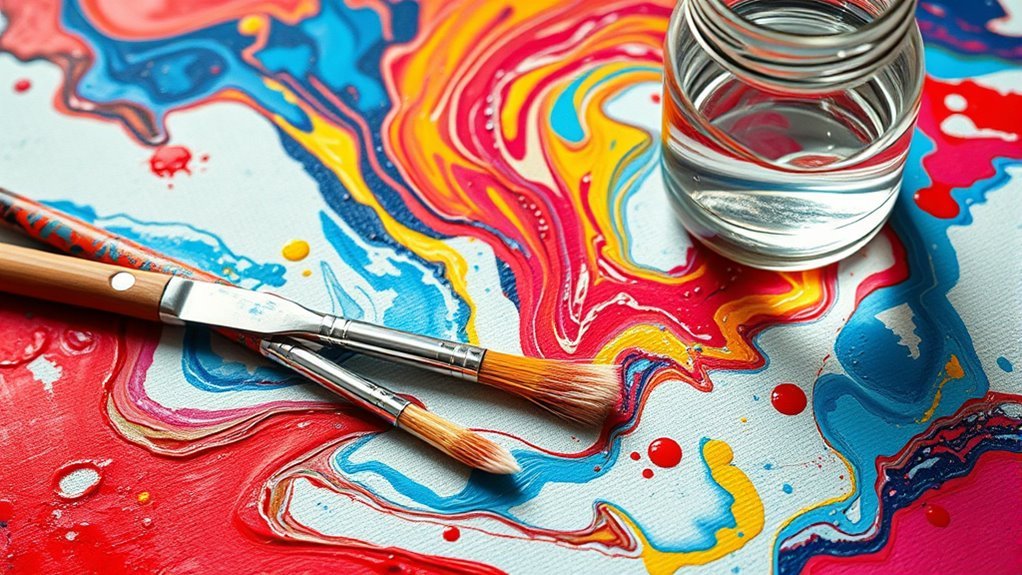
Use a large brush or palette knife to spread the dark paint with spontaneous, gestural strokes, embracing the freedom that comes with making abstract art. Cover most of the surface with deep blues, blacks, or burnt umber, but leave some white areas untouched. These white spaces add visual interest and offer opportunities for layering later on.
Experimenting with shades of dark paint enriches your initial layer, adding depth and complexity. Let the paint dry partially or fully before moving on.
This step sets a strong foundation, making abstract elements stand out boldly against the white backdrop. Starting this way ensures your painting has dynamic tension that keeps viewers engaged and helps the eye explore the evolving artwork effectively.
Add Contrasting Shapes Using Stencils or Freehand
Although your initial layer sets a strong foundation, adding contrasting shapes using stencils or freehand techniques brings your abstract painting to life. Use stencils to create transparent, loose shapes that contrast with more opaque, freehand drawing forms.
Layer transparent stencil shapes over opaque freehand forms to enliven your abstract painting with dynamic contrast.
This dynamic interplay captures attention and adds visual interest. Experiment with freehand drawing to introduce irregular, spontaneous shapes that oppose the controlled, geometric stencil shapes.
Vary the size, placement, and layering of these contrasting shapes to build movement within your composition. Incorporate different media like ink, watercolor, or acrylic to distinguish shapes and enhance impact.
Don’t forget to redefine and block out edges to create clear distinctions between forms, guiding the viewer’s eye through your artwork. By balancing the precision of stencils with the freedom of freehand drawing, your abstract piece gains depth and energy, making it truly mesmerizing.
Layer Light and Dark Colors for Depth
Start by laying down dark colors to create a strong foundation, then build up with lighter layers to balance contrast and add depth. You’ll enhance texture by letting some of the darker tones peek through lighter washes.
This careful layering brings your abstract art to life with rich dimension and visual interest. It’s a simple trick that really makes your work pop!
Balancing Light And Dark
When you layer dark colors first, you set a foundation that adds depth and contrast to your artwork. Balancing light and dark requires mindful layering of values to maintain harmony and guide the viewer’s eye.
Start with dark tones, then gradually add light colors, letting some dark layers peek through for dimension. Use varying values to create focal points without overpowering any area.
Techniques like glazing or wiping paint help adjust lightness and darkness, enhancing subtle depth. Keep your contrast balanced by constantly evaluating the interplay between light and dark.
| Light Colors | Dark Colors |
|---|---|
| Soft highlights | Deep shadows |
| Mid-tone accents | Strong base layers |
| Subtle glazes | Bold contrast areas |
Building Depth With Layers
As you layer light colors over darker areas, you create a striking sense of depth and dimension that brings your abstract art to life. Use transparent or semi-transparent mediums, like watered-down paint or glazes, to build subtle, luminous layers.
This transparency allows the darker tones beneath to show through, enriching your composition. Gradually add lighter tones on top of darker ones, letting each layer dry fully to avoid muddiness and keep your colors clear.
Combining bold dark strokes with delicate pale hues introduces contrasting values that enhance visual complexity. Don’t hesitate to experiment by scraping away upper layers to reveal colors underneath, adding even more depth and interest.
Mastering these layering techniques helps you create abstract art that feels vibrant and alive. Give it a try and see how your work transforms!
Enhancing Contrast And Texture
Although layering dark colors first establishes depth, adding lighter tones on top sharpens contrast and brings your abstract art to life. Focus on layering transparent or semi-transparent paint to create subtle tonal shifts that enhance texture.
Experiment with contrasting textures—combine smooth washes with thick impasto—to highlight differences between light and dark areas. Don’t hesitate to lift or remove color in spots to reveal underlying layers, adding more depth and visual interest.
Balancing light and dark elements guides the viewer’s eye, creating a dynamic sense of space. By thoughtfully layering and contrasting textures and tones, you’ll give your abstract pieces richness and energy, making them visually compelling and full of depth.
Balance Saturated and Desaturated Colors
To create a compelling abstract composition, you’ll want to balance saturated and desaturated colors thoughtfully across your canvas. Use saturated colors to draw attention and infuse energy, making key areas stand out.
Then, soften your palette by adding desaturated tones or pale grays, which provide visual rest and prevent your piece from feeling overwhelming. Achieving color harmony means distributing these vibrant and muted hues evenly, so your artwork feels cohesive and balanced.
Avoid overusing black, as it can dull the vibrancy; instead, contrast with white or muted shades. Don’t hesitate to experiment by layering saturated and desaturated colors—this builds depth and keeps your composition engaging.
Add Dynamic Lines and Expressive Marks
When you add dynamic lines and expressive marks, you inject movement and energy into your abstract art. Use pencils, pens, and brushes to create contrasting lines—thin, delicate or bold, sweeping strokes—that bring rhythm and visual interest.
Try incorporating spontaneous, loose gestures and flowing lines to evoke emotion and enhance the overall dynamism. It really helps to place expressive marks strategically to connect shapes and guide the viewer’s eye, creating a seamless flow throughout your composition.
Build layers of these marks over and under existing elements to develop depth and texture. This layering adds complexity and makes your piece feel alive.
| Emotion | Effect |
|---|---|
| Excitement | Bold, sweeping strokes |
| Serenity | Thin, delicate lines |
| Passion | Spontaneous, loose gestures |
Refine Edges and Shapes to Strengthen Structure
As you refine edges and shapes, you’ll strengthen the overall structure of your abstract piece and give it clearer definition. Refining edges sharpens your composition’s impact, while layering techniques add depth and complexity to shape definition.
To do this effectively, use blocking techniques with contrasting colors to clearly define and refine edges, making each shape stand out. You can also employ tools like brushes, palette knives, or dry brushes to sharpen or soften edges. It’s all about balancing crispness and blur to keep things visually interesting.
Incorporate layering techniques that involve both adding and removing paint—scraping or wiping away layers—to enhance clarity and strengthen boundaries.
Make sure to regularly step back and view your work from different angles. This helps you see how well your refined edges and shapes contribute to the piece’s cohesion. That way, your abstract art will have a strong, intentional structure without losing its expressive freedom.
Connect Elements to Create Movement and Flow
How do you guide a viewer’s eye across your abstract composition? Start by connecting shapes and marks with flowing lines or gestures to create a sense of continuity and movement.
Use contrasting line weights and directions to enhance visual flow, smoothly leading the eye from one element to another. Incorporate linking elements like lines or subtle color transitions to establish clear visual pathways throughout your artwork.
Try varying your marks—thin, thick, curved, or jagged—to build dynamic energy and rhythm. This helps suggest motion within the piece.
Overlap and redefine shapes to create a layered, interconnected structure that encourages seamless movement between different areas. This linking technique not only adds depth but also strengthens the overall unity of your composition.
Add Final Pencil Details to Emphasize Forms
Now it’s time to add final pencil details that sharpen your shapes and bring your forms to life. Use varied lines and subtle marks to suggest depth and invite interpretation.
This step helps your abstract art feel more dynamic and defined. Just take your time and enjoy how these little touches make a big difference.
Enhancing Shape Definition
When you add final pencil details, you’ll enhance the definition of your abstract shapes and bring subtle texture to your composition. These pencil details help clarify and emphasize your shapes without overpowering the artwork.
Focus on layering marks carefully to build depth and contrast while guiding the viewer’s eye through the piece. Here’s how to enhance shape definition effectively:
- Use a sharpened pencil with a side point to create textured, less controlled marks that add interest and depth.
- Apply varied pressure and line weight in your pencil details to define shapes dynamically.
- Selectively layer pencil marks over painted areas to reinforce key shapes and make them pop.
This approach keeps your composition balanced and visually engaging. Give it a try and see how those little details can really bring your work to life!
Suggesting Interpretative Forms
Although your abstract shapes stand on their own, adding final pencil details can suggest interpretative forms that invite viewers to explore deeper meanings. Use a sharpened pencil with a side point to create disturbed, organic marks.
Vary pressure and texture to add contrast and depth. Subtle shading and line work give volume and dimensionality, reinforcing the abstract composition. Focus on connecting and redefining shapes with pencil details to guide the viewer’s eye and emphasize key forms.
| Pencil Technique | Effect on Interpretative Forms | Impact on Abstract Composition |
|---|---|---|
| Side-point marks | Suggest organic shapes | Adds spontaneity |
| Varied pressure | Creates contrast and depth | Enhances visual interest |
| Subtle shading | Implies volume and form | Builds dimensionality |
| Connecting lines | Redefines shapes | Unifies composition |
Frequently Asked Questions
How to Create an Abstract Painting Step by Step?
Start by choosing a reference or gesture, then layer contrasting shapes and colors. Use various media, add focal points, and step back often to adjust.
Keep experimenting until your composition feels balanced and expressive. Just take your time and enjoy the process!
What Are the 7 Elements of Abstract Art?
You know what they say, “Don’t put all your eggs in one basket.”
The seven elements of abstract art are line, shape, color, texture, value, form, and space.
You’ll use these to create dynamic, expressive pieces.
What Is the 70 30 Rule in Art?
The 70/30 rule in art means you’ll balance about 70% of your composition with stable elements and use the remaining 30% for dynamic, contrasting features.
This keeps your artwork harmonious yet visually exciting. It’s a simple way to make sure your piece feels balanced but still grabs attention.
What Are the 5 Steps of an Abstract?
You’ll start by choosing a reference, then create a focal point off-center. Next, build depth with layers and values.
Add spontaneous marks, and finally refine your composition for balance and harmony. Embrace chaos and control together.
Conclusion
Now that you’ve mastered these ten essential steps, your abstract art will truly come alive, like a Renaissance painter wielding a futuristic digital brush. Remember, abstract art is all about expressing your unique vision, so don’t be afraid to break the rules and experiment.
Keep layering, refining, and connecting your elements to create dynamic movement. With practice, your creations will captivate and inspire, proving that art transcends time and trends—just like you.
Abstract art allows you to explore creativity without limits. So dive in, trust your instincts, and enjoy the process of making something truly original. The more you experiment with colors, shapes, and textures, the stronger your artistic voice becomes. Keep creating, because every stroke adds to your journey as an abstract artist.