What Is Mandala Art and Its Meaning?
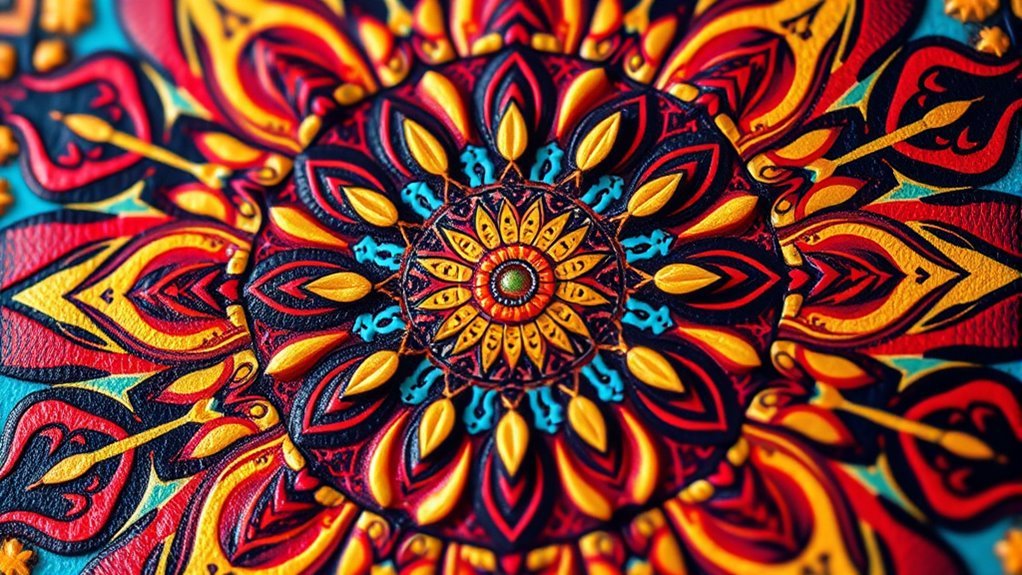
You’ll find mandala art made of intricate, symmetrical patterns radiating from a central point, symbolizing unity and the cosmic universe. This beautiful art form combines decorative beauty with deep spiritual meaning, often used to focus your mind during meditation.
Mandalas are more than just designs—they offer a way to connect with your inner self and the world around you.
Rooted in traditions like Hinduism and Buddhism, mandalas help promote inner peace and spiritual connection.
As you explore further, you’ll discover how mandalas are created, their cultural importance, and the powerful symbolism they carry.
It’s fascinating to see how these patterns have been used for centuries to inspire mindfulness and harmony.
Key Takeaways
– Mandala art features geometric patterns radiating from a central point, symbolizing wholeness and unity.
It holds deep spiritual significance in Hinduism and Buddhism, representing cosmic order and spiritual transformation.
– Mandalas are created using symmetrical, repetitive designs with techniques like drawing, coloring, and shading.
They serve as meditation tools, promoting inner peace and connection to the universe.
– Mandala art is culturally significant across societies, used in rituals, ceremonies, and spiritual practices.
Understanding Mandalas: Definition and Spiritual Meaning
Although mandalas might seem like simple geometric patterns, they carry deep spiritual significance in Hinduism and Buddhism. When you look at a mandala, you’ll notice its intricate patterns radiating from a central point, creating a sacred space that symbolizes wholeness and unity.
This geometric design isn’t just decorative—it’s symbolic of the cosmic process and the universe itself. Engaging with a mandala during meditation helps you focus, fostering inner peace and a connection to something greater.
In religious contexts, mandalas invite deities, facilitating spiritual transformation. The symmetry and balance within these designs reflect the cyclical nature of life, harmony, and balance.
Creation Techniques and Cultural Uses of Mandalas
When you create a mandala, you’ll find that artists often use techniques like drawing, coloring, shading, and pointillism to build symmetrical, repetitive patterns that draw you in. These creation techniques help form intricate designs with geometric design elements.
They usually use coloring tools such as brushes, markers, and acrylic paints to add texture. Shading and overlapping deepen the visual effect, enhancing the spiritual symbolism embedded in each piece.
Mandalas hold cultural significance across traditions—from Tibetan sand art to Native American ceremonial uses. This highlights their role in rituals and meditation.
As you work on a mandala, you engage with centuries of spiritual symbolism. You connect with the cultural importance these symmetrical patterns carry, making your creation both a personal and collective experience.
Frequently Asked Questions
What Are the 4 Types of Mandalas?
You’ll find four main types of mandalas: teaching mandalas for learning, healing mandalas for meditation, sand mandalas symbolizing impermanence, and spiritual mandalas used in religious or cultural practices, each serving unique purposes.
What Does the Mandala Art Symbolize?
Like a compass guiding your soul, mandala art symbolizes unity, wholeness, and cosmic order. It reflects your spiritual growth, life’s cyclical nature, and interconnectedness, helping you find balance, harmony, and transformation on your journey.
What Does a Mandala Mean in Christianity?
In Christianity, a mandala symbolizes God’s eternal nature and unity. You’ll find circular designs reflecting divine perfection, often including crosses or saints, helping you focus on spiritual harmony and the infinite, sacred order of creation.
Is It Good to Keep Mandala Art at Home?
Yes, keeping mandala art at home can help you create a calming, balanced space that supports mindfulness and emotional well-being. Choose designs that resonate with you to enhance harmony and reduce stress effectively.
Conclusion
You might think creating mandala art is too complex or time-consuming, but it’s actually a calming, rewarding process anyone can enjoy. As you draw or color, you’ll feel your mind clear and focus deepen, connecting you to a rich spiritual tradition.
Mandalas aren’t just beautiful patterns—they’re tools for mindfulness and self-discovery. So grab some paper or digital tools, and start exploring this meaningful art form today.
Whether you’re looking to relax, boost your creativity, or connect with a deeper sense of peace, mandala art offers a unique way to do all that. This ancient practice blends art and meditation, making it perfect for anyone seeking calm and clarity. Give mandala art a try and experience the calming benefits and spiritual connection it brings!