What Does an Art Director Do in Film?
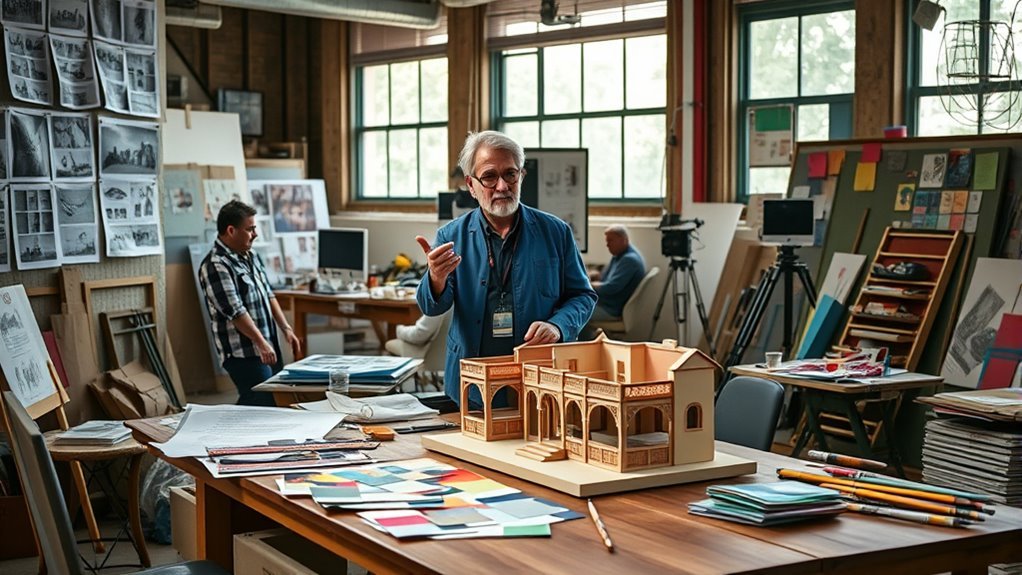
As an art director in film, you play a crucial role in shaping the visual world of a movie. You bring creative ideas to life by designing sets, props, and costumes that align perfectly with the director’s vision. This means turning concepts into tangible elements that audiences will see on screen.
You start by developing sketches and mood boards to set the tone and style. Then, you oversee set construction to make sure everything looks just right.
Plus, you keep a close eye on the budget and schedule to avoid any surprises.
Managing your team is a big part of the job, too. From pre-production through filming and into post-production, you ensure the visual look stays consistent and polished.
Curious about how you balance all this creativity with practical realities? There’s a lot more to discover in the role of an art director.
Key Takeaways
- Develops and oversees visual concepts, including set design, props, and costumes, to align with the director’s vision.
- Manages the art department’s schedule, budget, and workflow throughout pre-production, filming, and post-production.
They keep everything running smoothly behind the scenes. It’s all about making sure the visuals match what the director wants.
- Supervises set construction and dressing during filming to ensure visual consistency and quality.
- Coordinates with other departments like SFX, locations, and props to support cohesive visual storytelling.
Basically, they’re the go-to person for making sure all the visual pieces fit together perfectly.
– Reviews and refines visual elements in post-production to maintain design integrity and enhance the film’s look.
This final step helps polish the overall appearance and keeps the film looking great from start to finish.
Art Director Responsibilities Throughout Film Production
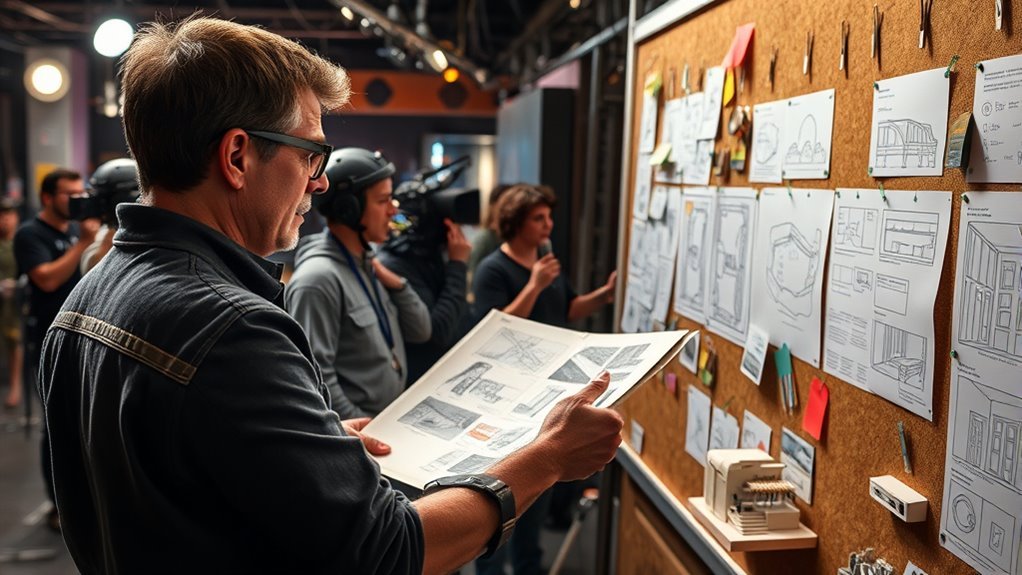
While films unfold on screen, art directors work behind the scenes throughout the entire production process to bring the director’s vision to life. You start by developing visual concepts during pre-production, creating sketches, and overseeing set design, props, and costumes.
Managing the art department’s production schedule and budget management is essential to keep everything on track. As filming begins, you take charge of supervising sets, guaranteeing set construction and dressing align with the intended look.
You constantly maintain visual consistency by coordinating departments like locations, SFX, and props to support the film’s aesthetic. Your role doesn’t end when filming wraps; during post-production review, you verify that all visual elements remain cohesive with the original design concept.
How Film Art Directors Balance Creativity, Budgets, and Collaboration

Although creativity drives the art director’s vision, you must constantly balance it with budget limits and practical collaboration. As an art director, your role is to translate the creative vision into a feasible set design that respects budget constraints without sacrificing visual style.
You develop detailed visual concepts like sketches and mood boards to guide the team, ensuring your creative vision aligns with cost management goals. Collaboration is key—you coordinate closely with the production designer, construction crew, and props department to maintain visual storytelling consistency.
Effective team coordination helps you oversee material procurement and supervise set construction, keeping the project on budget. By communicating openly with directors and crew, you navigate the challenges of blending artistry with financial realities.
Balancing creativity, budgets, and collaboration ultimately strengthens your ability to deliver compelling, cost-effective designs that bring the film’s story to life.
Frequently Asked Questions
What Is the Hardest Job in Film?
The hardest job in film is often the production designer. You’ll juggle the entire visual concept, coordinate departments, and manage tight budgets.
Plus, you have to handle unexpected issues—all while making sure the sets look stunning and cohesive. It’s a lot to balance, especially under pressure.
And on top of that, everything has to match the director’s vision perfectly. It’s definitely a tough gig!
Do Art Directors Get Paid Well?
You might think art directors struggle financially, but they actually get paid well. With median salaries around $121,830 and potential for much more, especially on big projects, your expertise in this role is definitely valued and rewarded.
It’s pretty clear that being an art director pays off. So, if you’re thinking about this career, know that the financial side can be quite rewarding!
What Are the Duties of an Art Director?
You oversee the film’s visual style and manage the art team. You also create concept art and coordinate with other departments.
Your job is to make sure sets, props, and costumes all align with the director’s vision. Basically, you keep everything looking consistent throughout filming.
Is Art Director Stressful?
You’ll face stress juggling tight deadlines and unexpected set issues, yet you’ll find joy in creative teamwork.
It’s tough, but the thrill of shaping a film’s look makes the pressure worthwhile.
Conclusion
As an art director in film, you’re the captain steering the visual ship through creative waves and budget storms. You blend imagination with practicality, turning abstract ideas into tangible worlds that captivate audiences.
Your role is a dance of collaboration, balancing artistic vision with the realities of production. It’s about working closely with directors, designers, and the entire crew to bring a cohesive look to the film.
Embrace the challenge, because every frame you shape paints the story’s soul. The art director’s touch is what makes the film’s environment believable and immersive.
In the end, an art director in film is essential for creating the visual style and atmosphere that support storytelling. Your work influences set design, props, and overall aesthetics, making sure everything fits the director’s vision while staying within budget. This role is truly where creativity meets practical filmmaking, crafting the magic that stays with audiences long after the credits roll.