How to Make an Art Portfolio for College in 7 Steps
To make a strong college art portfolio, it’s important to first understand each school’s specific requirements and deadlines. Every college might ask for different things, so do your homework to avoid missing out on key details. Knowing what they want helps you tailor your portfolio perfectly.
Next, gather your best 10-15 pieces that showcase technical skill, creativity, and variety in mediums and styles. Including themed or narrative works can really add depth and show your unique perspective. It’s all about making your portfolio stand out.
Organize your portfolio logically with high-quality images and physical prints if needed. Presentation matters just as much as the art itself. Don’t hesitate to seek feedback from mentors and revise accordingly—it can make a huge difference.
Finally, keep updating your portfolio to reflect your growth over time. Following these steps sets you up for success, and there’s always more to explore about perfecting your submission.
Key Takeaways
– Research each college’s portfolio requirements and deadlines to tailor your submission accordingly.
This way, you’ll know exactly what they’re looking for and can avoid missing any important details. Staying organized with deadlines is a huge help, too.
– Select 10-15 high-quality, diverse artworks showcasing technical skills and artistic versatility.
Try to include a range of styles and mediums if possible. This shows you’re adaptable and skilled in different areas.
– Include pieces with clear themes or narratives to demonstrate conceptual thinking and originality.
Colleges love seeing work that tells a story or has a deeper meaning behind it. It really sets you apart.
– Organize artworks logically with strong opening pieces and include process work to highlight your creative development.
Think about the flow of your portfolio—it should feel natural and engaging. Including sketches or process shots can give insight into how you think and create.
– Seek feedback from mentors and revise your portfolio regularly to ensure cohesion and polish.
Don’t be afraid to ask for opinions and make changes. A fresh perspective can help you catch things you might’ve missed and make your portfolio shine.
Understand College Portfolio Requirements and Goals

Before you begin creating your art portfolio, make certain you thoroughly research each college’s specific requirements, including the number of pieces, preferred media, and submission formats. Understanding portfolio requirements is essential to meet submission guidelines and avoid disqualification.
Your portfolio should showcase both your technical skill and conceptual development, tailored to the school’s focus. Review accepted portfolio examples from your target colleges to grasp their presentation standards and media preferences. This helps you align your work with their expectations while maintaining originality and your unique artistic voice.
Showcase your skills and creativity while aligning with each school’s artistic focus and presentation standards.
Don’t forget to track application deadlines and required documents to submit your portfolio on time. By knowing these details upfront, you guarantee your portfolio not only complies with each school’s rules but also highlights your strengths effectively.
Your goal is to balance creativity with clear adherence to guidelines, making your application stand out for all the right reasons. Keep these tips in mind, and you’ll be on the right track!
Gather and Select Your Strongest Artwork
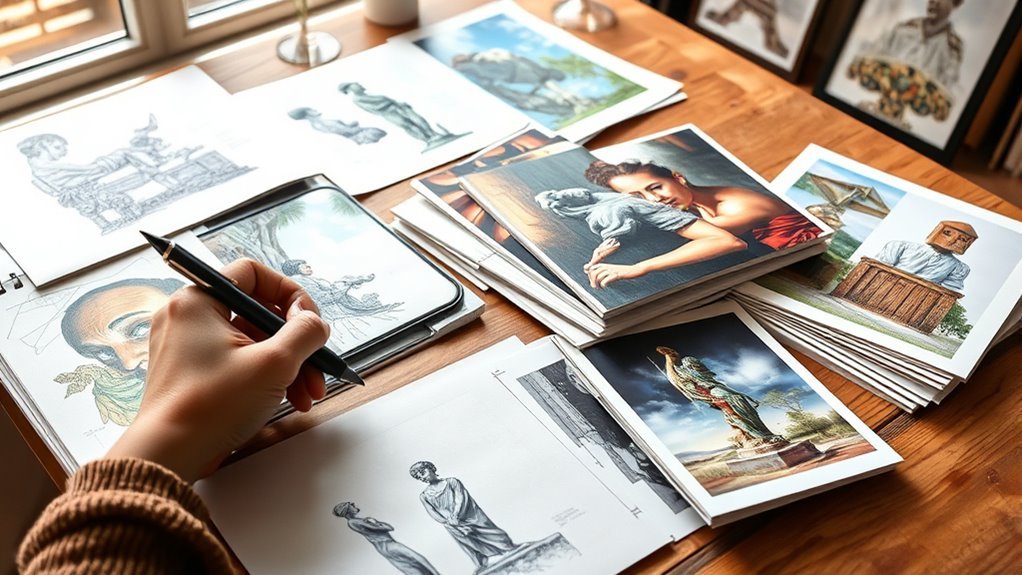
Focus on selecting your strongest pieces rather than filling your portfolio with too many works. Choose a variety of techniques and media to show your range and adaptability.
This approach helps create a balanced, high-quality collection that truly represents your skills. It’s all about quality over quantity, you know? So pick the works that really stand out and show what you’re capable of.
Prioritize Quality Over Quantity
Choosing around 10 to 15 of your strongest pieces will help you create a portfolio that truly showcases your skills. Focus on quality by selecting works that highlight your craftsmanship, strong composition, and thoughtful concepts.
Avoid overwhelming reviewers with too many pieces; a cohesive and curated selection leaves a more refined and lasting impact. Regularly edit your portfolio to replace weaker works with recent pieces that better represent your abilities.
This process guarantees your portfolio stays fresh and relevant while maintaining a high standard. Remember, a smaller collection of well-crafted, strong pieces speaks louder about your talent than a large, unfocused assortment.
Showcase Diverse Techniques
While putting together your portfolio, include your strongest pieces that showcase a variety of techniques and skills across different media. Demonstrating diverse techniques in your art portfolio highlights your technical skills and creative approaches.
Balance traditional art, digital art, and experimental techniques to reflect your versatility. Prioritize fully resolved works, ensuring each piece contributes to a cohesive narrative of your artistic growth.
Thoughtful portfolio curation with media variety strengthens your presentation and impresses admissions.
| Art Mediums | Creative Approaches |
|---|---|
| Traditional Art | Realism, Abstract |
| Digital Art | Illustration, Animation |
| Experimental Techniques | Mixed Media, Collage |
This mix of art mediums and styles enriches your portfolio, showing adaptability and mastery across multiple disciplines.
Showcase Variety in Mediums, Subjects, and Styles

Showcasing a variety of mediums, subjects, and styles can considerably boost your art portfolio’s appeal. By including different mediums like digital art, traditional sketches, and mixed media, you demonstrate your adaptability and technical skill.
Exploring a range of subjects—portraits, landscapes, abstracts—shows your ability to handle diverse themes. This enriches the creativity and depth of your visuals.
Varying styles within your portfolio highlights your versatility and willingness to experiment. It makes your work stand out.
Focus on presenting a balanced diversity that reflects your unique artistic voice:
- Use multiple mediums to reveal your technique and adaptability.
- Include a broad range of subjects to display your creative range.
- Experiment with different styles to create a dynamic and cohesive collection.
This variety signals to admissions committees that you’re both skilled and willing to push boundaries. It makes your portfolio a powerful representation of your artistic potential.
Include Conceptual and Narrative Work to Demonstrate Creativity
Including conceptual and narrative work lets you communicate ideas and stories through your art, making your portfolio more compelling. By featuring pieces with clear themes or a strong message, you reveal your creative thinking and originality.
Try using series or sequences to build storytelling and show your conceptual development. It’s a great way to keep your work connected and meaningful.
Incorporate works that express your artistic voice, whether through personal experiences or social commentary. This adds emotional depth and helps your art resonate with viewers.
Balancing technical skill with these elements ensures your portfolio feels polished and thoughtful. It’s all about showing both your craft and your unique perspective.
| Aspect | Purpose | Example |
|---|---|---|
| Conceptual Work | Show creative thinking | Abstract interpretations of social issues |
| Narrative Work | Tell a story | A series depicting a personal journey |
| Themes | Connect pieces | Identity, growth, or conflict |
| Message | Convey meaning | Environmental awareness |
| Emotional Depth | Engage viewers emotionally | Portraits expressing vulnerability |
This approach highlights your originality and really strengthens your portfolio’s impact.
Organize Your College Art Portfolio for a Clear Narrative
To create a compelling college art portfolio, you need to arrange your artworks in a clear, logical order that highlights your artistic growth and skills. Thoughtful portfolio organization guarantees your sequence of work forms a strong visual narrative, showcasing your artistic skill and conceptual development.
Start by grouping themes or techniques to create a cohesive presentation that guides viewers through your creative process. This approach not only reveals your evolving ideas but also emphasizes your best work showcase.
Keep these tips in mind:
- Begin with impactful pieces to grab attention immediately
- Use connectors between artworks to illustrate your conceptual development
- Include process sketches alongside finished pieces to highlight your creative process
Take Great Photos and Prepare Digital and Physical Versions
Capturing your artwork with great photos is essential for making a strong impression. Start your artwork photography with natural, even lighting and a plain background. This helps avoid shadows or distractions.
Keep your camera steady and maintain a consistent distance. This way, you get sharp, high-quality images that show colors and details accurately. When editing, just adjust white balance and sharpness—skip filters to keep things authentic.
For your digital portfolio, organize high-resolution files with clear filenames. Crop images carefully to highlight your work. This kind of image organization makes it easier for admissions to navigate your portfolio.
When it comes to your physical portfolio, print on quality paper and protect your pieces with binders or plastic sleeves. This keeps your artwork documentation looking pristine.
Get Feedback and Refine Your Portfolio Before Submission
Although creating your portfolio takes time and effort, getting feedback is essential to making it stronger before submission. Seek honest critique from art teachers, mentors, or trusted peers to identify strengths and areas for improvement.
Take advantage of portfolio review events or National Portfolio Day to gain professional input from college representatives. Use their assessment to refine your artworks, enhance presentation, and guarantee your portfolio reflects your best skills and ideas.
To guide your portfolio refinement, focus on reviewing your portfolio multiple times for clarity, cohesion, and consistency. Incorporate constructive critiques to make meaningful revisions.
And don’t forget to regularly update your portfolio to demonstrate growth and adaptability. This process of feedback, review, and revisions leads to continuous improvement.
It helps you submit a polished, cohesive portfolio that stands out and accurately represents your artistic vision.
Frequently Asked Questions
How to Build a Portfolio for Art College?
You’ll choose 10-12 strong pieces showing your skills and style, use clear labels, and present high-quality images.
Make sure to follow each college’s requirements and get feedback to polish your portfolio before submitting.
What Are the 7 Steps of Art?
Ever wondered how artists bring ideas to life? The 7 steps of art are concept development, composition, value studies, color exploration, refinement, final execution, and presentation.
You’ll follow these to create stunning, complete artworks from start to finish. It’s like a roadmap for turning your vision into reality. Each step helps build on the last, making sure your art truly shines.
What Are the 7 Elements of Art College?
The 7 elements of art are line, shape, form, space, value, texture, and color. You’ll use these to create balanced compositions, express ideas clearly, and develop your skills across different media in college art programs.
It might sound like a lot, but once you get the hang of them, they become second nature. These basics help you see and create art with a sharper eye. Plus, mastering them gives you a solid foundation no matter what kind of art you want to make.
What Is the 70 30 Rule in Art?
The 70/30 rule means you should show 70% technical skill and craftsmanship in your art, while 30% highlights your creativity and original ideas.
Balancing both helps you impress viewers with skill and innovation. It’s all about mixing solid technique with your unique touch.
Conclusion
By following these steps, you’ll create a portfolio that truly represents your artistic journey. Imagine Sarah, a student who included diverse pieces—from charcoal sketches to digital art—and organized them to tell her story.
Her thoughtful presentation impressed the admissions team and earned her a spot at her dream college. With careful selection, clear organization, and honest feedback, you’ll build a portfolio that stands out and opens doors to your future in art.
Remember, making an art portfolio for college is all about showcasing your skills and personality. Include a variety of work to highlight your versatility, and arrange everything in a way that flows naturally. Don’t forget to ask for feedback—it’s key to refining your portfolio. By putting in the effort to create a well-rounded, authentic portfolio, you’ll make a strong impression on admissions committees and take a big step toward your artistic goals.