How to Make Prints of Your Art to Sell in 5 Easy Steps
To make prints of your art to sell, start by capturing sharp, high-resolution photos in natural light. This ensures your artwork looks its best and captures all the fine details. Good lighting is key to getting those vibrant colors just right.
Next, prepare your digital files with proper resolution and color adjustments. This step is crucial to make sure your prints come out looking exactly like your original art. Don’t rush this part—it can make all the difference in quality.
Then, find a reliable printer by checking reviews and ordering proofs to guarantee quality. A trustworthy printer will help your prints look professional and consistent. It’s worth investing time here to avoid surprises later.
Set competitive prices based on edition type and size. Think about what similar artists charge, and factor in your costs.
Finally, focus on online sales to reach more buyers. Selling online opens up a whole new audience who’ll appreciate your art.
Follow these steps, and you’ll soon open detailed tips to refine each part of the process.
Key Takeaways
– Capture high-quality photos of your artwork using a ≥12 MP camera in natural, indirect light with a steady setup.
Make sure the lighting is soft and even to avoid harsh shadows. A tripod can really help keep your shots sharp.
– Prepare digital files at ≥300 DPI, adjusting sharpness and color, and save in PNG or JPEG with sRGB profile.
This ensures your prints look vibrant and true to the original. Always double-check the colors before finalizing.
– Choose between limited edition or open edition prints based on exclusivity and accessibility goals.
Limited editions give your art a special touch of exclusivity, while open editions let more people enjoy your work. Think about what fits your brand best.
– Find reputable printers, request proof prints, and compare samples to ensure print quality matches your artwork.
Don’t hesitate to ask for test prints first. It’s worth the effort to make sure the colors and details come out just right.
– Price prints strategically between $20-$60 for general sales, higher for limited editions, and sell via online platforms.
Research what others charge for similar work, and choose platforms that suit your audience. A good price can make all the difference!
Why Making Art Prints Matters and How to Start
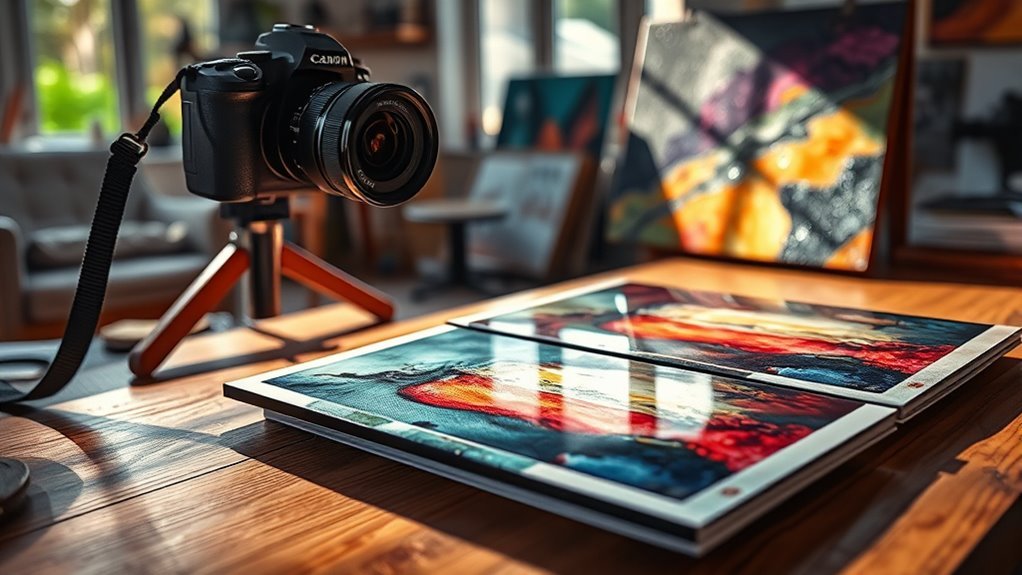
Although creating original art is rewarding, making prints lets you share your work with more people and boost your income. When you produce prints of your artwork, you extend its reach beyond the original piece, allowing a wider audience to enjoy and appreciate your creativity.
This means you can sell your art at more affordable prices while still maintaining the value of your originals. Starting with high-quality photos is essential to guarantee your prints look professional and vibrant.
You’ll want to decide whether to offer limited edition prints, which add exclusivity and authenticity, or open editions to reach even more buyers. Using the right materials and printing methods will also protect your prints’ longevity and quality.
How to Capture Great Photos of Your Art
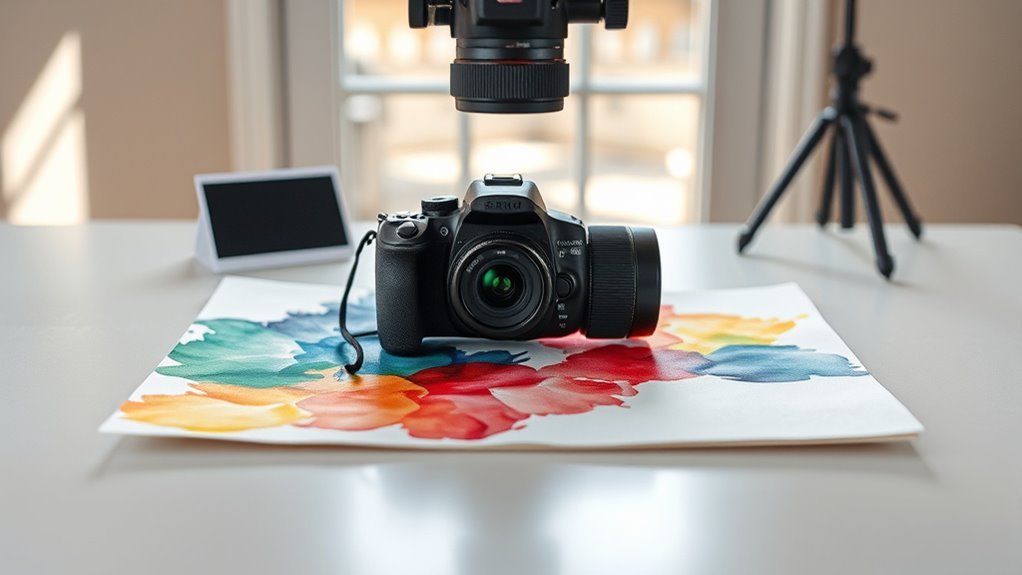
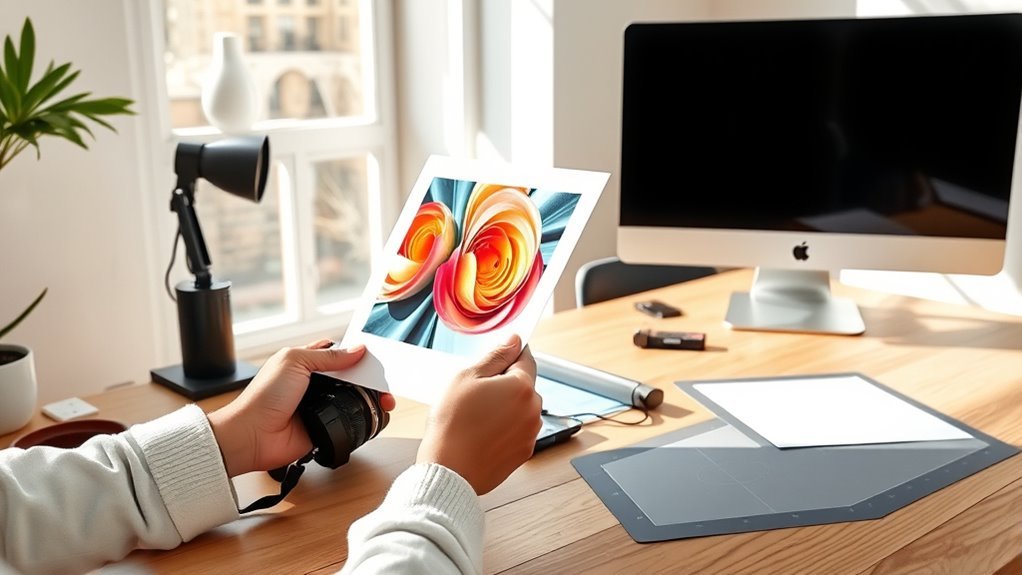
Sharing your art through prints begins with capturing high-quality photos that showcase every detail and color accurately. Use a high-resolution camera or smartphone with at least 12 megapixels to guarantee sharpness and clarity.
Position your artwork in soft, indirect natural lighting to avoid glare and harsh shadows—skip the flash, as it can distort colors. Keep your camera steady with a tripod or stabilizer, and make sure your piece is level and centered in the frame.
Use soft natural light, avoid flash, keep your camera steady, and ensure artwork is level and centered.
Take multiple shots from different angles and distances to find the best composition and focus. Don’t hesitate to experiment a bit; sometimes the perfect shot comes from trying something new.
Review your images carefully, selecting one with accurate colors and crisp focus. Finally, use photo editing software to fine-tune brightness, contrast, and color balance, making certain your digital image faithfully represents the original artwork.
Getting Your Digital Files Ready for Print
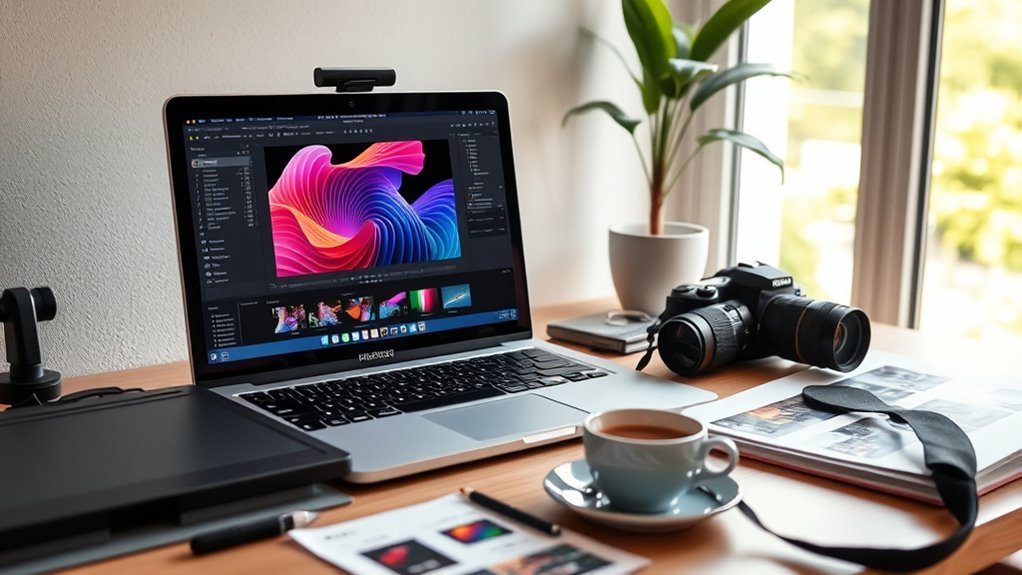
Before you send your artwork off to print, you’ll need to prepare your digital files carefully to guarantee they reflect your original piece perfectly. Start by using a high-resolution scanner or camera (at least 300 DPI) to capture detailed digital images.
Then, use photo editing software to adjust sharpness and ensure color fidelity matches your original artwork. Pay attention to resolution and make sure your file dimensions fit the desired print size.
Save your digital files in appropriate file formats like PNG or JPEG, and apply the sRGB color profile for consistent color across devices and printers. Finally, review and proof your files by comparing them to your original piece to catch any discrepancies before printing.
Where to Find Printers and How to Order Proofs
Where can you find a reliable printer that brings your artwork to life with true color and sharp detail? Start by seeking recommendations from fellow artists or photographers, and check online reviews to discover reputable printers, whether local or online.
Once you’ve identified potential options, verify their portfolio and ask for sample prints to assess print quality and color accuracy before committing.
Next, contact your chosen local printer to inquire about their proofing process, turnaround times, and costs. Don’t hesitate to order proofs—request printed proofs or test runs of your artwork to evaluate color fidelity, paper quality, and overall appearance firsthand.
Ordering multiple proofs can help you compare materials or sizes to ensure the final product meets your standards. By carefully selecting printers and thoroughly reviewing sample prints during the proofing process, you’ll ensure your art prints truly reflect your vision and maintain high quality for your customers.
Setting Prices and Selling Your Art Prints
Although pricing art prints can feel challenging, setting the right price is essential to attract buyers while valuing your work properly. When selling art prints, aim for a pricing strategy between $20 and $60 to maintain perceived value and appeal to a broad audience.
Offering limited editions allows you to price prints over $100, creating exclusivity and boosting profit margins. Consider your target audience’s income and preferences to keep prices competitive and affordable.
Using tiered pricing for different print sizes or materials maximizes your sales opportunities, giving buyers options that fit their budget. Focus on online sales platforms to reach a wider market, but regularly review and adjust your prices based on demand, sales performance, and production costs.
This flexibility helps you optimize profitability and stay responsive to your audience. With these strategies, you can confidently set prices that reflect your art’s worth while encouraging sales.
Frequently Asked Questions
How Do I Turn My Art Into Prints to Sell?
You’ll digitize your art with a high-resolution scanner or camera, then edit the image to make sure the colors are accurate.
Next, you’ll want to choose a quality print medium that really shows off your work. Partnering with a trusted printer is key to getting great results.
After that, sign and number your prints. It’s a simple step that can really boost their value and appeal.
What Are the 5 Steps of Art?
Think of creating art like baking a cake: you start with ideation (gathering ingredients), sketching (mixing), refining (adjusting flavors), coloring (baking), and finishing (decorating).
You’ll build your masterpiece step by step, just like a perfect cake. It’s all about layering each part carefully and enjoying the process along the way.
What Kind of Art Prints Sell Best?
You’ll find art prints of popular subjects like landscapes, floral designs, and pets sell best. Limited editions, high-quality reproductions, and trending themes also attract buyers.
Stick to versatile sizes like 8×10 or 11×14 for easier framing. That way, it’s simpler for people to find frames, which makes your prints more appealing.
How to Start Making Art Prints?
Did you know 70% of buyers prefer limited editions? Start making art prints by digitizing your work at 300 DPI.
Then, choose archival materials and partner with trusted printers. This way, you create authentic, high-quality prints that collectors will love.
It’s easier than you think once you get started!
Conclusion
Now that you’ve mastered these steps, your art prints can soar like vibrant birds, reaching new homes and hearts. Every print you create is a ripple in the vast ocean of creativity, carrying your passion far beyond the canvas.
Keep capturing, preparing, and sharing your work with confidence. Remember, your art isn’t just a product—it’s a story waiting to be told, one print at a time.
Your journey has just begun! With each print you sell, you’re not only showcasing your talent but also building a connection with art lovers everywhere. So get ready to make your mark in the world of art prints and watch your creativity flourish.