What Is Wabi Sabi Art and How Do You Begin?
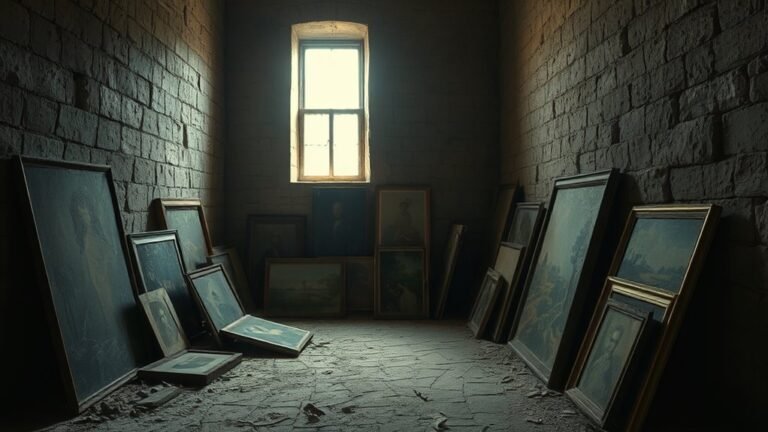
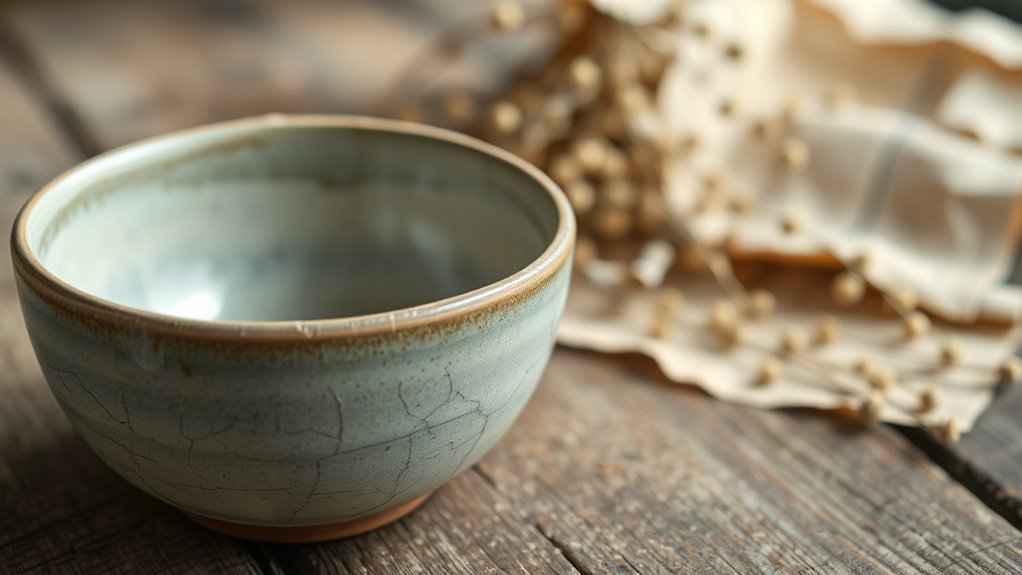
Wabi Sabi art celebrates the beauty found in imperfection, simplicity, and natural aging. It’s all about embracing organic textures, muted earthy tones, and asymmetry. You’ll find charm in flaws and irregularities, which makes each piece unique and meaningful.
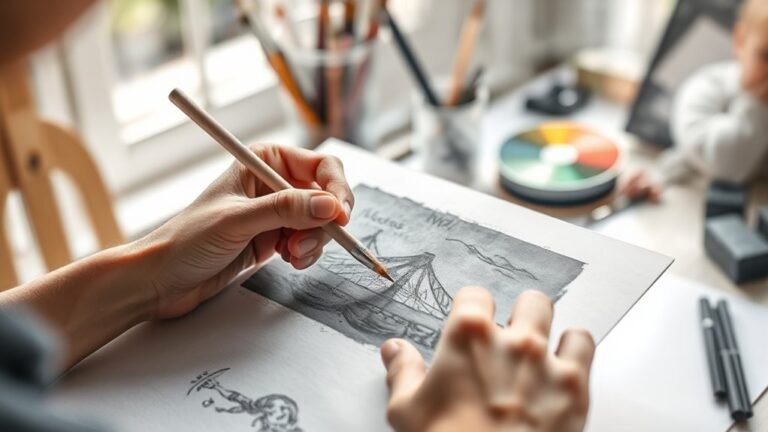
Start by choosing natural, aged materials like clay or handmade paper. Then, focus on minimalism and authenticity without overworking your piece. Let your creative process flow naturally—don’t stress about making it perfect.
This art form values impermanence and the passage of time. Keep practicing, and you’ll uncover deeper ways to connect with this timeless Japanese aesthetic.
Trust me, once you get into it, Wabi Sabi art becomes more than just creating—it’s a whole way of seeing the world.
Key Takeaways
- Wabi Sabi art celebrates beauty in imperfection, transience, and natural aging of materials like wood, clay, and stone. It emphasizes simplicity, asymmetry, and authenticity, valuing irregularity and minimalism in composition.
- Use muted, earthy tones and focus on subtle textures, flaws, and organic, weathered surfaces in your art. Select natural, aged materials such as handmade paper or clay and avoid overly refined or polished finishes.
- Begin by embracing imperfection. Let your creative process evolve naturally, with mindfulness and respect for aging. It’s all about appreciating the beauty in things that aren’t perfect or permanent.
What Is Wabi Sabi Art? Understanding Its Meaning and Value
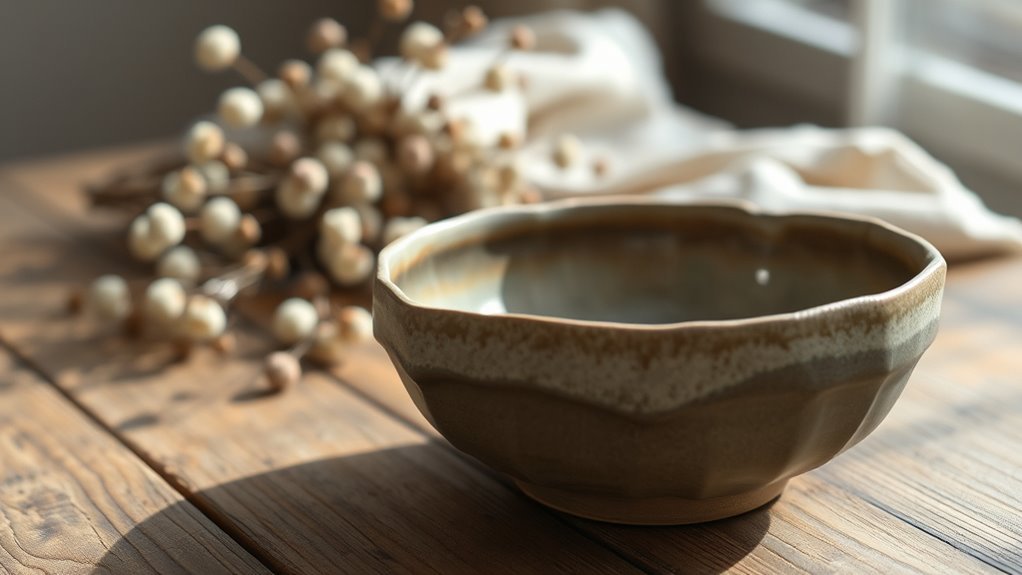
What makes Wabi Sabi art so enthralling? It’s the way it finds beauty in imperfection and transience, rooted deeply in Japanese aesthetics.
When you explore Wabi Sabi, you embrace simplicity and authenticity, appreciating how natural materials like wood, clay, and stone age gracefully over time.
Embracing simplicity and authenticity, Wabi Sabi honors the graceful aging of natural materials like wood, clay, and stone.
You’ll notice irregularity and asymmetry aren’t mistakes but essential elements that highlight the art’s unique charm. This philosophy encourages you to see beauty in the incomplete and weathered, celebrating life’s fleeting moments.
Wabi Sabi art invites you to slow down and connect with the subtle textures and flaws that tell a story. It reminds you that true beauty often lies in imperfection and the passage of time.
It’s a mindful celebration of authenticity and natural aging.
How to Create Your Own Wabi Sabi Art: Simple Steps to Get Started
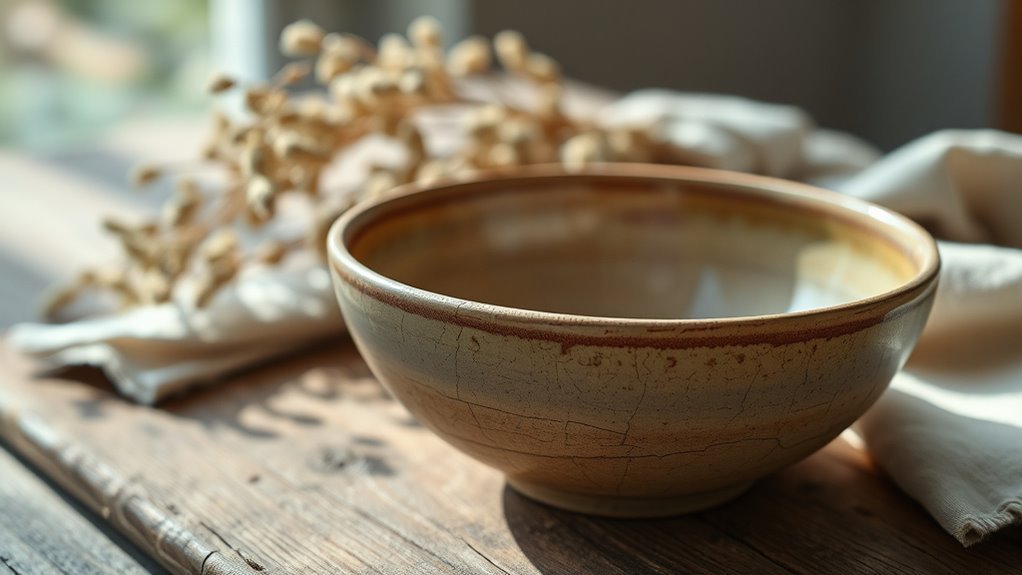
Although creating Wabi Sabi art may seem simple, it requires a mindful approach that embraces imperfection and natural aging. Start by choosing natural materials like clay or handmade paper that showcase aging and organic forms.
Focus on simplicity and minimalism, highlighting one or two authentic elements. Embrace asymmetry and visible flaws to celebrate imperfection.
Use muted, earthy tones and avoid overworking your piece. Let the creative process evolve naturally, respecting the beauty in aging and irregularities.
| Step | Focus Area |
|---|---|
| Select Materials | Natural & aged |
| Composition | Simplicity & minimalism |
| Technique | Asymmetry & imperfection |
This approach honors Wabi Sabi’s core values of authenticity and natural beauty.
Frequently Asked Questions
What Are the 7 Principles of Wabi-Sabi?
The seven principles of Wabi-Sabi are simplicity, asymmetry, natural materials, weathered surfaces, irregularity, modesty, and accepting imperfection. Embrace these to find beauty in authenticity, impermanence, and the imperfect nature of life and art.
Can Anyone Create Wabi-Sabi Art?
You don’t need to be a master painter to create Wabi-Sabi art—you’re already halfway there by embracing imperfections. Just let go, experiment with natural textures, and watch your authentic, beautiful piece come to life through patience and mindfulness.
What Are Examples of Wabi-Sabi Art?
You’ll find wabi-sabi in cracked ceramics like Kintsugi, weathered Zen gardens, ink wash paintings with imperfect strokes, handcrafted faded textiles, and minimalist art focusing on natural textures, muted colors, and organic, asymmetrical forms.
How to Learn Wabi-Sabi?
They say, “Practice makes perfect.” To learn wabi-sabi, you’ll study its core principles, observe traditional art, practice mindful creation embracing flaws, use natural materials, and connect with communities or courses exploring its beauty and philosophy.
Conclusion
Now that you know what wabi sabi art is, you’re ready to embrace beauty in imperfection. Don’t stress about perfection—think of each flaw as a treasure that adds character, like finding a diamond in a sea of stones.
Start small, experiment freely, and let your creativity flow naturally. Remember, wabi sabi is all about appreciating the simple, imperfect moments.
So, immerse yourself fully and let your art tell its perfectly imperfect story! Wabi sabi art encourages us to find beauty in simplicity and imperfection, making each piece unique and meaningful. By embracing this philosophy, you can create art that feels authentic and deeply personal. Just relax, enjoy the process, and watch how your imperfect creations reveal their own special charm.