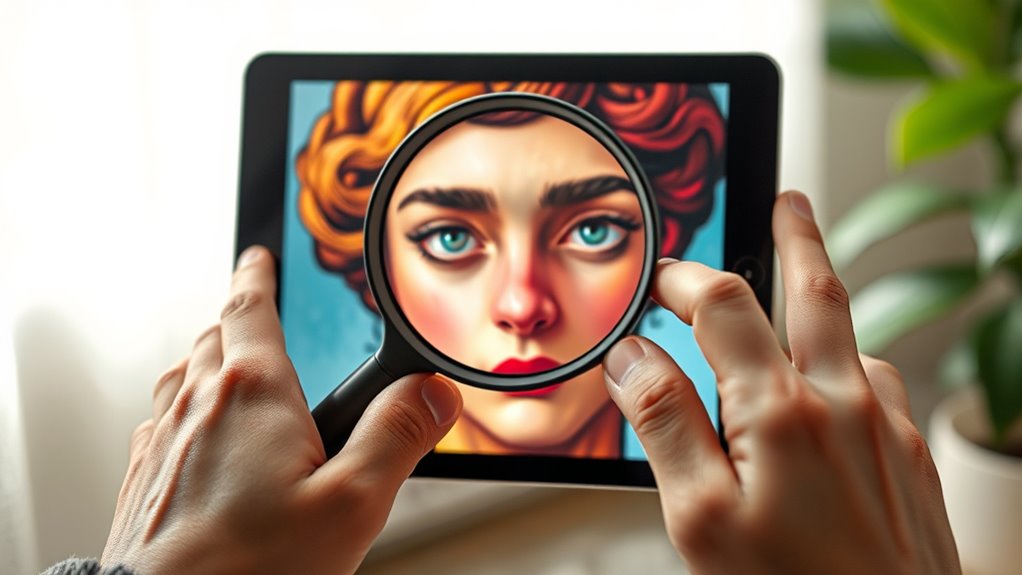
How to Spot AI Art Step by Step
You can spot AI art by first checking for unnatural textures, like overly smooth or plastic-like surfaces without real detail. AI-generated images often have this kind of texture that looks a bit too perfect or artificial.
Look closely at the face—perfect symmetry or misplaced features often signal AI. Sometimes the eyes, ears, or mouth might be a little off or not quite right. It’s subtle but noticeable once you know what to look for.
Notice any odd lighting or shadows that don’t match a single source. AI sometimes struggles with consistent light direction, so things can look weird or off.
Backgrounds might blend awkwardly or show strange objects that don’t belong.
Finally, use tools like reverse image search or metadata analyzers to confirm. These tools can help you dig deeper and verify whether an image is AI-generated or not.
Keep exploring, and you’ll uncover deeper ways to identify AI art.
Key Takeaways
- Examine textures for unnatural smoothness or overly uniform surfaces. Often, they lack the little imperfections you’d see in real life.
- Check facial features closely. Perfect symmetry or oddly placed elements can be a giveaway that AI created the image.
- Look out for lighting issues. Shadows or highlights might not line up with a single light source, which feels off.
- Spot background oddities like sudden transitions or weird blending of objects. These can be signs the image wasn’t made by a human artist.
- Don’t forget to use reverse image searches and AI detection tools. They can help confirm if the image is authentic or not.
How to Spot Visual Signs of AI Art
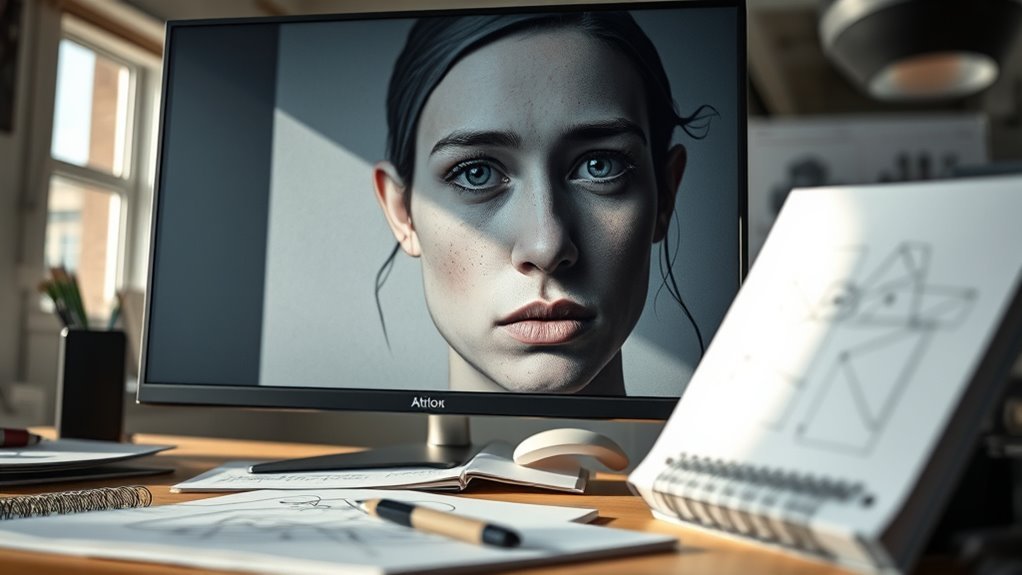
How can you tell if a piece of art was created by AI? Start by examining the visual signs carefully. Look for uncanny textures like overly smooth or rubbery surfaces lacking realistic surface detail.
Check facial symmetry—AI often creates perfectly symmetrical eyes and facial structures that feel unnatural. Inconsistent lighting is another giveaway; shadows and highlights may not align with a logical light source, resulting in odd contrasts.
Background anomalies often appear as unnatural blending where different scenes or objects meet, creating disjointed elements. Also, watch for extra limbs, fingers, or facial features—these are common AI errors.
How to Use Tools to Verify AI Art
Although visual clues can help, you should also use specialized tools to verify if art is AI-generated. Start with reverse image search engines like Google Images or TinEye to trace suspicious images.
Next, analyze image metadata using ExifTool to detect digital manipulation. AI detection tools such as WasItAI estimate if the content is AI-generated.
Compare the image against reference images from trusted sources for authenticity checks, and use online resources or forums for collective image verification.
| Tool Type | Examples | Purpose |
|---|---|---|
| Reverse Image Search | Google Images, TinEye | Trace image origin |
| Metadata Analysis | ExifTool, FotoForensics | Detect digital manipulation |
| AI Detection | WasItAI, Hivemoderation | Identify AI-generated content |
| Reference Images | Wikimedia Commons, iNaturalist | Validate authenticity |
| Online Resources | Forums, community sites | Cross-verify suspicious images |
Frequently Asked Questions
Can AI Art Be Legally Copyrighted?
You can’t legally copyright AI-generated art if no human created it. But if you contribute significant creative input, you can claim copyright. Always check your jurisdiction’s rules since laws vary and are still evolving.
How Do Artists Feel About Ai-Generated Art?
You’ll find artists feel divided about AI-generated art; some embrace it as a new tool, while others worry it threatens creativity and jobs. Your perspective might shift as you explore its impact and ethical debates firsthand.
What Are the Ethical Concerns Surrounding AI Art?
When it comes to AI art, you’ve got to take into account copyright issues, artist consent, and originality. You can’t just throw caution to the wind—using AI might blur creative boundaries and impact artists’ livelihoods unfairly.
Can AI Art Replace Human Creativity?
AI art can’t replace your unique creativity because it lacks personal experiences and emotions. You bring intuition and originality that AI mimics but doesn’t truly understand, so your creative spark remains essential and irreplaceable.
How Is AI Art Impacting the Art Market?
Imagine a gallery selling AI art like hotcakes—prices fluctuate wildly. You’ll see AI art shaking the market by lowering costs and sparking debates on value, forcing you to rethink what art truly means and who creates it.
Conclusion
You might think AI art looks just like human-made art, but with these tips, you’ll quickly spot the difference. By paying attention to subtle visual signs and using verification tools, you’ll become confident in identifying AI-generated pieces.
Don’t worry if it feels tricky at first—practice makes perfect. Soon enough, you’ll see the unique quirks AI art often has, helping you appreciate both human creativity and advanced technology.
Keep exploring and stay curious! With a little experience, spotting AI art becomes easier. Recognizing AI-generated art not only sharpens your observation skills but also deepens your understanding of digital creativity. So, whether you’re an art lover, student, or professional, these tips empower you to distinguish AI creations from human-made artwork with confidence.