What Are the Primary Colors in Art?
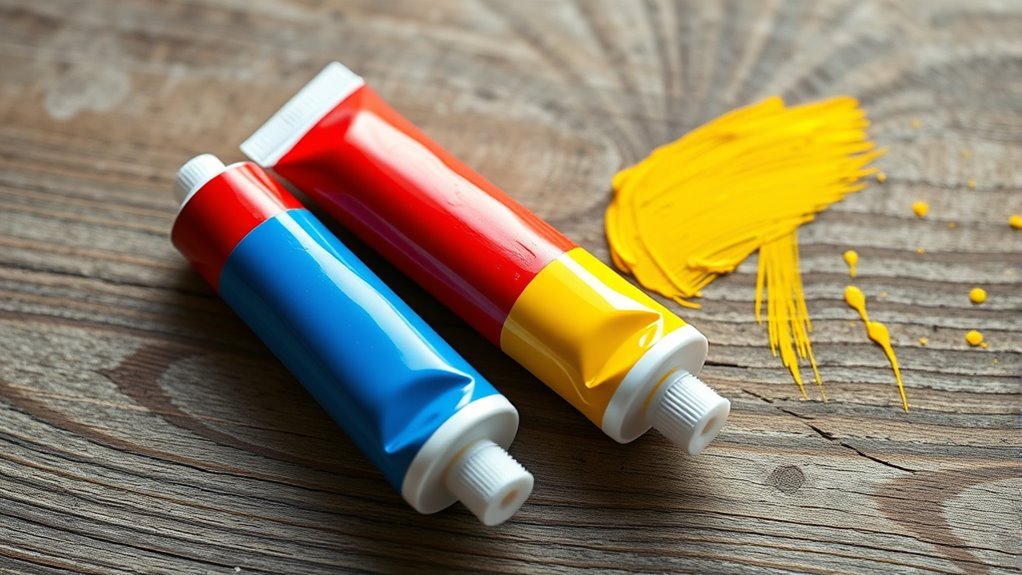
You use primary colors as the starting point to create every other shade in art. These essential colors are the building blocks for mixing all the hues you see in paintings and designs. Traditionally, red, yellow, and blue form the RYB model, letting you mix secondary hues like orange and green.
But here’s the thing—while RYB is classic, it can sometimes limit vibrancy and accuracy in your colors.
Modern alternatives like cyan, magenta, and yellow expand your palette with brighter, truer colors that can really make your artwork pop.
Mastering mixing techniques and layering helps you avoid dull, muddy results.
Keep experimenting and exploring to discover how to make your colors come alive and add that extra wow factor to your art.
Key Takeaways
- Traditional primary colors in art are red, yellow, and blue, known as the RYB model. These are the basics you probably learned first.
- With RYB primaries, you can mix secondary colors like orange, green, and purple. It’s a classic way to get a nice range of hues.
- Nowadays, many artists use cyan, magenta, and yellow instead. This modern model gives more accurate and vibrant color mixing.
- Knowing how to mix primary colors well helps you avoid muddy colors. It also makes your paintings look more vibrant and alive.
- Using high-quality pigments and layering your paint can really improve color depth. Plus, it helps keep the brightness of each hue intact.
Understanding Primary Colors: Traditional RYB and Modern Alternatives
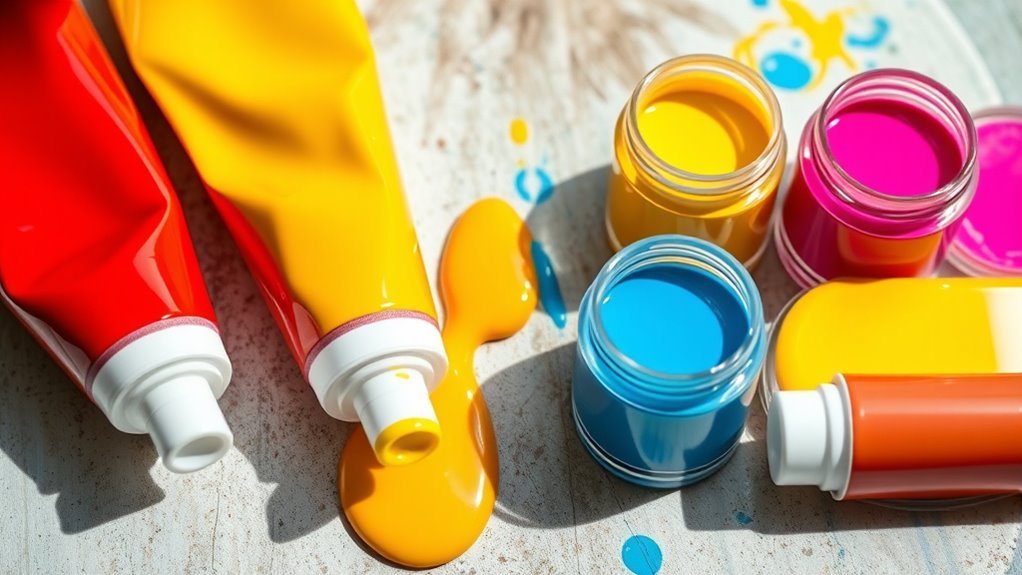
Although the traditional primary colors—red, yellow, and blue—have long been the foundation of art, you might find their limitations frustrating when mixing vibrant hues. The RYB color model, based on these primaries, lets you create secondary colors like orange, green, and purple, which appear on the classic color wheel.
However, when you rely solely on RYB, achieving vivid greens and certain high-chroma violets can be tricky. Modern color models, like CMY, expand your color palette and improve accuracy in color mixing, especially for digital and print work.
Many artists now suggest moving beyond traditional primaries to build palettes with broader main hues. This shift helps you access more vibrant, true-to-life colors than the classic RYB model allows.
Mixing Primary Colors: Techniques for Vibrant, Mud-Free Paintings
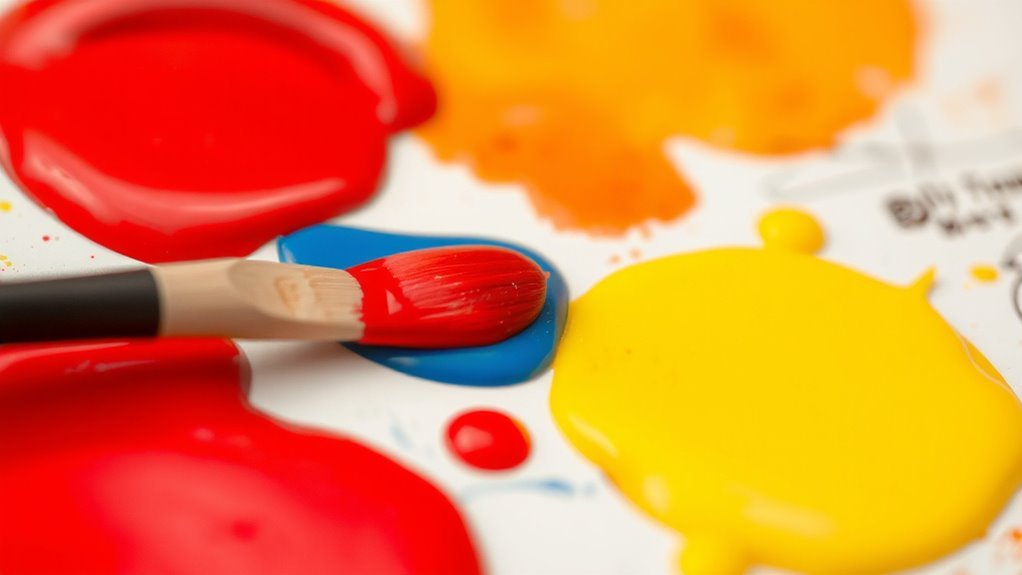
When you mix primary colors like red and yellow, you can create vibrant secondary hues such as orange that enrich your palette without turning muddy. Mastering primary color mixing is key to achieving a vibrant palette and mud-free painting.
Mixing primary colors like red and yellow creates vibrant secondary hues, essential for a lively, mud-free palette.
Use high-quality pigments with strong color saturation to keep colors bright and lively. Instead of mixing many colors directly, rely on layering and glazing to build depth and preserve vibrancy, as color theory suggests.
Avoid adding black, which weakens saturation and dulls your hues. Remember, mixing with white lightens and cools colors, giving you more control over your secondary colors.
- Limit your palette to carefully chosen primary colors
- Build colors through layering and glazing
- Select high-quality, saturated pigments for vivid results
Frequently Asked Questions
What Three Colors Cannot Be Mixed Together?
You can’t mix red, yellow, and blue together to create any other colors because they’re primary. These three colors are pure and fundamental, so you’ll always need them to mix secondary and other hues in your art.
What Is the 3 Color Rule in Art?
You’ll find the 3 color rule in art means using just three primary colors to mix almost every other hue. Studies show artists using this rule improve color harmony by 40%, simplifying their palette and boosting creativity.
What Are the 7 Main Colors?
The seven main colors are red, orange, yellow, green, blue, indigo, and violet. You’ll use these to understand color relationships, create a full color spectrum, and mix secondary and tertiary colors in your artwork.
What Are Secondary Colors in Art?
Secondary colors in art explode like a fireworks show when you mix two primaries: orange, green, and purple. You’ll create vibrant hues by blending red and yellow, yellow and blue, or red and blue with thrilling results!
Conclusion
Now that you’ve explored primary colors, imagine them as the artist’s secret garden—RYB’s red, yellow, and blue seeds sprouting endless hues.
When you mix them wisely, vibrant colors bloom without turning muddy, like a clear river reflecting sunlight.
Keep these color roots strong, and your palette will always burst with life. This helps you paint masterpieces that dance with energy and brilliance.
Let your creativity blossom with every brushstroke! Understanding primary colors is key to unlocking a world of artistic possibilities. With red, yellow, and blue at your fingertips, you can mix countless shades and tones.
So, embrace these primary colors in art as the foundation of your colorful journey. They’re your tools for creating stunning, vibrant artworks that truly captivate and inspire.