What Is an Art Appreciation Class?
In an art appreciation class, you learn to analyze and interpret artworks by exploring their composition, color, and techniques. This kind of class is all about understanding what makes art meaningful and how it connects with us.
You’ll develop skills to see beyond the surface and understand art’s cultural and historical contexts.
It’s pretty cool because this class sharpens your critical thinking and broadens your cultural awareness by connecting art to society and diverse traditions.
As you engage more deeply with visual art, you’ll discover how creativity reflects broader human experiences and values.
So, it’s not just about looking at paintings or sculptures—it’s about seeing the stories and emotions behind them.
Key Takeaways
- An art appreciation class teaches visual analysis techniques for understanding composition, color, and artistic methods. It explores major art movements, influential artists, and historical contexts shaping artistic styles.
- The class develops critical thinking by interpreting and articulating responses to various artworks. It also fosters cultural awareness by examining diverse artistic traditions and societal influences on art.
- Students gain enhanced visual literacy and a deeper emotional engagement with creative expression. It’s a great way to connect more personally with art and what it represents.
What You’ll Learn About Art Appreciation: Skills, History, and Culture
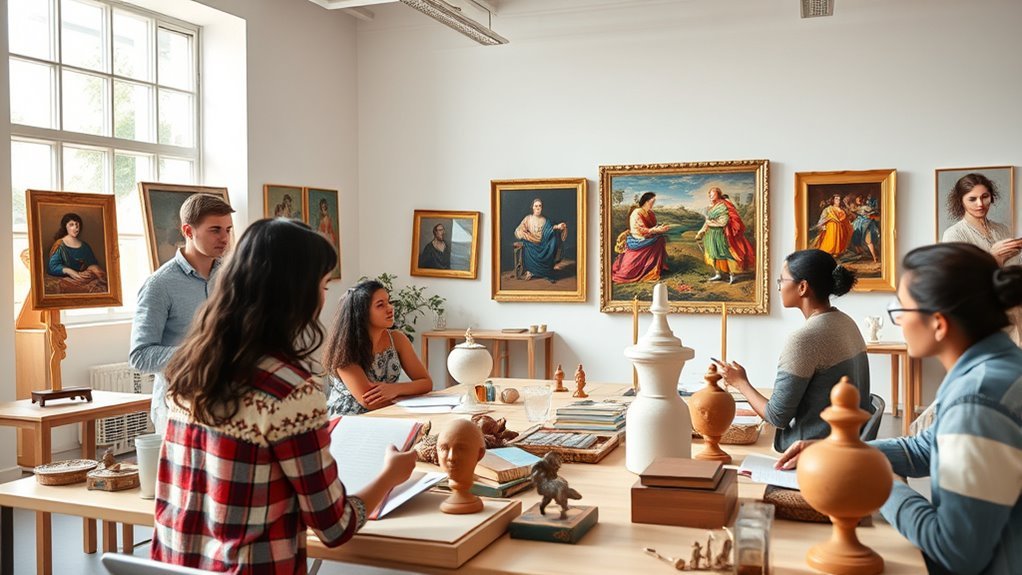
How can an art appreciation class transform the way you see and understand art? It guides you to look beyond the surface, teaching you visual analysis techniques that reveal the secrets behind composition, color, and technique.
You’ll explore art history, exploring major movements and influential artists that shaped creative expression over time. Understanding the cultural context of artworks helps you grasp the societal values and historical moments that influenced their creation.
As you learn to interpret and articulate your responses, the class sharpens your critical thinking skills, encouraging you to contemplate multiple perspectives. This process deepens your emotional engagement and helps you appreciate the expressive power of art.
Why Art Appreciation Matters: Boosting Critical Thinking and Cultural Awareness

As you learn to interpret art beyond its surface, you start to see how it sharpens your critical thinking and broadens your cultural understanding. Art appreciation classes push you to analyze and interpret visual artworks, enhancing your ability to think critically about what you see.
Interpreting art sharpens critical thinking and expands your cultural understanding through thoughtful analysis.
You’ll develop visual literacy, helping you decode the messages and techniques artists use. This skill lets you engage more deeply with art and the ideas it conveys.
At the same time, these classes expose you to diverse artistic traditions and societal contexts, boosting your cultural awareness. You gain insight into different cultures, historical moments, and social changes reflected in art.
This perspective encourages empathy as you consider various viewpoints and emotional expressions. Ultimately, art appreciation enriches your understanding of how culture shapes creativity and invites you to think more thoughtfully about the world around you.
Frequently Asked Questions
Is Art Appreciation an Easy Class?
Yes, you’ll find art appreciation easier than technical art classes since it focuses on understanding and discussing artworks rather than creating them.
You’ll analyze images, join discussions, and write reflections, making the workload manageable for most students. It’s more about thinking and talking than hands-on skills, which many find less stressful.
What Do You Expect in an Art Appreciation Subject?
You can expect to analyze diverse artworks and explore cultural and historical backgrounds. Plus, you’ll get to discuss different artistic styles.
You’ll develop visual literacy and critical thinking skills. And you’ll express your interpretations through discussions and assignments. This makes art more meaningful and engaging for you.
Why Do I Have to Take an Art Appreciation Class in College?
You’ll find that engaging with over 40,000 years of human creativity sharpens your critical thinking, broadens your cultural perspective, and enhances empathy—skills that’ll enrich both your academic journey and personal growth throughout college and beyond.
It’s pretty cool how art connects us to different times and places, right? Plus, these skills aren’t just for school; they really come in handy in everyday life too.
What Are Examples of Art Appreciation?
You’ll analyze famous artworks like *Starry Night*, visit museums, and discuss art styles in class or forums.
You might also compare movements like Impressionism and try some creative activities.
These examples help you connect deeply with art’s meaning and techniques.
Conclusion
By diving into an art appreciation class, you’ll open a treasure chest of skills and stories that color your world in new ways. It’s like learning a secret language that sharpens your mind and deepens your connection to cultures across time.
So, let your curiosity be the brush, and watch how your perspective transforms into a vibrant masterpiece of understanding and critical thinking. Art appreciation helps you see beyond the surface, unlocking the meaning behind every stroke and sculpture.
In this journey, you’ll develop critical thinking skills while exploring diverse cultures and historical contexts. An art appreciation class isn’t just about looking—it’s about experiencing art in a way that enriches your mind and soul. Embrace this chance to grow your awareness and enjoy the beauty and complexity of art like never before.