
How to Sell Art Prints in 7 Essential Steps
To sell art prints successfully, start by knowing your ideal buyers and what motivates them. Understanding your target audience is key to creating prints that truly resonate.
Prepare high-quality, clear images that highlight your prints’ details to attract attention and showcase your work’s value.
Choose platforms that match your style and audience, then craft engaging, keyword-rich listings with fair prices. This makes it easier for potential buyers to find your art.
Promote using social media and newsletters to reach more buyers and build a community around your work.
Manage orders carefully with secure shipping and transparent communication. This helps build trust and encourages positive reviews.
Build a consistent brand to encourage loyalty and repeat sales.
Keep going to uncover deeper strategies that boost your art print business.
Key Takeaways
– Identify and research your target audience to tailor prints and marketing effectively.
This way, you know exactly who you’re creating for and how to reach them best.
– Prepare high-resolution, professionally edited images and craft detailed, keyword-rich listings.
Having great visuals and clear descriptions really helps your prints stand out.
– Choose suitable sales platforms like Etsy, personal websites, or galleries for optimal exposure.
Pick the places where your audience is most likely to shop.
– Promote prints through social media, email newsletters, and collaborations to engage buyers.
Getting the word out is key, so use every channel you can.
– Ensure secure packaging, clear communication, and prompt shipping to satisfy customers and build trust.
Happy customers are more likely to come back and recommend you.
Know Who Will Buy Your Art Prints
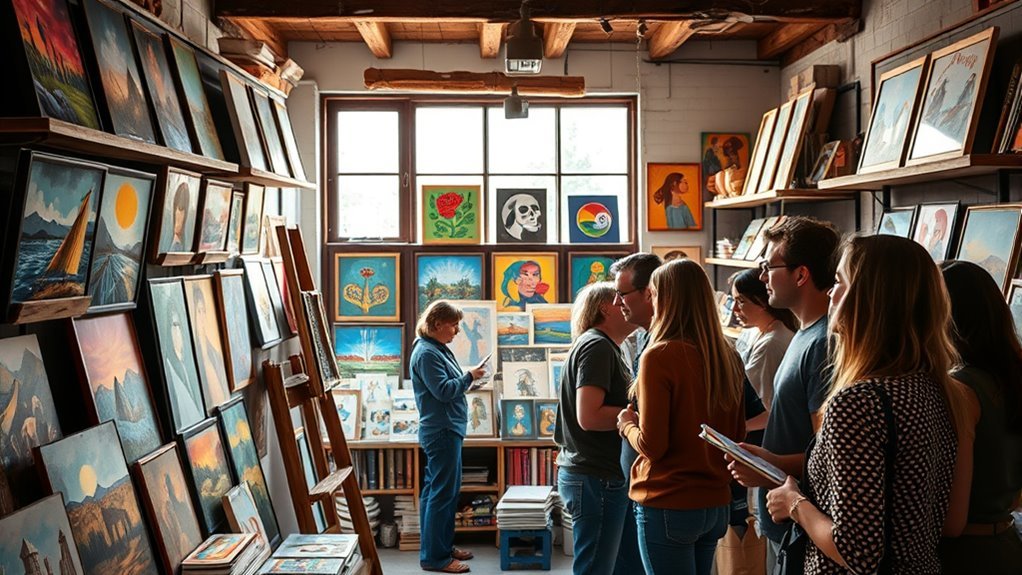
Before you start selling your art prints, you need to know who will buy them. Identifying your target buyers is essential. Take a close look at your prints’ themes and styles to see who they might appeal to—nature lovers might connect with environmental art, while interior designers may prefer abstract pieces.
Understanding the demographics of your potential audience is really helpful. Think about age, location, income level, and interests. This info helps you tailor your marketing efforts to reach the right people effectively.
Consider age, location, income, and interests to effectively target and connect with your ideal audience.
Keep in mind that different platforms attract different buyer groups. For example, Etsy draws budget-conscious collectors, whereas galleries tend to appeal to high-end investors. Also, consider why your buyers are interested—are they looking for decorative art, investment pieces, or something with personal meaning?
Use market research and feedback from past sales to get a better grasp of who’s most likely to purchase your prints. By focusing on your target buyers and their demographics, your marketing efforts will hit the mark and boost your chances of success.
Prepare High-Quality Images That Sell Your Prints
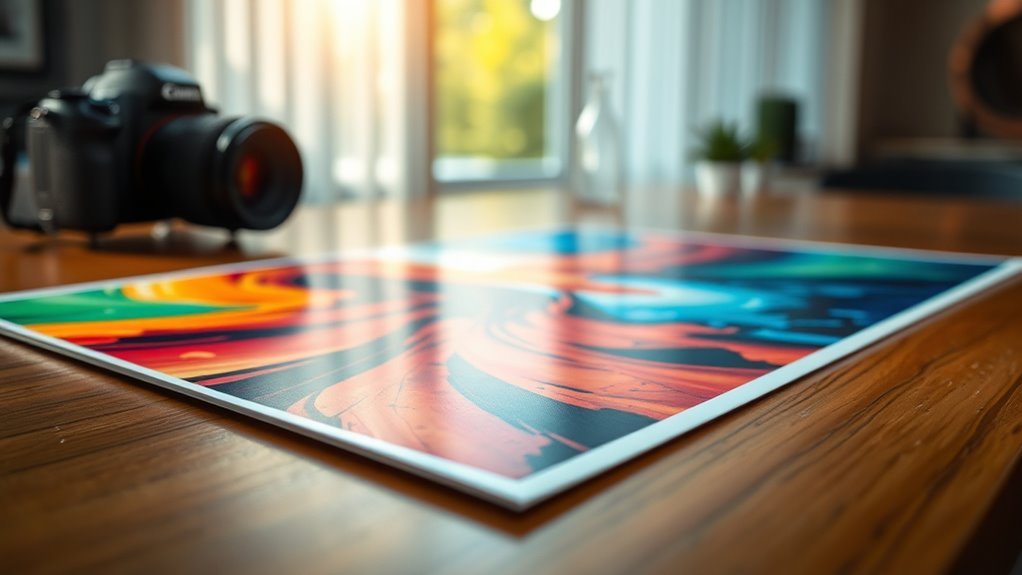
To sell your art prints effectively, you’ll need high-resolution images that capture every detail and color accurately. Consistency in your visual style helps build recognition and trust with buyers.
Focus on sharp, vibrant photos that truly represent your work. That way, your prints will stand out and attract more attention.
Image Resolution Importance
Three key factors determine whether your art prints will captivate buyers: image resolution, color accuracy, and detail clarity. To sell art prints effectively, you need high-resolution images—usually 300 DPI or higher—that capture every fine detail.
Professional photography or high-quality scanning guarantees your art prints maintain sharpness and true colors without pixelation. Use proper lighting and flat surfaces during shoots to preserve texture and vibrancy.
Investing in these techniques increases the perceived value and appeal of your prints.
| Aspect | Importance |
|---|---|
| Resolution | Sharp, detailed prints |
| Color Accuracy | Faithful reproduction of artwork |
| Detail Clarity | Preserves fine textures |
| Professional Setup | Ensures consistent quality |
| Image Quality | Prevents blurriness or pixelation |
Consistent Visual Style
Capturing your artwork with consistent lighting and a high-resolution camera sets the stage for a cohesive visual style that helps your prints stand out.
To maintain this consistent visual style, photograph or scan your artwork against a flat, neutral background. This keeps the focus solely on the piece.
Use professional editing software to adjust color, contrast, and sharpness. This ensures your images represent the original artwork faithfully.
Also, sign, date, and number your prints uniformly—typically in pencil below the image. This helps authenticate limited editions and can boost their value.
Finally, format and size your images consistently to fit the requirements of your printing and marketing platforms.
This attention to detail creates a polished, professional presentation that attracts buyers and highlights the quality of your prints.
Choose the Right Platforms to Sell Your Art Prints

When deciding where to sell your art prints, you’ll want to think about platforms that match your goals and audience. Using your own website or Shopify gives you full control over branding and pricing. But keep in mind, you’ll need to build your audience from scratch.
Etsy offers access to a large, active customer base, which makes it easier to reach potential buyers quickly. Online marketplaces like Saatchi Art or Fine Art America connect you with niche collectors who are specifically interested in art prints. This can really boost your chances of targeted art sales.
Don’t overlook physical venues—art fairs and gallery partnerships let you sell directly to engaged, in-person audiences. To maximize your exposure and sales opportunities, consider combining multiple platforms.
Craft Listings That Showcase and Price Your Prints
Although listing your art prints may seem straightforward, crafting detailed and visually appealing listings can greatly boost your sales. Use high-resolution images that truly represent your prints’ quality.
Include multiple photos from different angles and settings to help buyers visualize your art in their space. Your descriptions should be keyword-rich and highlight essential details like print size, materials, and any unique features.
Be sure to clearly display edition numbers, signing, and numbering to authenticate limited editions. When it comes to pricing, research your market to set competitive rates based on size and edition specifics.
Transparent pricing builds trust and attracts the right audience. Thoughtful listings with clear descriptions and fair pricing not only make your prints stand out but also make buyers feel confident in their purchase.
Promote Your Art Prints to Reach More Buyers
To reach more buyers, you need to actively promote your art prints through targeted strategies that connect with the right audience. Use social media platforms like Instagram and Facebook to run ads aimed at specific demographics—filter by location, age, and interests to maximize impact.
Create compelling product descriptions that highlight your print’s story, quality, and uniqueness to engage potential buyers. Incorporate limited editions or exclusive releases to generate urgency and boost sales.
Collaborate with influencers or art collectors to expand your reach and add credibility. Don’t overlook email marketing—send newsletters to notify subscribers about new prints, special offers, and upcoming sales events.
Manage Orders and Shipping for Happy Customers
You’ll want to confirm all order details and shipping addresses carefully to avoid any mix-ups. Choosing reliable carriers with tracking helps keep your prints safe and your customers informed.
Packaging your art securely and offering clear shipping updates will make buyers feel confident and satisfied. It’s all about making the process smooth and easy for everyone involved.
Efficient Order Processing
When managing your art print sales, keeping orders organized and shipments reliable makes all the difference in customer satisfaction. Use an efficient order management system to track sales, customer info, and payments in real-time.
Choose trusted shipping services that offer tracking and insurance. Automate notifications to keep buyers updated from purchase to delivery.
| Task | Best Practice |
|---|---|
| Order Management | Real-time tracking of orders |
| Shipping Services | Use insured, trackable shipping |
| Customer Updates | Automate notifications and alerts |
Clear shipping costs and policies upfront help set expectations. Securely package prints with archival paper and sturdy tubes or frames to avoid damage.
This approach streamlines your workflow and builds trust with customers, encouraging repeat business.
Reliable Shipping Solutions
How can you guarantee your art prints arrive safely and on time? Choose reliable shipping carriers like FedEx, UPS, or DHL to assure consistent delivery and tracking.
Invest in quality packaging materials—rigid tubes or flat mailers with corner protectors—to prevent damage during transit. Offering insured shipping, especially for high-value prints, protects both you and your customers against loss or damage.
Make sure to clearly communicate shipping timelines and provide tracking details promptly to keep buyers informed and satisfied. For fragile or large prints, consider specialized art shipping or white-glove services to enhance safety and professionalism.
Build Your Brand for Repeat Sales and Growth
Although selling art prints starts with creating great work, building a strong brand is what keeps buyers coming back. You need a clear brand identity that reflects your unique style and story.
Consistent branding—through logos, packaging, and messaging—helps your audience recognize and trust you. This trust drives repeat sales.
Engage regularly with your audience via social media, newsletters, or exhibitions to build relationships and loyalty. Offering exclusive or limited edition prints boosts perceived value and encourages collectors to return.
| Key Strategy | Benefit |
|---|---|
| Cohesive Visual Style | Establishes brand identity |
| Consistent Branding | Reinforces unique identity |
| Audience Engagement | Increases repeat sales |
Focus on authenticity and maintain consistent branding across all touchpoints. This approach not only attracts buyers but transforms them into loyal customers, fueling your growth.
Frequently Asked Questions
What’s the Best Way to Sell Art Prints?
You should combine selling on your website and marketplaces like Etsy. Use high-quality photos to really showcase your art.
Offering limited editions with certificates is a great way to add value. And don’t forget to promote your work via social media—it makes a big difference.
This approach boosts your reach, gives you pricing control, and builds customer trust effectively. It’s all about mixing the right platforms and strategies to get your art noticed.
What Is the 70 30 Rule in Art?
The 70/30 rule in art means you spend 70% of your time building relationships and engaging your audience, and only 30% promoting and selling.
This balance helps you create loyal fans who buy more naturally over time.
It’s all about connecting first, then letting the sales follow. Makes sense, right?
How Much to Sell 5×7 Art Prints?
You should price 5×7 art prints between $10 and $50, adjusting for quality and exclusivity. Don’t just guess—test your market and factor costs.
That way, you’re confident your price matches your art’s true value. It’s all about finding that sweet spot!
Do You Need a License to Sell Art Prints?
You don’t need a license to sell prints of your original artwork.
But if you use copyrighted images or characters owned by others, you’ll need permission or a license.
This helps you avoid legal issues when selling those prints.
Conclusion
Now that you’ve uncovered the seven essential steps to sell your art prints, the real question is—are you ready to turn your passion into profit?
Picture your art reaching walls and hearts worldwide, but it won’t happen by chance. You’ve got the tools, the know-how, and the drive.
The next move? It’s all yours. Step into the spotlight and watch your art prints transform into a thriving business.
Selling art prints takes more than just creativity—it’s about marketing smart, connecting with your audience, and staying consistent.
With these essential steps, you’re equipped to grow your art print sales and build a brand that resonates. So, why wait? Start today and watch your art prints sell, making your passion a profitable reality.