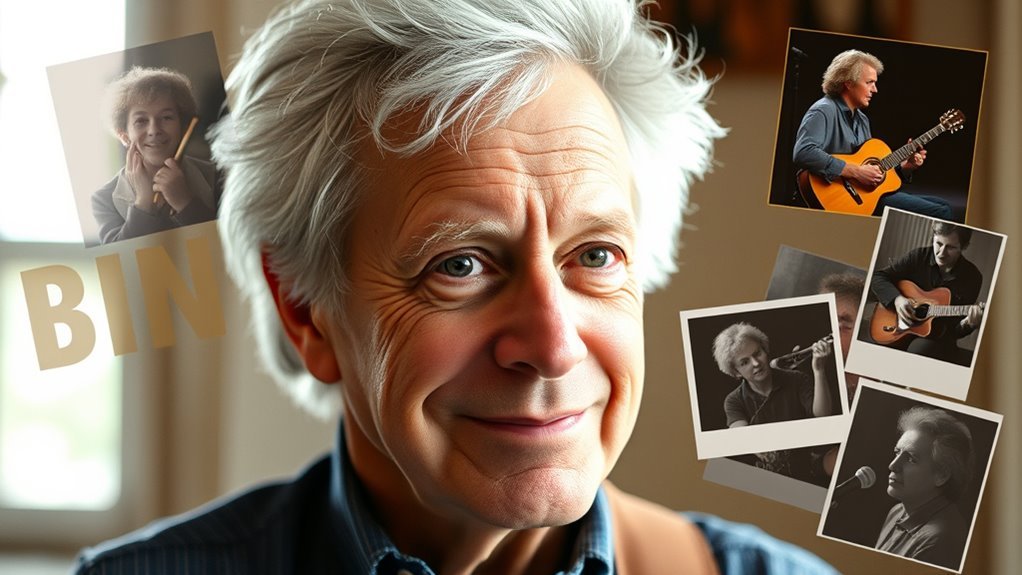
What Happened to Art Garfunkel: 10 Key Moments
You’ll see Art Garfunkel’s journey starting with Simon & Garfunkel’s rise. Then his solo success with hits like “My Little Town.” His career is packed with standout moments that show both his musical talent and personal challenges.
He faced deep personal loss when Laurie Bird died, which led to depression and creative struggles.
After vocal cord issues in 2010, he recovered and renewed his career with fresh tours and family collaborations.
His artistic growth spans poetry, film, and lasting influence. Keep exploring to uncover how these moments shaped his life and legacy. It’s a story of resilience and creativity that continues to inspire.
Key Takeaways
- Art Garfunkel gained fame with Paul Simon in Simon & Garfunkel, then launched a successful solo career with hits like “All I Know.”
- The 1979 suicide of his partner Laurie Bird deeply affected him, leading to depression and influencing his music.
- In 2010, Garfunkel suffered vocal cord paresis but fully recovered by 2014 through therapy and lifestyle changes.
- He expanded his artistry by acting, publishing poetry, and collaborating with family on recent musical projects.
- Garfunkel reunited with Paul Simon for tours, maintaining his legacy as an iconic voice in folk rock.
Art Garfunkel’s Early Breakthroughs With Simon & Garfunkel
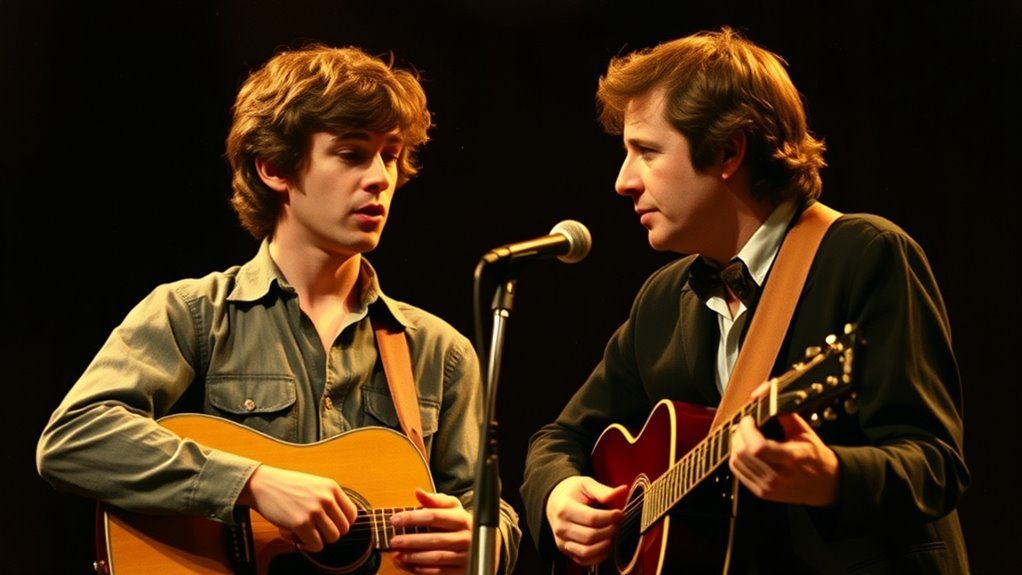
Although Art Garfunkel and Paul Simon met as early as sixth grade, their musical partnership truly began to take shape in the late 1950s when they performed as Tom & Jerry. Back then, you might have known Art Garfunkel as Artie Garr, releasing two singles that didn’t quite hit the charts.
During that time, they emulated The Everly Brothers, honing their craft while Garfunkel also pursued degrees in art history and mathematics education at Columbia University. When they reunited as Simon & Garfunkel in 1963, you’d hear their debut album, Wednesday Morning, 3 A.M., in 1964.
It didn’t gain much attention initially, but things changed dramatically when producer Tom Wilson added electric backing to their song, Sound of Silence, in 1965. That move launched the duo into the spotlight, marking the beginning of their early breakthroughs.
If you listen closely, you’ll recognize those roots in their timeless harmonies and enduring legacy.
Art Garfunkel’s Solo Career and Early Success
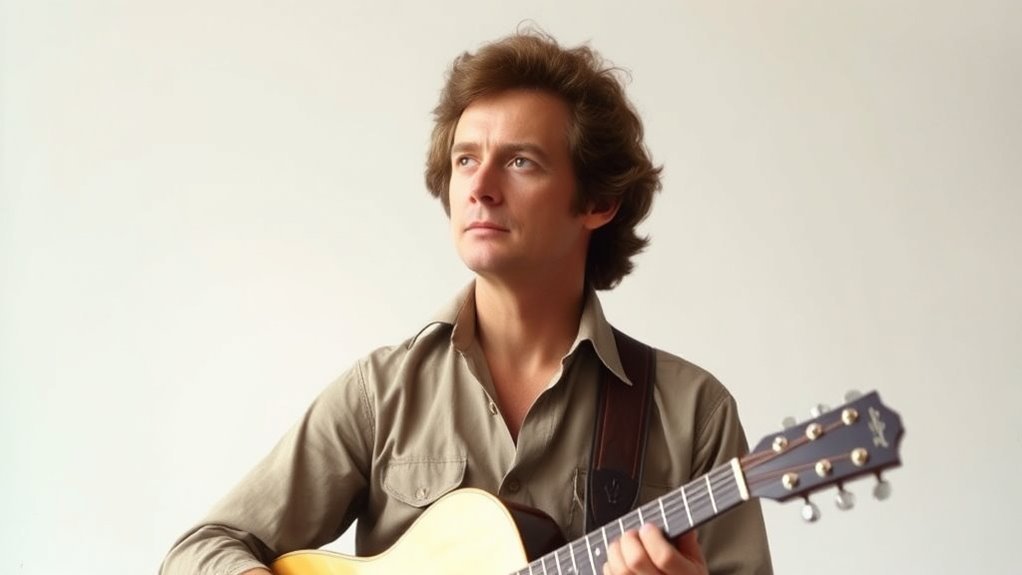
When Art Garfunkel stepped out on his own after the Simon & Garfunkel split, he quickly proved he could shine solo. His debut album, *Angel Clare* (1973), soared to #5 on the U.S. charts, driven by the hit single “All I Know.”
This early success set the tone for his solo career, showing fans he wasn’t just Paul Simon’s partner but a talented artist in his own right. In 1974, Garfunkel returned to the charts in the UK with “Second Avenue,” further establishing his presence.
The momentum continued with his 1975 album *Breakaway*, featuring “My Little Town,” which became his first UK #1 single. Alongside his solo work, he collaborated with notable artists like Stephen Bishop and James Taylor, broadening his musical reach.
These achievements marked a strong start to Art Garfunkel’s solo career, highlighting his ability to captivate audiences without the duo. Pretty impressive, right?
Laurie Bird’s Death and Its Impact on Garfunkel

You can’t overlook how Laurie Bird’s tragic death shook Art Garfunkel deeply. Her loss hit him right after his album “Fate for Breakfast,” which he dedicated to her, marking a tough period of emotional struggle.
This heartbreak shaped both his personal life and the way he approached his music afterward. It was a really hard time for him, and you can feel that pain in his work.
Laurie Bird’s Tragic Loss
How does one cope with the sudden loss of a loved one? When Laurie Bird, Art Garfunkel’s partner since 1974, died by suicide in June 1979, Garfunkel faced intense emotional turmoil. Her death shook him deeply, plunging him into a period of reflection and pain.
You can see how much Laurie meant to him through his 1981 album *Scissors Cut*, which he dedicated to her memory. This tragic loss didn’t just affect his personal life—it shaped his emotional world and creative expression.
While Laurie’s death left a lasting scar, Garfunkel’s tribute in *Scissors Cut* stands as a poignant reminder of her profound influence on his life during those difficult years.
Emotional and Career Effects
Although losing Laurie Bird plunged Art Garfunkel into deep emotional pain, it also profoundly shaped his career and artistic expression. You’ll see how his grief over her suicide in 1979 led to periods of intense depression, which influenced both his personal life and music.
Garfunkel channeled this emotional turmoil into his work, dedicating his 1981 album *Scissors Cut* to her memory. This album isn’t just a collection of songs; it’s a reflection of his ongoing struggle with loss and sorrow.
If you explore his career after Laurie’s death, you’ll notice how grief remained a defining force, driving him to express vulnerability and depth in his art. Her passing marked a turning point that shaped the emotional core of his music and identity.
Facing Depression and Career Challenges
When Art Garfunkel lost Laurie Bird to suicide in 1979, he plunged into a deep depression that shook both his personal life and career. You can imagine how those emotional struggles made it hard for him to focus, leading to career challenges marked by commercial setbacks in the late ’70s and early ’80s.
Losing Laurie Bird in 1979 sent Art Garfunkel into a deep depression, derailing his personal life and career.
Then, in 2010, Garfunkel faced vocal cord paresis, a condition that temporarily halted his singing career and added another layer to his emotional battles. You’d see how quitting smoking became a pivotal, tough decision to help his vocal recovery and mental health.
These challenges tested his resilience, but they also shaped his growth. Through confronting depression and overcoming vocal issues, Garfunkel’s journey highlights the impact of personal loss and health on an artist’s path.
You can’t overlook how these hardships influenced his art and life before he found his way back.
How Garfunkel Came Back Strong in the Late ’90s
You’ll see how Garfunkel reignited his career in the late ’90s by hitting the road with renewed energy and passion. He also teamed up with other artists, creating fresh collaborations that brought new life to his music.
This period marked a clear turnaround. It showed his determination to reconnect with fans and the industry.
Renewed Touring Success
How did Art Garfunkel manage to come back strong after years away from the spotlight? His renewed touring success in the late ’90s proved his comeback was no fluke.
After resting and quitting smoking, his vocal cords healed, allowing you to enjoy his performances once again. Starting with U.S. and European shows, Garfunkel reconnected with fans, highlighted by his 1996 “Across America” with James Taylor.
His 2012 retrospective album, “The Singer,” celebrated his musical endurance, reinforcing his return to form.
| Year | Event |
|---|---|
| Late ’90s | Renewed touring begins |
| 1996 | “Across America” performance |
| Early 2000s | Worldwide tours |
| 2012 | Release of “The Singer” |
| 2014 | Full vocal recovery |
You witnessed a true comeback fueled by resilience and passion.
Collaborative Musical Projects
Art Garfunkel’s return to the spotlight wasn’t just about solo performances; his collaborative projects played a key role in revitalizing his career. In 2002, he teamed up with Maia Sharp and Buddy Mondlock for the album *Everything Waits to Be Noticed*, showcasing his willingness to explore new musical partnerships.
This collaboration highlighted his adaptability and kept him creatively engaged. Following that, Garfunkel reunited with Paul Simon for a world tour, but it was these collaborations that truly refreshed his sound.
You’ll notice how these projects paved the way for his 2006 album *Some Enchanted Evening*, which leaned into classic pop standards. By embracing collaboration, Garfunkel not only reconnected with his roots but also demonstrated his resilience and relevance in the evolving music scene.
Vocal Cord Paresis Effects on Garfunkel’s Singing
Though vocal cord paresis temporarily disrupted his singing, Garfunkel faced the challenge head-on by adjusting his technique and embracing the changes in his voice. In 2010, this condition caused partial paralysis of one of his vocal cords, which impacted his singing ability by limiting his vocal range and control.
In 2010, vocal cord paresis challenged Garfunkel, who adapted his technique to embrace his evolving voice.
You’d notice how this condition forced him to slow down and rethink how he used his voice. Garfunkel also made significant lifestyle changes, quitting tobacco and marijuana to support his vocal cords’ healing.
Over the next few years, through rest and medical care, he gradually experienced voice recovery. This process wasn’t just physical but emotional, as he learned to accept imperfections in his singing.
While vocal cord paresis altered his performance, it also showed his resilience in adapting to these new constraints. It allowed him to continue sharing his artistry despite the setbacks.
Vocal Recovery and Technique Changes
You’ve seen how Art Garfunkel’s vocal cord paresis forced him to pause and rethink his approach. After years of rest and vocal exercises, he found new ways to sing that focus more on emotional connection than perfect technique.
Now, his evolving style blends classical influences with a relaxed, natural harmony that suits his recovered voice. It’s like he’s discovered a whole new way to express himself through singing.
Vocal Cord Paresis Recovery
Although vocal cord paresis struck unexpectedly after a choking incident in 2010, Garfunkel didn’t let it end his singing career. You’ll find that his vocal cord paresis temporarily impaired his voice, but through dedicated vocal therapy and quitting smoking, he made a full recovery by 2014.
During this time, he rested his voice and worked closely with specialists to regain strength and control. You can see how this experience influenced his vocal technique, as he adapted to protect his voice while still delivering emotional performances.
His focus shifted toward natural harmony and embracing imperfections, relying on audience goodwill. This journey highlights the importance of vocal therapy and mindful recovery in overcoming vocal challenges without losing your unique sound.
Evolving Singing Techniques
Since his vocal cord paresis in 2010, Art Garfunkel has transformed his singing techniques to protect his voice and enhance emotional delivery. You’ll notice his vocal recovery involved more than rest and quitting smoking; he adapted his vocal technique to emphasize natural harmony and emotional authenticity.
Garfunkel now sings closer to the melody, using intervals of thirds and fourths, creating a richer, more expressive sound. Influenced by classical music principles, especially J.S. Bach, he incorporates natural movement around the melody, which reshapes his performance style.
If you listen carefully, you’ll hear how he strategically sequences songs to maintain emotional impact, showing a refined, mature approach. This evolving technique not only safeguards his voice but elevates his artistry in remarkable ways.
Art Garfunkel’s Artistic Diversification: Poetry and Film
How did Art Garfunkel expand his creative horizons beyond music? He embraced artistic diversification by diving into both poetry and film.
You’ll find that in 1981, during a Simon & Garfunkel tour in Switzerland, Garfunkel began writing poetry. This passion culminated in his 1989 collection, *Still Water*, where he shared personal prose poems that revealed a new dimension of his artistry.
But Garfunkel didn’t stop there. He also ventured into film, acting in notable movies like *Catch-22* (1970), *Carnal Knowledge* (1971), and the psychologically complex *Bad Timing* (1980), for which he earned a Golden Globe nomination.
In these roles, especially as a psychiatrist in *Bad Timing*, he explored intricate characters, showcasing his depth beyond singing. Through poetry and film, Garfunkel broadened his expressive range, proving that his creativity extends well past the microphone into rich, multifaceted artistic realms.
Family Collaborations and Recent Work
Where can you see Art Garfunkel’s legendary voice blending with new generations? You’ll find it in his family collaborations, especially with his son, Art Garfunkel Jr.
They’re joining forces on a highly anticipated 2024 album titled *Father and Son*, where their voices intertwine, creating a fresh yet familiar sound.
Garfunkel’s recent performances also showcase his commitment to family, often featuring his daughter Kim Garfunkel. At a notable NYC show at Au Bar, the duo performed backed by a quartet, highlighting Kim’s diverse musical talents alongside her father’s timeless voice.
You can tell Art takes great pride in involving his children in his projects, emphasizing a strong family connection in his latest work. These collaborations not only celebrate his musical legacy but also breathe new life into it.
It’s clear that even decades into his career, Art Garfunkel remains creatively vibrant and deeply connected to his family through music.
Art Garfunkel’s Lasting Legacy and Influence
Although decades have passed, Art Garfunkel’s distinctive tenor voice and poetic lyricism continue to shape the sound of folk rock and harmony singing. You can still hear his influence in artists who value vocal purity and emotional depth.
His work with Paul Simon on *Bridge Over Troubled Water* remains a cornerstone of music history, earning a spot on VH-1’s *100 Greatest Albums of Rock n Roll*. Beyond the duo, Garfunkel’s solo work, like “Bright Eyes” and “My Little Town,” showcases his ability to inspire across genres.
When you explore his contributions to soundtracks and tribute performances, it’s clear his impact endures. Art Garfunkel’s lasting legacy isn’t just about past hits; it’s about how his vocal innovation and poetic songwriting continue to resonate with new generations.
If you appreciate folk rock’s evolution, you owe a nod to Garfunkel’s timeless artistry.
Frequently Asked Questions
What Song Did Art Garfunkel Refused to Sing?
You’ll find Art Garfunkel refused to sing “Bridge Over Troubled Water” during a 2010 concert due to vocal issues.
He’s also skipped “The Boxer” and “Mrs. Robinson” when his voice felt strained or weak.
It happens sometimes, you know? Singing those classics can be tough if your voice isn’t up for it.
What Illness Does Art Garfunkel Have?
Art Garfunkel has vocal cord paresis, which partially paralyzed his vocal cords. You’ll find he overcame it by quitting smoking, resting his voice, and undergoing therapy.
This allowed him to sing again after a tough recovery. It’s pretty inspiring how he managed to get back on track despite the challenges.
Where Does Art Garfunkel Live Today?
You’ll find Art Garfunkel nestled in New York, steering through New York City’s noise or New York State’s serenity.
He’s also settled in sunny Los Angeles, balancing bustling beats with peaceful pauses in his preferred peaceful places.
Are Simon and Garfunkel Still Friends in Real Life Today?
You’ll find Simon and Garfunkel aren’t close friends today, but they respect each other professionally. They’ve reunited occasionally, showing some warmth.
Yet their personal bond remains cautious and distant, reflecting years of ups and downs. It’s been a bit of a rollercoaster for them over time.
Conclusion
You’ve seen how Art Garfunkel’s journey, like a river carving through rock, shaped his resilience and artistry over time. From his early days with Simon & Garfunkel to personal struggles and a powerful comeback, he’s continuously evolved.
His voice, poetry, and collaborations show that true artistry never fades—it transforms. So, when you think of Garfunkel, remember a talent that bends but never breaks, inspiring generations with every note.
Art Garfunkel’s story is one of growth and transformation. His unique voice and poetic lyricism have left a lasting impact on music. Despite challenges, his comeback highlights the power of persistence.
In the world of artistry and music, Garfunkel remains a shining example. His legacy continues to inspire fans and musicians alike, proving that true talent transcends time and hardship.