What Is Hatching in Art How to Draw It Step-by-Step
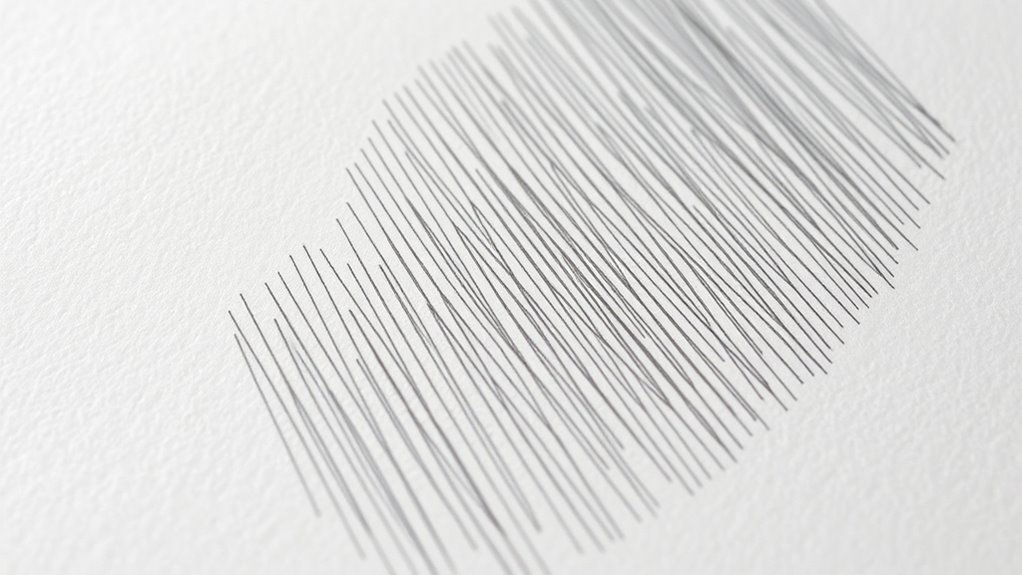
Hatching in art is a popular shading technique where you draw closely spaced parallel lines to create shading and suggest volume. It’s a simple yet effective way to add depth and texture to your drawings.
By adjusting the spacing of these lines, you can control how light or dark an area appears.
Start by sketching evenly spaced lines over the area you want to shade. Closer lines make the shading darker, while wider lines keep it lighter. It’s also helpful to follow the contours of the object to add a sense of form and dimension.
For even richer tones, try layering lines at different angles—this is called cross-hatching.
Mastering hatching and cross-hatching can really bring your drawings to life with realistic light and shadow. Stick around, because you’ll discover even more tips to enhance your shading skills next!
Key Takeaways
– Hatching uses evenly spaced parallel lines to create shading and suggest volume in drawings.
You can control the tone by adjusting how close or far apart the lines are. Closer lines make darker areas, while wider spacing creates lighter regions.
– It helps to follow the object’s contour lines to bring out a three-dimensional form and make your drawing look more realistic.
Try layering additional lines at different angles. This deepens the shading and adds more tonal variation.
– Keeping a consistent line direction and spacing is key for smooth, realistic shading effects.
With practice, hatching can really bring your art to life!
How to Draw Hatching: Step-by-Step Techniques for Realistic Shading
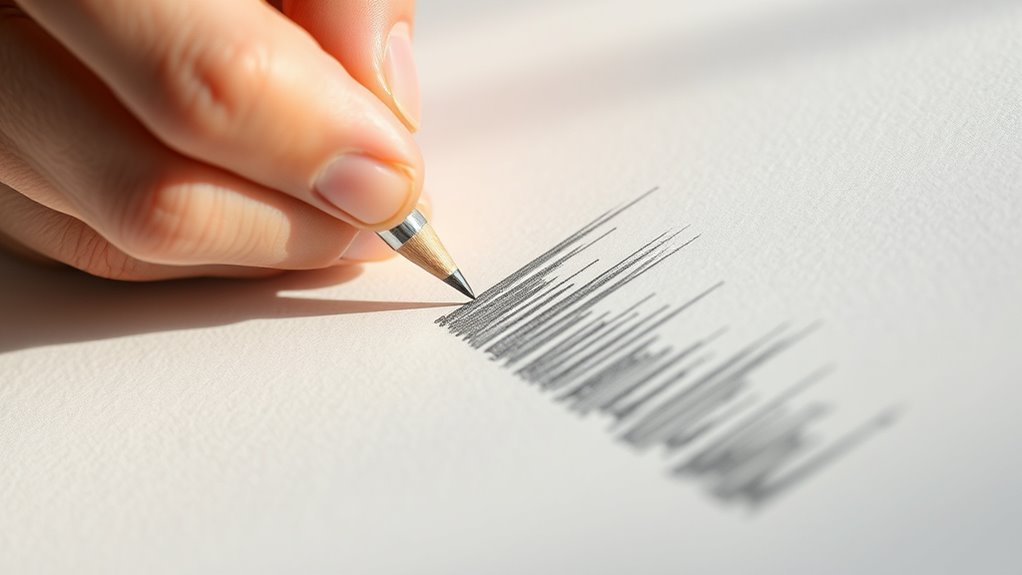
How do you achieve realistic shading with hatching? Begin by drawing evenly spaced parallel lines across the area you want to shade. Adjust the spacing to control the tone—closer lines create darker areas, while wider spacing keeps it lighter.
Vary the pressure of your pen or pencil to produce lines of different thicknesses. This adds texture and depth to your drawing.
To convey volume, follow the object’s contour lines. Wrap your hatching around curves to suggest form.
You can deepen the tone by layering additional sets of lines at different angles. This technique is known as cross hatching.
Maintain consistent line direction and spacing for smooth shading transitions. In shadowed areas, increase the density of your hatching to emphasize darkness.
What Is the Hatching Technique and Why It Matters in Art
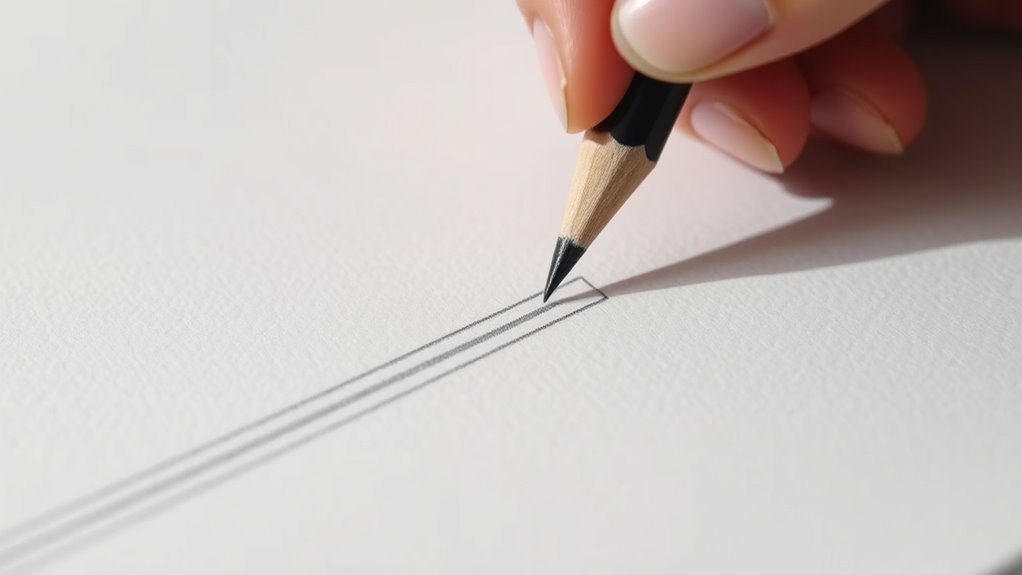
Although it may seem simple at first, the hatching technique plays an essential role in art by using closely spaced parallel lines to create shading and suggest volume.
When you apply hatching, you follow the contour of your subject, which helps reveal its form and three-dimensionality.
By varying the density, spacing, and angle of these parallel lines, you can represent different tonal values that respond to the light source.
This variation brings depth and texture to your work, making it more lifelike.
Hatching isn’t just about shading; it’s a fundamental drawing technique that communicates surface qualities and spatial relationships clearly.
Mastering hatching lets you suggest volume and depth effectively, even with simple lines.
As you practice, you’ll see how this technique enhances your ability to depict form and light, transforming flat drawings into vivid representations of reality.
Frequently Asked Questions
What Is Hatching in Art Drawing?
Hatching in art drawing is when you create shading by drawing closely spaced parallel lines. You control tone and texture by adjusting line density, direction, and pressure.
This technique helps your artwork show depth, volume, and light effectively. It’s a simple but powerful way to add dimension to your drawings.
What Does Hatching Look Like in Drawing?
Wondering what hatching looks like in drawing? You’ll see closely spaced parallel lines that follow the form’s curves, creating shading and texture.
You can layer these lines to deepen shadows and add volume to your artwork. It’s a simple but effective technique that really brings your drawing to life.
What Is Art Hatching?
Art hatching is a shading technique where you draw closely spaced parallel lines to create light and shadow. You can vary line density and direction to build texture, depth, and form in your drawings effectively.
It’s a simple but powerful way to add dimension. By changing how close or far apart your lines are, you can show different levels of darkness. Plus, switching up the direction of your lines helps give your art more texture and life.
What Is the Best Hatching Technique?
The best hatching technique depends on your goal; use cross hatching for depth and tonal variation, contour hatching to emphasize form, and combine styles to create unique textures.
Try experimenting with angles and pressure for smooth gradation. It’s all about finding what works best for your style and the effect you want to achieve.
Conclusion
Hatching is like weaving threads of light and shadow to bring your drawings to life. Once you master this technique, your art gains depth and texture that truly speaks.
Keep practicing those lines—short, long, close, or wide—and watch your sketches transform from flat shapes into vibrant, dynamic images.
Remember, every stroke you make adds a new layer to your creative story. So pick up your pencil and start weaving your masterpiece today!
By learning hatching in art, you unlock a powerful way to add dimension and emotion to your work. This step-by-step drawing technique helps you create light, shadow, and texture that make your sketches pop. Keep exploring different hatching styles to develop your unique artistic voice. With patience and practice, hatching will become an essential tool in your drawing toolkit, turning simple lines into captivating, expressive art.