What Is Non-Objective Art?
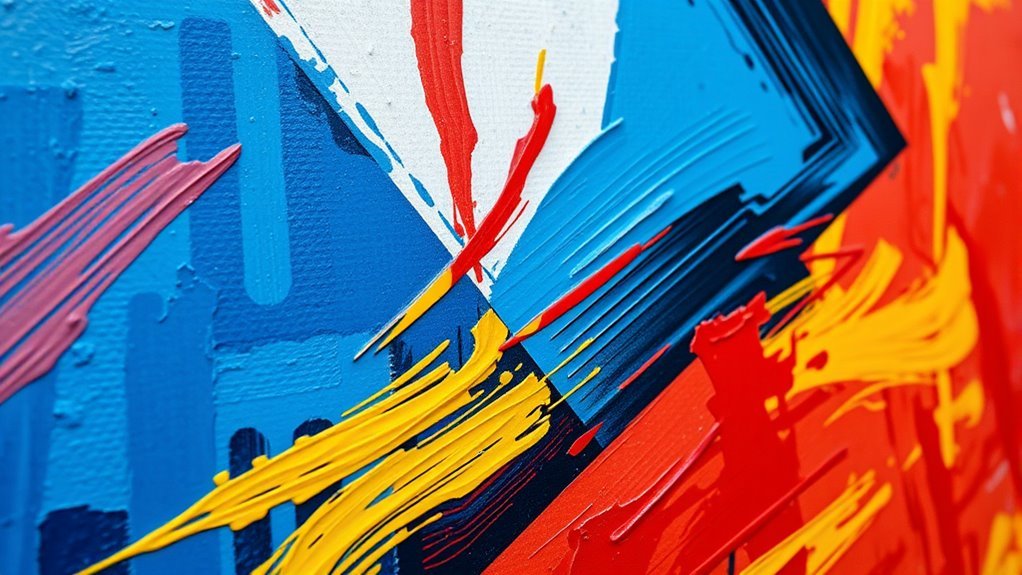
When you engage with non-objective art, you experience pure form and color without any recognizable objects or scenes. This unique art style focuses entirely on shapes, lines, and hues to create visual harmony.
It frees you from story or external reality, inviting you to connect with the artwork on a deeper level.
Unlike abstract art, non-objective art rejects real-world references. It emphasizes internal expression and spirituality through geometric simplicity.
If you want to understand how this art form conveys deeper spiritual and emotional meaning, there’s more to discover beyond what meets the eye.
Key Takeaways
- Non-objective art is purely nonrepresentational. It focuses only on form, color, and visual elements without depicting real objects or scenes.
- It emphasizes shape, line, and color to create visual harmony and internal expression. There’s no narrative or recognizable imagery here.
- This style often communicates spiritual and metaphysical ideas through abstract shapes and vibrant colors. The goal is to evoke inner harmony.
- Non-objective art encourages viewers to experience emotions and concepts beyond physical reality. It promotes transcendence and deeper consciousness.
- It represents a distinct movement within abstract art. The focus is on pure abstraction and the visual expression of spiritual and philosophical themes.
What Is Non-Objective Art and How Is It Different From Abstract Art?
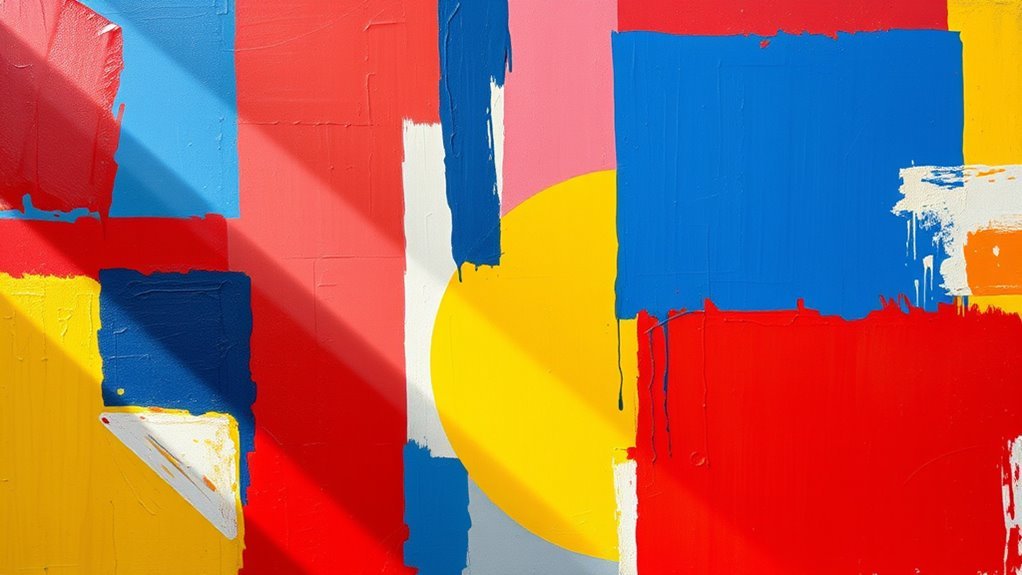
What exactly sets non-objective art apart from abstract art? While both styles embrace abstraction, non-objective art is strictly nonrepresentational—it doesn’t depict any recognizable objects or scenes. Instead, it focuses entirely on form and color as pure visual elements.
Abstract art might still reference real-world subjects, but non-objective painting rejects all external reality, aiming for pure abstraction.
Kazimir Malevich’s iconic Black Square exemplifies this approach in modern art. His work highlights how non-objective art centers on internal expression and visual harmony without telling a story or showing familiar imagery.
When you engage with non-objective art, you’re invited to experience shape, line, and color on their own terms, free from narrative or representation. This emphasis on pure visual elements defines the unique power of non-objective art in the broader abstract art movement.
How Non-Objective Art Expresses Spirituality and Visual Purity
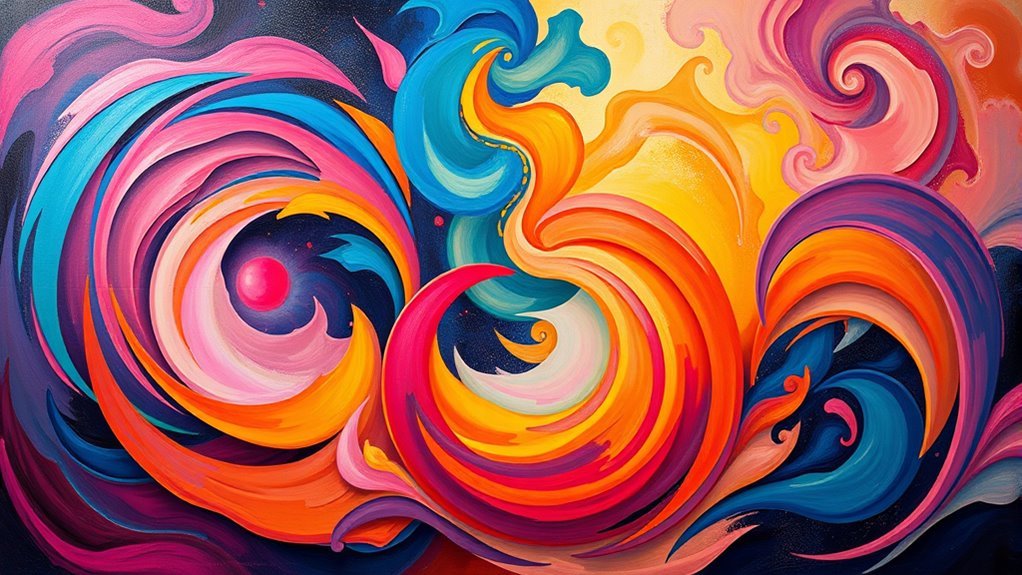
How does non-objective art communicate spirituality without relying on recognizable forms? By using abstract shapes and pure colors, it taps into metaphysical ideas that go beyond physical reality.
When you engage with geometric shapes and vibrant hues in non-objective art, you’re invited to experience inner harmony and a kind of spiritual awakening that goes beyond material stuff. Artists like Kandinsky believed these visual elements could spark spirituality and connect you to higher moral virtues.
Engaging with shapes and colors in non-objective art awakens spirituality and connects us to higher moral virtues.
The focus on visual purity cuts out distractions, letting the artwork act like a spiritual language. This way, you can feel transcendence and sense universal truths through simplicity and balance.
Non-objective art doesn’t show the physical world. Instead, it expresses deep metaphysical ideas through pure abstraction. As you look, you’re encouraged to move past the tangible and experience emotions and ideas that reflect moral purity and spiritual depth.
In that sense, the artwork becomes a bridge to deeper consciousness and inner peace.
Frequently Asked Questions
What Is Objective Art and Non-Objective Art?
You’ll see objective art depicts real things you recognize, like people or landscapes.
Non-objective art, on the other hand, avoids recognizable forms. It focuses instead on abstract shapes and feelings.
Basically, it’s all about expressing ideas without referencing the physical world.
Who Is a Famous Non-Objective Artist?
You’ll recognize Wassily Kandinsky as a famous non-objective artist. He created abstract works that express emotion and spirituality, focusing on shapes and colors rather than realistic subjects.
This approach made him a pioneer in this art style. His work really changed how people think about art, moving away from just copying what we see. It’s pretty cool how he used art to show feelings instead.
What Is Non-Subjective Art?
Non-subjective art doesn’t rely on personal opinions or emotions; you focus on objective elements like shapes and colors without bias.
It’s about presenting art without subjective interpretation, letting viewers find meaning on their own.
What Is an Example of Objective Art?
An example of objective art is Leonardo da Vinci’s *Mona Lisa*. You’ll see a clearly identifiable portrait, capturing realistic details and expressions.
It tells a story and represents reality in a way you can easily recognize and understand. So, it’s all about showing things just as they are, without much interpretation or abstraction.
Conclusion
Imagine stepping into a world where colors and shapes are like stars in a night sky, not tied to anything familiar but shining with their own light. That’s what non-objective art invites you to explore—a domain beyond the ordinary, where your spirit dances with pure form and feeling.
Unlike abstract art’s echoes of reality, this art is a fresh breeze, whispering secrets only your heart can understand. Immerse yourself and let it transform your view.
Non-objective art breaks free from recognizable objects and focuses purely on elements like color, shape, and texture. It’s all about experiencing art in its most essential form, inviting you to connect with emotions and ideas on a deeper, more personal level. When you engage with non-objective art, you’re not just looking—you’re feeling, interpreting, and discovering something uniquely yours. This art challenges the way we see the world, opening up new possibilities for creativity and expression.