
What Can You Do With an Art History Degree: 3 Top Career Paths
With an art history degree, you can explore a variety of exciting career paths that blend your passion for art with practical skills. Museums and galleries often hire graduates as curators, assistants, or exhibition coordinators. In these roles, you help preserve and showcase art, making it accessible and meaningful to the public.
You might also consider working in the art market or auction houses. Here, your focus could be on valuation, sales, or provenance research, which involves tracing the history of artworks.
Alternatively, careers in research, conservation, and education allow you to protect cultural heritage and develop engaging programs. Each path offers a unique way to connect with art and make a difference.
There’s so much more to explore in these exciting options!
Key Takeaways
- Museum and gallery careers include roles like curators, collections managers, and exhibition coordinators. These jobs often require advanced degrees and can offer salaries up to $85,000.
- Art market careers involve art dealers, auctioneers, and cataloguers. They focus on valuation, authentication, and sales, with starting salaries around $40,000 to $50,000.
- Research, conservation, and education roles emphasize provenance research, preservation, and public outreach. These typically require specialized training and advanced degrees.
- Digital literacy and provenance expertise are becoming more important across museum, auction house, and conservation careers. They help with engagement and authentication.
- Art history degrees open up diverse pathways that combine art knowledge with business, technology, and public engagement. This lets you make an impact through cultural preservation and scholarship.
Museum and Gallery Careers for Art History Graduates

What career paths can you pursue with an art history degree in museums and galleries? Museum careers offer diverse roles, from entry-level museum assistants and gallery attendants to specialized positions like curators, collections managers, conservators, and exhibition coordinators.
Starting salaries for assistants typically range from $30,000 to $40,000. These roles provide a solid foundation for advancing to senior jobs.
Curators oversee research, acquisition, and display of collections, often requiring advanced degrees. Senior curators earn between $60,000 and $85,000.
You might also explore niche roles such as provenance researchers, who verify artwork histories, or interpretation managers, who develop educational programs to engage visitors.
Beyond these, museums rely on professionals in digital engagement, marketing, and visitor services to connect with audiences and support their mission.
If you’re passionate about preserving and sharing art, a museum career lets you combine your knowledge with meaningful public outreach and curation.
Art History Careers in the Art Market and Auction Houses
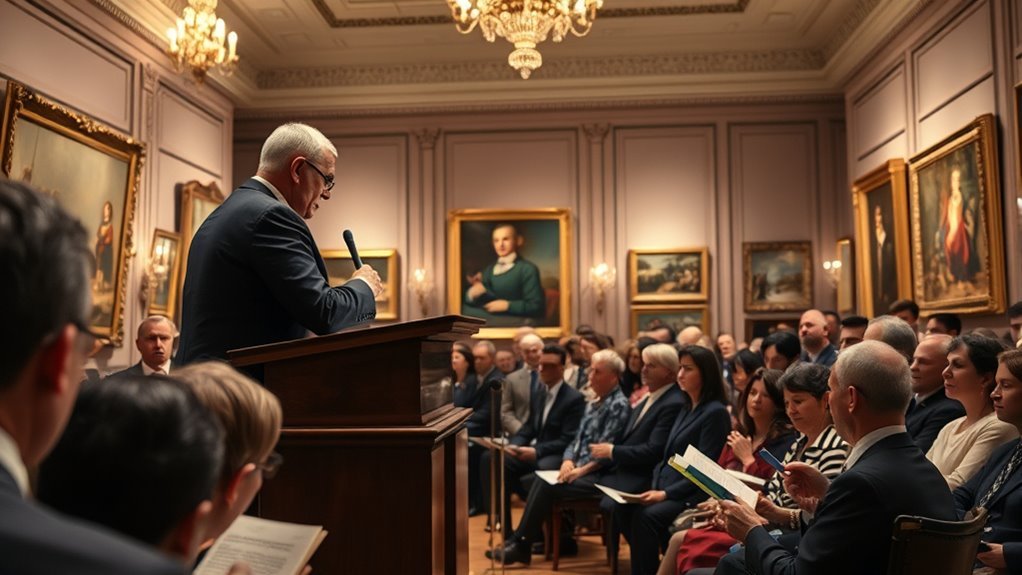
While art history degrees often lead to museum roles, they also open doors to dynamic careers in the art market and auction houses. You can become an art dealer, gallery manager, or auction house specialist who evaluates and catalogs artworks to facilitate art sales.
Positions like cataloguers and auctioneers require strong knowledge in valuation and authentication. These roles often start with salaries between $40,000 and $50,000.
Cataloguers and auctioneers need expertise in valuation and authentication, starting with salaries from $40,000 to $50,000.
Provenance research plays a vital role, helping establish artwork histories and ensuring legitimacy. Major auction houses such as Christie’s and Sotheby’s rely on specialists and client liaisons to manage sales and authenticate pieces.
Digital skills have become essential these days. They enable you to support online auctions, virtual sales, and digital marketing efforts.
If you enjoy combining art expertise with business and technology, careers in the art market offer dynamic, rewarding opportunities. You get to directly influence the buying and selling of valuable artworks.
Specialized Art History Careers: Research, Conservation, and Education

Careers in research, conservation, and education offer art history graduates opportunities to engage deeply with artworks beyond buying and selling. If you pursue these paths, you’ll often collaborate with museums, galleries, and cultural institutions to preserve and interpret art.
Here are key options to contemplate:
- Provenance Research – You’ll investigate ownership history and cultural property issues, ensuring artworks’ legitimacy and ethical stewardship.
- Conservation – Applying specialized training, you’ll slow deterioration using environmental controls and chemical treatments to preserve artworks.
- Museum Education – As museum educators or interpretation managers, you’ll design accessible educational programs that engage diverse audiences.
- Research and Preservation – With advanced degrees, you’ll contribute to scholarship and the long-term preservation of cultural heritage.
These roles typically require specialized training and advanced degrees, but they allow you to make a lasting impact by safeguarding art and enriching public understanding.
Frequently Asked Questions
What Careers Can I Get With an Art History Degree?
You can work as a museum curator, art appraiser, gallery director, or educator. You might also pursue roles in art conservation, auction houses, nonprofit arts management, or digital content creation.
There are lots of ways to use your expertise creatively and professionally. It’s all about finding the right fit that matches your interests and skills.
What Is the Highest Paying Art History Job?
The highest paying art history job is like striking gold—you’ll find it as an art lawyer or cultural policy advisor.
In these roles, your expertise can earn you $100,000 to $200,000+ annually. It’s a great way to make your passion highly lucrative.
Is Art History a Good Major?
Yes, art history is a good major if you’re passionate about culture and critical thinking. You’ll develop research and writing skills that open doors in museums, education, marketing, or law.
It offers versatile career options, too. So, if you love diving into the stories behind art, this could be a great fit for you!
Do Art Historians Get Paid Well?
You won’t always get paid well right away, but with experience and extra qualifications, your salary can grow substantially.
Senior roles and specialized careers often offer competitive pay, especially in museums, auctions, or art law fields. So, if you stick with it, the rewards can definitely come.
Conclusion
With an art history degree, your path is wide open—but which direction will you choose? Will you immerse yourself in the vibrant world of museums and galleries, or plunge into the fast-paced art market and auction houses?
Maybe you’ll uncover hidden stories through research, conservation, or education. The possibilities are thrilling, but the choice is yours.
So, what’s next for you? Your art history adventure is just beginning. Whether you aim to work as a curator, art historian, or educator, this degree offers a wealth of career opportunities. Embrace your passion for art and history, and watch your skills open doors in museums, galleries, auction houses, and beyond. The future is bright for those with an art history degree ready to make their mark in the art world.