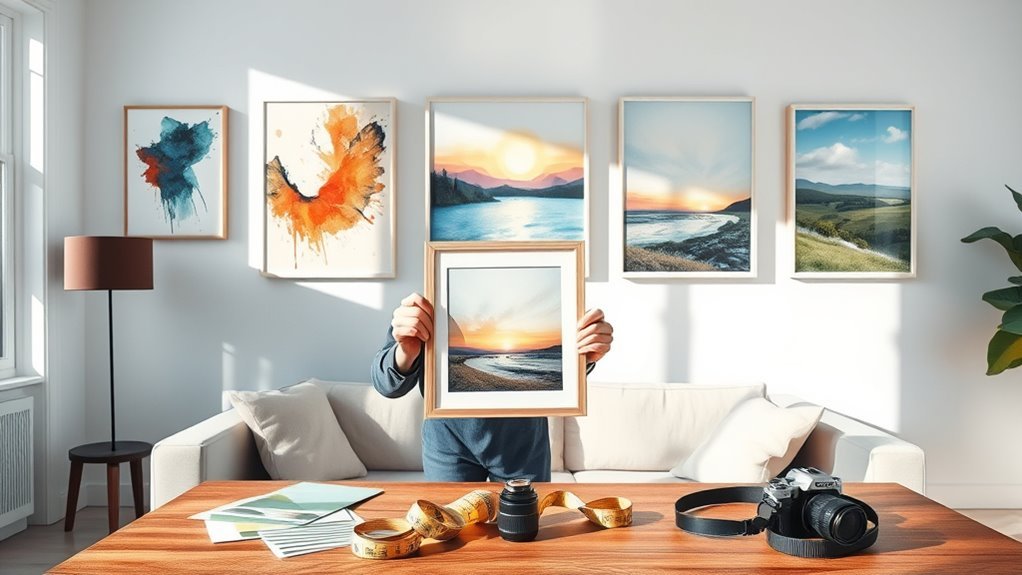
7 Tips to Choose Art for Your Home
Start by understanding your space and lighting to pick art that fits well and enhances your room’s mood. Knowing the right art for your home is all about creating a vibe that feels just right.
Match styles and colors to your desired atmosphere, then choose artwork sized proportionally for your walls.
Mix frames and layouts to create visual interest. Staying creative with how you display your pieces can really make your space pop.
Stay within your budget by sourcing affordable or DIY pieces, and use flexible hanging systems for easy updates. This way, you can switch things up without any hassle.
Experiment with placement to keep your display fresh and personalized. Keep going to uncover even more ways to perfect your art selection.
Key Takeaways
- Measure your wall space and choose artwork that fits proportionally. Ideally, it should cover two-thirds to three-quarters of the area above your furniture. This helps the art feel balanced and intentional.
- Select art styles and colors that complement your room’s mood and function. Using color theory can really enhance the ambiance and tie the space together.
- Use flexible hanging systems and lightweight frames. These make it super easy to rotate your art and experiment with different layouts whenever you want.
- Mix different-sized pieces and frame styles to create visual interest. Just be sure to keep things balanced with the scale of your room so it doesn’t feel cluttered.
- Source affordable art from local artists, thrift stores, or even create DIY pieces yourself. This way, your home decor feels personal and unique without breaking the bank.
Get to Know Your Space and Lighting First
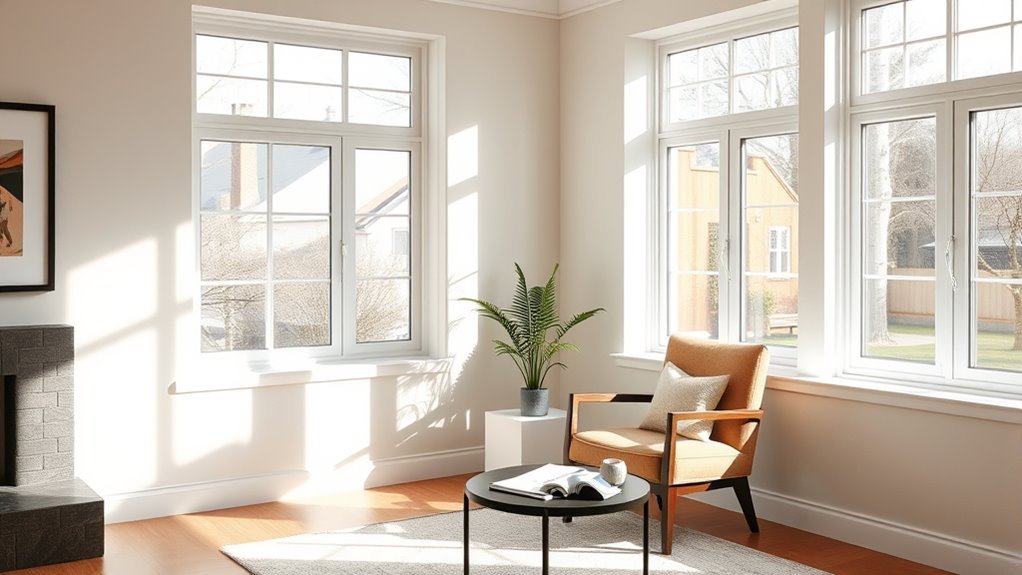
Where will your art shine best? Start by measuring your wall space and considering the room size to pick artwork that fits perfectly without overwhelming or underwhelming the area.
Begin by measuring your wall and room to choose artwork that fits just right, balancing presence without overpowering.
Next, pay close attention to the lighting—both natural and artificial. Lighting affects how colors appear and how visible your art will be throughout the day and night.
Bright, well-lit rooms let you choose vibrant pieces, while dimmer spaces may benefit from art with bolder contrasts. Also, take stock of your room’s decor style.
Your artwork should complement the existing furnishings and overall vibe, enhancing the room’s atmosphere instead of clashing with it. Don’t forget to think about how your art will interact with furniture and architectural features.
Choose Art Styles That Fit Your Room’s Mood
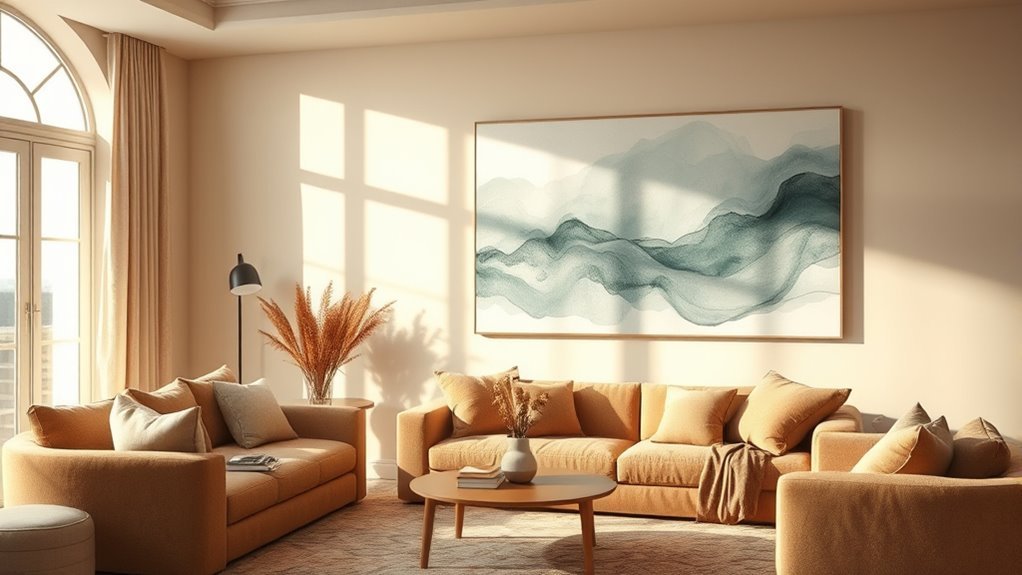
How do you want your room to feel? Choosing art styles that fit your room’s mood is key. If you want calm and relaxation, opt for soft pastels or botanical illustrations that bring a peaceful, natural vibe.
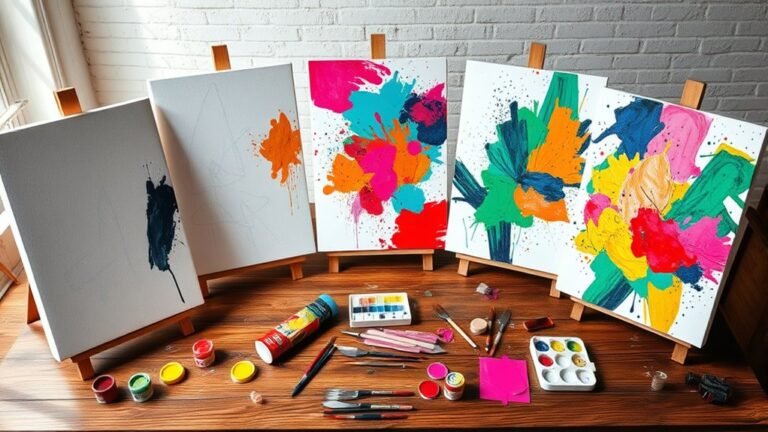
For energy and excitement, vibrant abstracts or geometric patterns work well to create a lively atmosphere. Use color theory to pick artwork with hues that either complement or contrast your room’s existing palette, enhancing the emotional tone.
Bold shapes and dark palettes introduce drama and mystery, perfect for adding depth. Meanwhile, light, soft colors foster tranquility. Remember, the art style should align with your room’s function and desired ambiance to truly enhance the space.
Whether it’s a bedroom needing serenity or a living area craving vibrancy, matching art styles to your room’s mood transforms your space into a reflection of how you want to feel.
Pick the Right Art Size and Scale for Walls
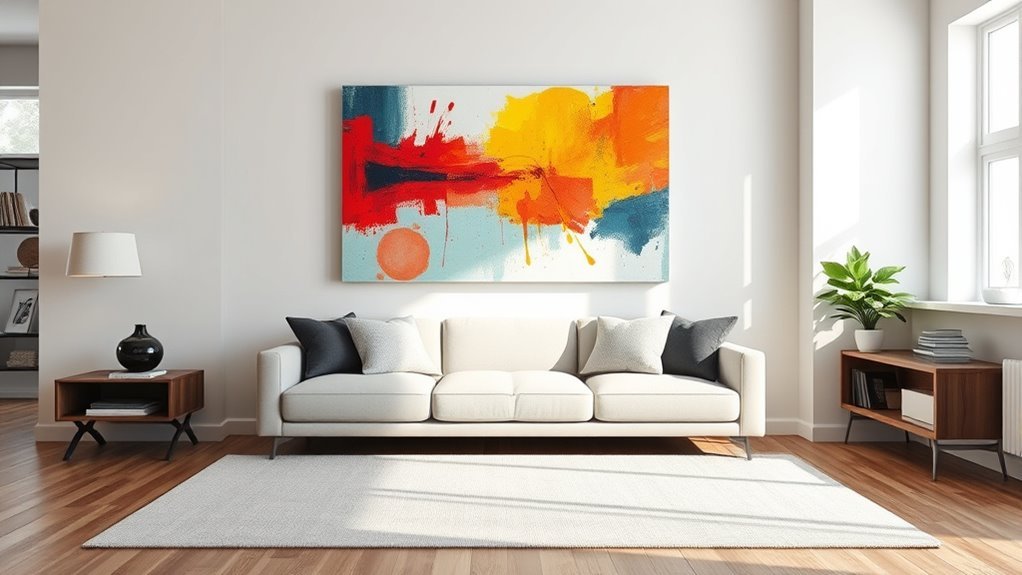
Although choosing the right art style is essential, selecting the proper size and scale for your wall art truly completes the look. When picking art for your home, aim for pieces that cover about two-thirds to three-quarters of the wall space above furniture.
For example, if your sofa is 230 cm wide, choose artwork around 150-190 cm wide. Hang large pieces at eye level—roughly 6 inches above the furniture—to maintain balance.
Consider your room’s proportions to avoid overcrowding or leaving walls too bare. Using layouts like a tapestry, grid, or gallery arrangement helps dress large walls effectively, creating cohesion.
Mixing different-sized pieces adds visual interest but make sure they relate well to each other and fit the room’s scale. By focusing on size and scale, you’ll create a harmonious and inviting space with your art for your home.
Mix and Match Art Styles for a Dynamic Look
You can create a dynamic look by combining different mediums like paintings, photographs, and sculptures to add texture and interest. Balancing colors and textures helps tie varied pieces together for a cohesive feel.
Don’t be afraid to contrast abstract and figurative art to highlight each style’s unique qualities. Mixing things up this way really makes the artwork pop and keeps the space feeling fresh.
Combine Different Mediums
When you combine different art styles and mediums, like oils, watercolors, sketches, and photographs, you create a visually engaging and dynamic gallery. Mixing and matching these varied forms adds exciting layers to your art journey, offering a rich variety that keeps your space from feeling static.
Don’t hesitate to pair textured pieces, like layered paper art, with smooth painted works to add depth and tactile interest. Balancing traditional and contemporary artworks highlights contrasts that showcase your eclectic personality.
Using a unified color palette across mediums helps maintain harmony while celebrating diverse techniques. Incorporating various sizes and framing styles further enhances dynamic movement, making your collection feel thoughtfully curated rather than monotonous.
Embrace this approach to craft a home gallery that truly reflects your unique taste. It’s all about mixing things up in a way that feels natural and fun.
Balance Colors And Textures
Mixing different art styles and mediums naturally leads to exploring how colors and textures interact in your space. To create a dynamic look, balance vibrant and subtle colors to energize your room without overwhelming it.
Pairing glossy photos with textured paintings or dimensional paper art adds depth and tactile richness that keeps your decor engaging. While contrasting colors can add excitement, maintaining a harmonious palette ensures cohesion throughout your gallery wall.
Don’t hesitate to blend modern and vintage pieces; this mix brings freshness and timeless charm simultaneously. By thoughtfully balancing colors and textures, you’ll craft a layered, curated aesthetic that reflects your personality and keeps your home visually mesmerizing.
Contrast Abstract And Figurative
Although combining abstract and figurative art may seem challenging, it offers a powerful way to energize your space and keep it visually engaging. You create contrast by mixing abstract art’s mood and movement with figurative art’s recognizable subjects.
This blend prevents monotony and adds dynamic energy, guiding the viewer’s eye naturally around the room. You can emphasize key areas while developing a curated, eclectic look that mirrors your creativity.
| Aspect | Effect |
|---|---|
| Abstract Art | Evokes emotion, movement, and texture |
| Figurative Art | Provides familiarity through identifiable forms |
| Contrast | Balances mood with clarity, enhancing interest |
Make Frames and Layouts Work for Your Room
To make frames and layouts work for your room, start by choosing framing styles that complement both the artwork and your decor. The right frames enhance the art and tie the room together, boosting visual impact.
Choosing frames that complement your artwork and decor enhances both, creating a cohesive and visually striking room.
Here are four tips to guide you:
- Match frames to the artwork and room style—minimal black frames suit photos, while ornate gold frames fit classical art.
- Use appropriate matting, like an 8-ply mat, to create a gallery effect that draws the eye.
- Plan your layouts carefully—grids, gallery walls, or tapestries should fit the wall space and vibe you want.
- Visualize spacing with templates or paper cutouts, keeping pieces 2-4 inches apart for balance.
Find Stylish Art That Fits Your Budget
You don’t have to spend a fortune to find stylish art that suits your budget. Check out affordable prints from Minted or explore secondhand markets like Etsy and flea markets for unique pieces.
You can also get creative by framing your own artwork or hunting local art fairs for budget-friendly options. It’s all about mixing style with smart spending!
Affordable Art Sources
Finding affordable art that suits your style is easier than you might think. You don’t have to break the bank to find pieces that add personality to your home.
Here are four great affordable art sources to explore:
- Big box stores offer quality, budget-friendly art that matches various decor styles.
- Online marketplaces like Etsy, Chairish, and Minted feature affordable art prints and originals from emerging artists.
- Second-hand markets such as Craigslist, Facebook Marketplace, and flea markets can surprise you with unique, inexpensive finds.
- Local art fairs and university exhibitions let you buy one-of-a-kind pieces directly from artists without paying gallery prices.
It’s all about knowing where to look!
Creative Budget-Friendly Ideas
Affordable art sources are just the start when it comes to filling your home with stylish pieces without overspending. You can create affordable art by painting your own abstract designs and framing them professionally, giving your space a personal touch while staying budget-friendly.
Try framing meaningful items like letters or tickets to add unique, low-cost decor. Explore DIY projects such as fabric scrap weaving or repurposing tea towels to craft one-of-a-kind pieces that reflect your style.
Don’t overlook second-hand markets like Etsy, flea markets, or thrift stores, where you can find quality artwork at great prices. Online platforms like Minted also offer reasonably priced prints, so you can easily find affordable art that complements your home’s aesthetic without breaking the bank.
Experiment With Art Placement and Change It Easily
When experimenting with art placement, using flexible hanging systems like picture rails or hooks lets you adjust your artwork’s height and position with ease. This flexibility makes it simple to refresh your space without the hassle of nails and holes every time.
Here’s how you can make the most of it:
Discover simple tips to maximize flexibility and creativity in your art display.
- Create a gallery wall using a moveable panel or grid, allowing you to rearrange different-sized pieces effortlessly.
- Use lightweight frames or unframed prints so you can quickly swap out artwork as your mood or season changes.
- Keep a collection of art pieces ready to rotate artwork regularly, giving your home a fresh vibe without buying new pieces.
- Measure and plan your layout beforehand to avoid unnecessary re-hanging and ensure every piece fits perfectly.
With flexible hanging systems, you’ll enjoy experimenting with your art and keeping your home’s look dynamic and personalized. It’s a fun way to keep things fresh without too much fuss.
Frequently Asked Questions
What Is the 70 30 Rule in Art?
The 70/30 rule in art means you align 70% of your artwork with your room’s style and colors.
Then, the other 30% stands out with contrast or expression. This creates balance and visual interest without overwhelming your space.
What Are the 5 C’s of Art?
The 5 C’s of art are Color, Composition, Content, Craftsmanship, and Context. You’ll use these to evaluate and appreciate artwork, focusing on palette, arrangement, meaning, skill, and the piece’s background or setting.
Basically, these five things help you look deeper at art. They guide you in understanding not just what you see, but why it matters and how it was made.
What Is the 2 3 Rule for Wall Art?
Don’t beat around the bush—the 2/3 rule means your wall art should cover about two-thirds to three-quarters of the space above furniture.
This keeps your room looking balanced, so the art doesn’t feel too small or overpowering.
It’s a simple trick, but it can make a big difference in how your space feels. Just aim for that sweet spot, and your walls will thank you!
What Is the 80/20 Rule in Painting?
The 80/20 rule in painting means you focus on 20% of the elements that create 80% of the impact. You highlight key features, simplifying your work while keeping it visually balanced and engaging.
It’s all about knowing what matters most in your piece. By concentrating on those crucial parts, you make your painting stronger without overcomplicating things.
Conclusion
Choosing charming, enthralling creations can completely change your cozy corners. Consider colors, compose contrasts, and carefully coordinate compositions to craft a captivating collection.
Don’t dread daring designs—dive into diversity and discover delightful dynamics. Frame fittings and flexible formats further fine-tune your fabulous feel.
Budget boundaries bring brilliant bargains, and bold placement plays with perspective. So, start selecting and switching, shaping your space into a stunning story of style and spirit!
When choosing art for your home, remember that the right pieces can transform any room into a personal gallery. Pay attention to color schemes and how the art complements your existing decor. Mixing different styles and formats adds interest and personality. Don’t be afraid to experiment with placement and framing to find what truly elevates your space. Staying mindful of your budget ensures you find beautiful art without overspending. Ultimately, selecting art is about expressing your style and creating a welcoming atmosphere that reflects your unique spirit. So get inspired, explore options, and enjoy the process of making your home beautifully yours!