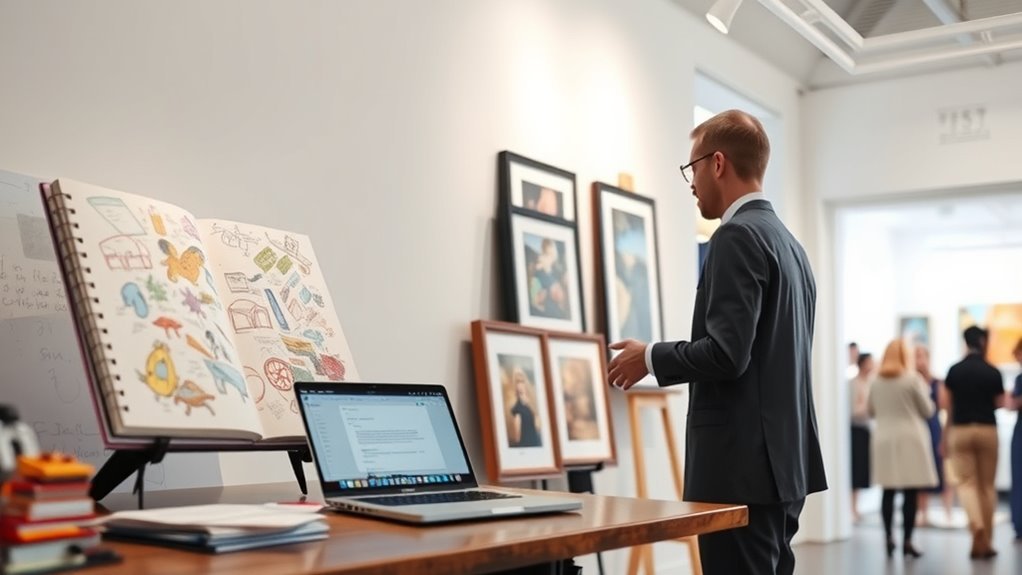
5 Steps to Get Your Art in a Gallery Successfully
To get your art into a gallery successfully, start by researching and targeting galleries that match your style and goals. Finding the right gallery is key—it should resonate with your artistic voice and ambitions. This focused approach sets a strong foundation for your journey.
Next, prepare a polished, cohesive portfolio showcasing your unique voice. Make sure your work tells a story and highlights what makes you different. Having a standout portfolio will catch the eye of gallery curators.
When you visit galleries, go during quiet times and do so confidently. Building genuine relationships with the staff is important—they can be your biggest allies.
After your visit, follow up politely to keep the connection alive and update them on your progress.
Don’t forget to boost your visibility online and locally. Share your art on social media and participate in local art events. These steps increase your chances of getting noticed.
Keep exploring and refining these strategies to truly stand out in the competitive gallery world.
Key Takeaways
– Research and target galleries that align with your art style and support emerging artists.
It’s important to find places that really get what you’re about. That way, your work has a better chance to shine.
– Prepare a cohesive, high-quality, and professionally presented portfolio showcasing your unique style.
Make sure your portfolio tells your story clearly and looks polished. First impressions count!
– Visit galleries during non-peak hours, build genuine relationships, and confidently discuss your work.
Try to catch gallery staff when they’re not too busy. Chatting sincerely can open doors.
– Follow up with polite, concise emails updating on new work and maintaining respectful communication.
Keep in touch without being pushy. A friendly update shows you’re active and professional.
– Enhance visibility through a strong online presence and active participation in local art communities.
Get your name out there! Being involved locally and online helps you connect with more people who appreciate your art.
Identify Galleries for Your Art Style and Goals
Before you approach any gallery, you need to identify those that align with your art style and career goals. Start by researching galleries known for supporting emerging artists or those that showcase art similar to yours.
Visit galleries in person to get a feel for their exhibited works and see if your style fits their aesthetic and audience. Check their websites carefully for gallery guidelines, artist submissions, and any open calls that match your approach.
Prioritize galleries with a consistent exhibition schedule, as this shows they actively promote artists and engage their community. Understanding a gallery’s market position and clientele helps you decide if your art’s price point and style will appeal to their visitors.
Don’t overlook galleries that focus on local art, since they often welcome emerging talent and provide valuable exposure. By targeting the right galleries, you’ll save time and increase your chances of a successful partnership.
Get Your Portfolio Ready With Marketable, Consistent Art

When you prepare your portfolio, focus on presenting a cohesive collection that highlights your unique artistic voice through consistent style, theme, and medium. This consistency helps galleries quickly understand your artistic identity and what sets you apart.
Prioritize high-quality work that’s fully finished and ready to display. Use professional appearance tactics like clean canvases or framing to enhance artwork presentation.
Focus on polished, ready-to-display pieces with professional touches like clean canvases or framing for maximum impact.
Include a variety of pieces that show your versatility without straying from your core style. This approach appeals to gallery tastes while reinforcing your brand.
Regularly update your portfolio with fresh work to demonstrate ongoing creative activity and growth. It really shows professionalism and dedication.
Avoid including unfinished or poorly presented pieces, as these can detract from the overall impression. By carefully curating your portfolio with marketable, consistent art, you’ll create a powerful first impression that increases your chances of getting noticed and accepted by galleries.
Visit Galleries Confidently and Start Building Relationships

A confident visit to galleries can open doors to meaningful connections and opportunities for your art. When you approach galleries, choose casual, non-peak hours to avoid disrupting busy times and to appear genuine.
Dress with a professional appearance that aligns with the gallery’s aesthetic to make a strong first impression. Start by sincerely admiring the gallery’s existing collection—this helps build relationships naturally and shows respect for the gallery owner’s taste.
Let staff guide conversations toward your work instead of pushing it yourself; this illustrates confidence without desperation. Remember, the goal is to build relationships, not just to showcase your art immediately.
Master Follow-Up and Gallery Communication
Though your initial gallery visit lays the groundwork, consistent follow-up is what keeps you on their radar. After meeting gallery staff or submitting your portfolio, send a polite, brief email within a few weeks to reinforce your interest.
Consistent, polite follow-up emails after your initial gallery visit help maintain your presence and show genuine interest.
This follow-up shows professionalism and persistence, essential qualities galleries appreciate. In your messages, update them on new work, exhibitions, or achievements to build credibility and keep your portfolio relevant.
Maintain respectful gallery communication by spacing out your emails to avoid appearing pushy. Track all interactions and responses carefully, so you can tailor future follow-ups effectively.
This attention helps nurture long-term relationships with gallery personnel, which can open doors over time. Remember, mastering follow-up is not just about persistence but about thoughtful, professional communication that keeps your art and your name in their thoughts.
Boost Your Visibility Online and Locally to Support Gallery Success
If you want galleries to notice your work, you need to boost your visibility both online and in your local art community. Build a strong online presence by using social media platforms like Instagram and maintaining a professional website.
Regularly post high-quality images of your art and engage with online art communities to attract gallery owners looking for emerging artists. Don’t overlook online art exhibitions and digital galleries; they expand your reach beyond local boundaries.
Locally, get involved by joining art groups, collaborating with fellow artists, and showing your work at local exhibitions. These activities create word-of-mouth buzz and increase your visibility within the community.
Staying active both online and locally shows professionalism and persistence, making it easier for galleries to discover and consider your work. By balancing your online presence with local engagement, you set yourself up for greater gallery success.
Frequently Asked Questions
What Is the 70 30 Rule in Art?
The 70/30 rule means you spend 70% of your time creating high-quality, marketable art and 30% promoting it.
You’ll balance improving your craft with marketing to attract galleries and buyers effectively.
How to Get Art Accepted Into a Gallery?
You’ll need to shine brighter than a supernova by presenting a polished, market-ready portfolio that matches the gallery’s vibe. Build genuine connections, follow submission rules, and showcase your unique artistic voice with confidence and professionalism.
It’s all about making your work stand out and showing that you’re serious. Take the time to understand what the gallery is looking for, and tailor your approach accordingly. Keep it professional, but don’t be afraid to let your personality shine through.
Do You Get Paid to Have Your Art in a Gallery?
You don’t usually get paid just for displaying your art in a gallery. Instead, galleries sell your work and take a commission.
Why Do Galleries Take 50%?
Imagine sharing a garden’s harvest—you split the fruits. Galleries take 50% because they invest in sales, marketing, and space.
They’re like gardeners who nurture your art, so both of you reap the rewards together. It’s a partnership that helps your work reach more people and thrive.
Conclusion
By following these five steps, you’ll increase your chances of getting your art into a gallery. Did you know that 85% of artists who actively network and follow up with galleries see positive responses within six months?
Keep your portfolio sharp, build genuine relationships, and boost your visibility both online and locally. These small efforts can make a big difference in how galleries perceive your work.
With persistence and strategy, you’ll turn your passion into gallery success faster than you might expect. Keep pushing forward! Staying consistent with networking, refining your art, and promoting yourself are key to getting your art in a gallery successfully. Remember, every connection and every piece you share brings you one step closer to your goal.