7 Steps to Pack Canvas Art for Moving Safely
To pack your canvas art safely for a move, start by gathering essential materials like bubble wrap, acid-free tissue, and a sturdy box. These items will protect your artwork from damage during transit.
Next, clean and document your canvas art before you wrap it securely. Focus on protecting the corners with extra padding to avoid dings or tears.
Cushion the piece well and place it snugly in a padded box. Make sure to seal the box tightly so nothing shifts inside during the move.
Finally, label the box clearly with handling instructions, so movers know to be careful. When you unpack, do so gently in a stable environment.
Following these simple steps will help you protect your canvas art every step of the way. Moving your artwork doesn’t have to be stressful if you prepare properly!
Key Takeaways
- Clean and photograph the artwork, then remove hanging hardware to prepare for packing.
- Wrap the canvas with acid-free paper, then add bubble wrap focusing on edges and corners.
- Use foam corner protectors and secure all layers with painter’s tape to prevent shifting.
- Choose a sturdy box with at least 2 inches of padding and fill gaps with cushioning materials.
- Label the box clearly with “Fragile” and “Handle with Care.”
Then, unpack carefully in a climate-controlled space. It really helps keep your art safe!
Choose Materials for Packing Canvas Art
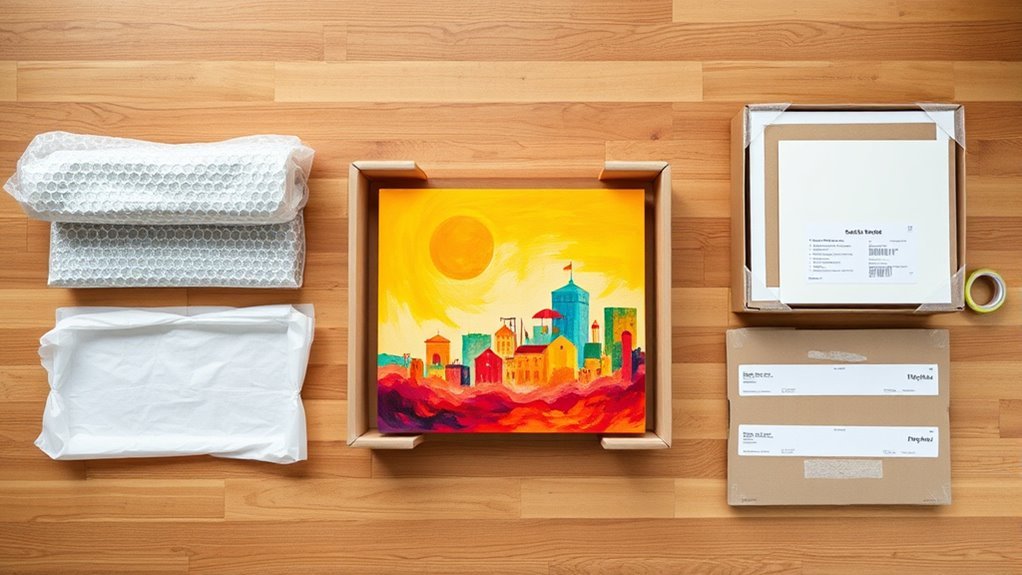
To pack your canvas art securely, start by gathering the right materials. You’ll need bubble wrap to cushion the canvas, preventing scratches or dents during transport.
Use parchment paper or acid-free tissue to wrap both the front and back of the canvas; these layers act as protective barriers against surface damage. Choose a box that fits your canvas dimensions well, leaving enough room for additional padding.
Proper padding is essential—fill any empty space with foam peanuts, crumpled paper, or foam sheets to stabilize the artwork and avoid shifting. Once wrapped, secure the bubble wrap and protective layers with painter’s tape or shipping tape to keep everything in place.
Prepare Canvas Art: Cleaning and Documentation
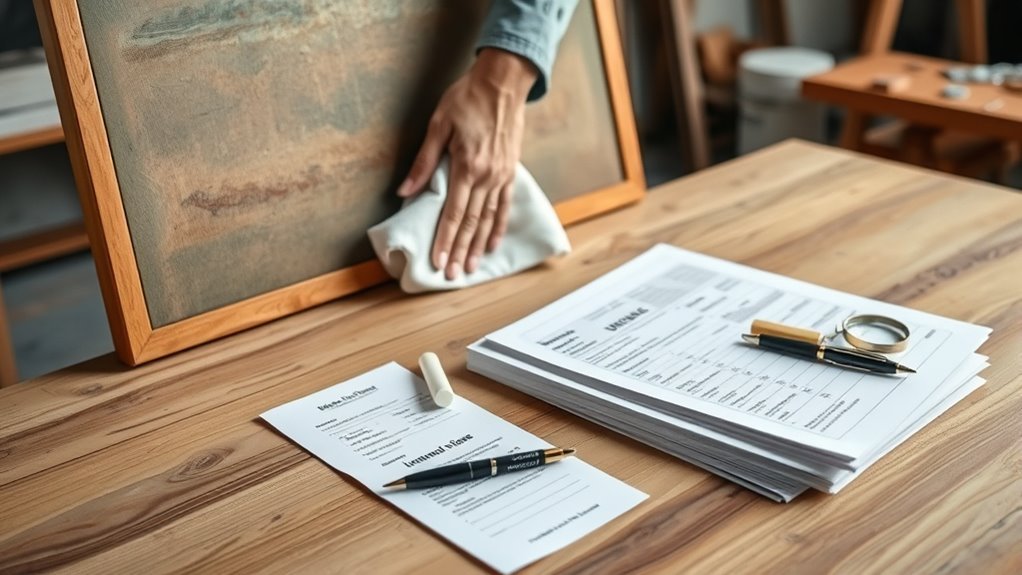
Before packing, gently clean your canvas art with a soft cloth to remove dust and make sure it’s completely dry.
Take clear photos and note important details like title, artist, and any damages to keep track of each piece.
Start this process early to give your art time to acclimate and avoid damage during the move.
Document Artwork Details
How can you guarantee your canvas art stays safe and well-documented during your move? Start by recording all essential artwork details. Take high-resolution photos from multiple angles to capture its condition.
Next, create a thorough inventory list including the artist’s name, title, dimensions, medium, and any unique marks. This documentation protects you against loss or damage claims and helps you keep track of each piece.
Here’s a simple table to organize your artwork details:
| Artwork Title | Dimensions | Special Notes |
|---|---|---|
| Sunset Over Bay | 24″ x 36″ | Small tear bottom left |
| Portrait of Ana | 18″ x 24″ | No damage |
| Abstract Forms | 30″ x 30″ | Remove hanging hardware |
This clear documentation ensures your art stays protected throughout the move. It’s a straightforward way to keep everything safe and sound!
Clean Frames Gently
Although cleaning your canvas art frames might seem minor, it plays a crucial role in protecting your pieces during the move. Start by gently dusting the frame with a soft, dry cloth to remove dirt and debris without causing scratches.
If your frame has glass, use a slightly damp cloth sparingly to clean it. Just make sure it’s completely dry afterward to prevent moisture damage.
Avoid harsh chemicals or excessive moisture, as they can harm the frame or artwork. Lightly wiping the frame before packing ensures it’s free of dust that might scratch or damage surfaces during handling.
Taking these simple cleaning steps helps maintain your art’s condition. It gives you peace of mind as you prepare to move your treasured pieces safely.
Acclimate Art Early
Cleaning the frames thoroughly sets the stage for protecting your canvas art as you prepare for the move. Next, you’ll want to acclimate your artwork early by packing it well in advance and storing it in a climate-controlled space. This helps the canvas adjust to new temperature and humidity levels, reducing risks of damage.
Before packing, gently remove dust with a soft, dry cloth, and take detailed photos from multiple angles to document the artwork’s condition. Create a written inventory listing dimensions, medium, and any existing damage for easy reference.
Don’t forget to remove hanging hardware like hooks or nails to prevent scratches or tears during transit. Taking these steps guarantees your artwork stays safe and ready for relocation.
Wrap Canvas Art Securely
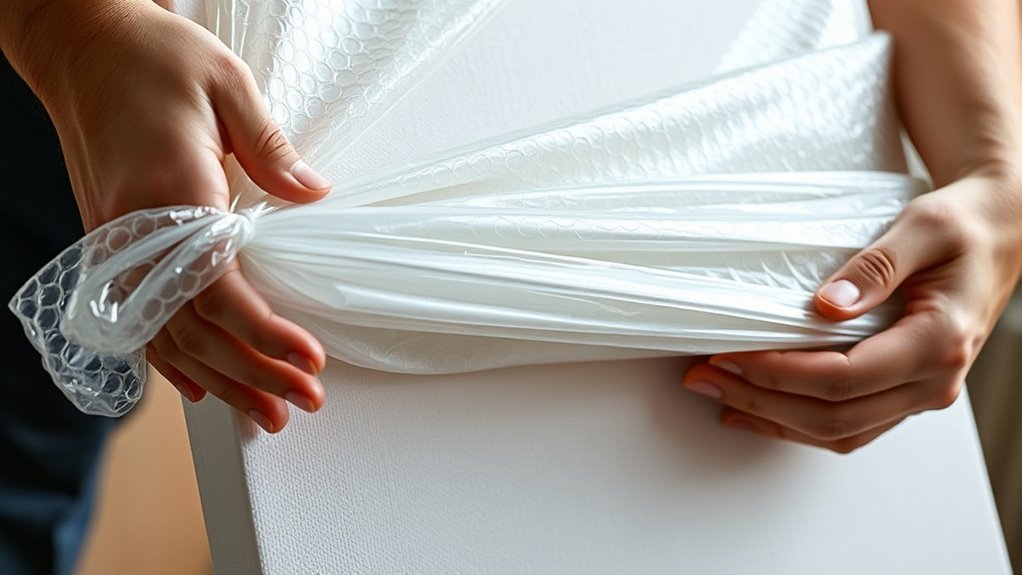
To wrap your canvas art securely, start by choosing the right protective materials like parchment paper and bubble wrap. Make sure you cover the entire surface carefully, paying close attention to edges and corners to prevent damage.
Securing everything tightly will keep your artwork safe during the move. It’s all about making sure nothing shifts or gets scratched along the way.
Selecting Protective Materials
When packing your canvas art, you’ll want to start by wrapping it with acid-free parchment paper or plastic wrap to shield it from dust and moisture. These protective materials prevent damage without harming the paint. Secure the wrap carefully with painter’s tape, avoiding direct contact with the painted surface.
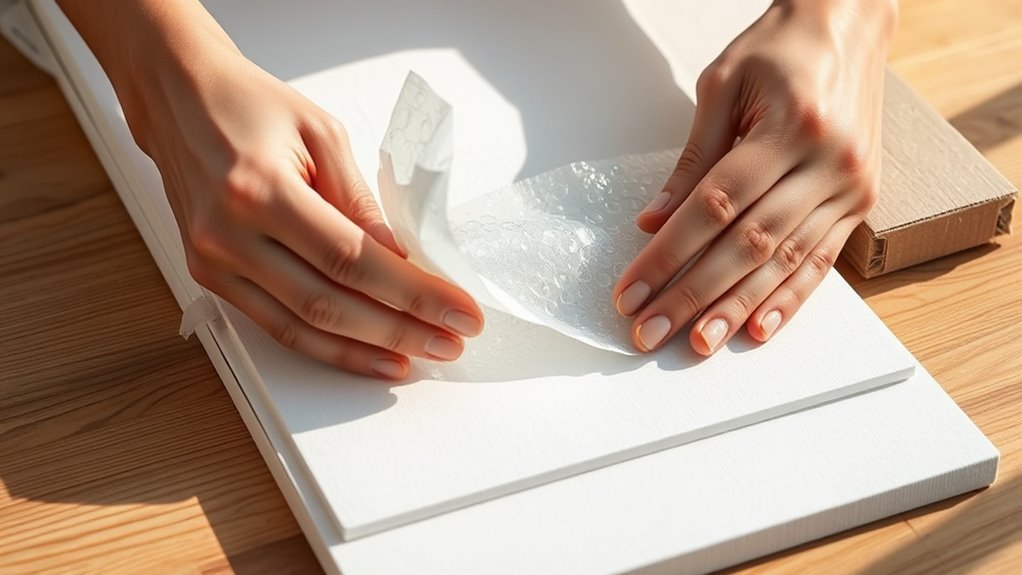
Next, cover the canvas with bubble wrap, paying special attention to the edges and corners, where damage is most likely. Bubble wrap provides essential cushioning against impacts during transit.
Finally, choose padding like foam or packing paper to place inside a box that fits the bubble-wrapped canvas snugly. This extra padding prevents shifting and absorbs shocks, ensuring your artwork arrives safely. Selecting the right protective materials is key to preserving your canvas art while moving.
Wrapping Techniques Overview
How do you guarantee your canvas art stays pristine during a move? Start by wrapping both the front and back with parchment paper to shield the surface from scratches and dust. Use painter’s tape to secure the parchment paper, but avoid letting the tape touch the canvas directly.
Next, wrap the entire piece with bubble wrap, making sure the bubbles face outward. This cushioning prevents impressions on your artwork and adds extra protection, especially around the edges and corners.
Finally, place your wrapped canvas into a box that fits well, then add padding around it to minimize any movement during transit. These wrapping techniques combine to keep your canvas safe, clean, and secure throughout your move.
Securing Edges And Corners
After wrapping your canvas with bubble wrap, pay close attention to the edges and corners, where damage is most likely to occur. Start by covering the edges with acid-free tissue paper or parchment to prevent scuffs and tears, securing it with painter’s tape.
Next, add corner protectors made of cardboard or foam to reinforce vulnerable corners and prevent crushing or punctures. Fold the bubble wrap tightly around these protected edges and corners, then secure everything firmly with packing tape.
This guarantees the protective materials stay in place during handling and transit. Thorough cushioning with bubble wrap or foam padding around all edges and corners provides extra shock absorption, keeping your canvas art safe throughout the move.
Taking these steps will safeguard your artwork’s most fragile points efficiently. It’s a simple way to make sure your canvas arrives just as beautiful as when you packed it.
Cushion and Protect Canvas Corners
Why focus on protecting the corners of your canvas? Corners are the most vulnerable parts during a move—they can easily get bumped, torn, or dented.
To safeguard them, start by wrapping each corner with acid-free tissue or parchment paper to prevent surface damage. Then, apply foam corner protectors or custom-cut foam padding to shield against dents and punctures.
Next, wrap the corners with at least two layers of bubble wrap for extra cushioning. Secure everything tightly with painter’s tape to keep the protection in place.
Here’s how to cushion and protect your canvas corners effectively:
- Use corner protectors to absorb impact and prevent crushing.
- Wrap corners in acid-free tissue before bubble wrap to avoid scratches.
- Apply two layers of bubble wrap for shock absorption.
- Secure padding firmly with painter’s tape to avoid slipping.
Taking these steps ensures your art arrives at its new home flawless and ready to display. Easy, right?
Pack Canvas Art in the Right Box
Choosing the right box plays a crucial role in keeping your canvas art safe during the move. Pick a sturdy box that fits your canvas snugly, allowing at least 2 inches of padding on all sides. This padding prevents the artwork from shifting and protects it against impact.
For unframed pieces, wrap them first in parchment paper secured with painter’s tape, then add a layer of bubble wrap before placing them in the box. Framed canvases need acid-free paper or glassine on the surface before bubble wrap, with extra attention to the edges and corners.
Make sure to reinforce all box seams with packing tape for added durability. Fill any empty spaces inside the box with padding material to keep the canvas from moving. Since your artwork is fragile, using the right box and enough cushioning will help it arrive safely at your new home.
Label and Handle Packed Canvas Art
Two simple but essential steps can make a big difference in protecting your canvas art during the move: labeling and handling instructions. When you clearly mark your boxes with visible labels, you’re giving movers the guidance they need to treat your artwork with the care it deserves.
Make certain to use waterproof or laminated labels on the largest flat surface to keep them intact and readable throughout the journey.
Use waterproof or laminated labels on the largest flat surface to ensure they stay clear and intact during your move.
Be sure your labels include words like “Fragile” and “Canvas,” along with clear instructions such as “Handle with Care” or “Keep Upright.” This way, everyone involved understands the importance of gentle handling.
It really helps avoid any confusion or rough treatment.
- Feel confident knowing your art is marked for careful treatment.
- Avoid the heartbreak of damaged pieces from rough handling.
- Trust that clear labels protect your investment.
- Enjoy peace of mind as movers see the “Fragile” warnings and act accordingly.
Unpack and Acclimate Canvas Art After Moving
Once you’ve safely transported your canvas art, unpack it carefully to prevent damage from sudden temperature or humidity changes. Remove the protective wrapping slowly, avoiding sharp objects that could scratch or puncture the surface.
As you unpack, take a moment to inspect your artwork for any signs of damage or deterioration. If you notice anything concerning, snap a quick photo to document it.
To help the canvas acclimate, place it in a stable, climate-controlled space where temperature and humidity remain consistent. Let your art sit for at least 24 to 48 hours before you hang or display it.
Try to avoid putting the canvas in direct sunlight or areas prone to high humidity or temperature swings. Those kinds of conditions can cause warping or cracking over time.
Following these simple steps will help ensure your canvas art stays in excellent condition and looks its best when you’re ready to showcase it.
Frequently Asked Questions
How to Pack Canvas Paintings When Moving?
You’ll want to wrap your canvas carefully with parchment paper, then bubble wrap it, placing it in a sturdy box padded well.
Make sure to fill any gaps to prevent shifting during the move. Seal the box securely and don’t forget to label it fragile for safe handling.
How to Pack a Canvas Painting for Travel?
Imagine your canvas wrapped like a precious gift, protected from every bump. You’ll shield it carefully with layers, cushion the edges, and place it upright in a sturdy box.
This way, you’re making sure it travels safely to your destination without a scratch. It’s all about giving it that extra bit of care!
How Do Movers Pack Paintings?
Movers wrap your paintings with bubble wrap or blankets and add corner protectors. Then, they place them in sturdy boxes or crates.
They secure glass with tape and keep the artwork upright. Big pieces get handled extra carefully to prevent any damage during the move.
How to Pack up Canvas Pictures?
Think of your canvas as a delicate treasure chest; you wrap it in soft parchment, shield it with bubble armor,
nestle it in a cozy box, and mark it fragile—ensuring your art travels safely, just like a guarded secret.
Conclusion
By following these steps, you’ll wrap your canvas art like a protective cocoon, shielding it from the bumps and jolts of your move. Think of your careful packing as a gentle hug, keeping each piece safe and sound.
When you finally unwrap your treasures, they’ll be ready to bloom anew in your new space, unharmed and full of life. Trust the process, and your art will travel as beautifully as it’s meant to.
Packing canvas art carefully is key to a smooth move. Using the right materials and techniques ensures your artwork stays protected throughout the journey. So, take your time with each step, and your canvas art will arrive in perfect condition, ready to brighten your new home.