
What Does “Wherefore Art Thou Romeo” Mean?
You might think Juliet’s line “Wherefore art thou Romeo?” asks where Romeo is, but actually, “wherefore” means “why.” She’s questioning why he has to be a Montague, her family’s rival, not his location.
Juliet’s frustration highlights the tension between love and social boundaries. Many misunderstand this because “wherefore” sounds like “where” today, but back then, it asked about reasons.
If you want to understand her true emotions and the line’s meaning, there’s more to explore. It’s really about the struggle between love and the obstacles that come with family loyalty.
So, next time you hear “wherefore,” remember—it’s asking why, not where!
Key Takeaways
- “Wherefore” means “why,” so Juliet asks why Romeo must be a Montague, not where he is. The line expresses Juliet’s frustration with the family feud that forbids their love.
- Juliet questions the significance of Romeo’s name, highlighting identity over location. Modern readers often misinterpret “wherefore” as “where,” causing confusion about Juliet’s intent.
- Understanding “wherefore” as “why” reveals the line’s deeper themes of love and social conflict. It’s really about why Romeo has to be who he is, not where he is.
What Does “Wherefore” Mean in Juliet’s Line?

Why does Juliet ask, “Wherefore art thou Romeo?” In this line, “wherefore” actually means “why,” not “where.” She’s not wondering where Romeo is, but why he has to be a Montague, the family her own is feuding with.
The word “wherefore” is an archaic term from Shakespeare’s time that means “for what reason” or simply “why.” Juliet’s question isn’t about Romeo’s physical location but about the reason behind his identity and name.
This line highlights her emotional struggle with the social barriers set by their families’ rivalry. When Juliet asks “wherefore,” she’s questioning the significance of Romeo’s name and the implications it has on their love.
Understanding the true meaning of “wherefore” in this Shakespeare line clarifies Juliet’s deeper conflict—her frustration with Romeo’s identity as a Montague, which complicates their relationship rather than any curiosity about his whereabouts.
Why Do So Many People Think “Wherefore” Means “Where”?
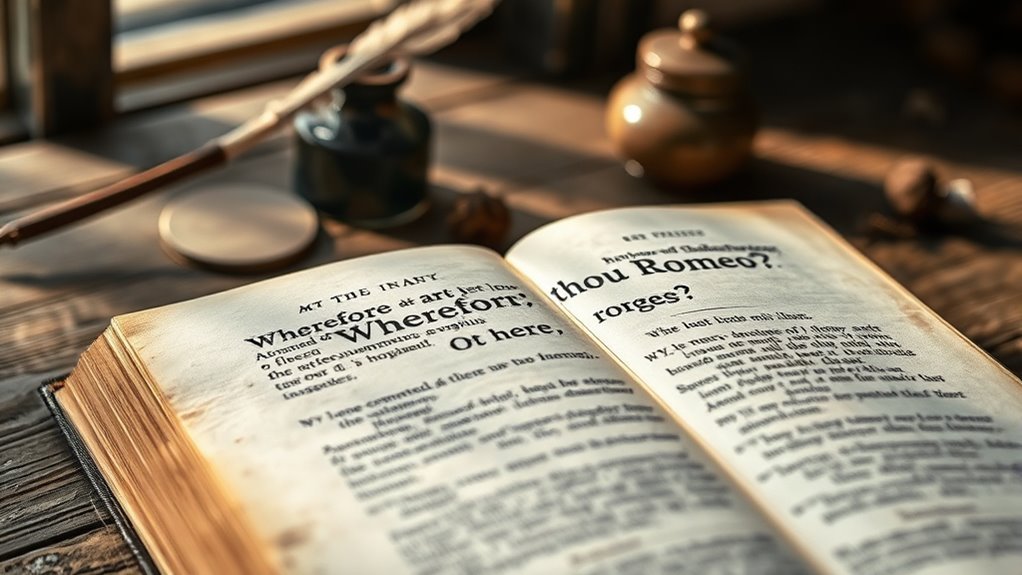
How often have you heard Juliet’s line misunderstood as asking where Romeo is, rather than why he is who he is? This misunderstanding stems from the word “wherefore,” which in Shakespeare’s Elizabethan English actually means “why,” not “where.”
Because modern audiences aren’t familiar with this archaic meaning, many people assume Juliet is asking about Romeo’s location. This leads to a widespread misinterpretation.
Modern audiences often mistake “wherefore” for location, causing a widespread misunderstanding of Juliet’s true question.
The historical context shows that “wherefore” was commonly used in literature of Shakespeare’s time to question reasons or causes. Unfortunately, contemporary media often overlooks this, reinforcing the false meaning.
So when Juliet says, “Wherefore art thou Romeo?” she’s really asking why Romeo must be Romeo—why he belongs to the rival family—rather than where he is.
Understanding the original meaning clears up this common confusion and highlights Shakespeare’s exploration of identity and fate rather than geography.
Frequently Asked Questions
What Is the Real Meaning of “Wherefore Art Thou, Romeo”?
You’re asking why Romeo must be a Montague, Juliet’s family enemy.
She’s not wondering where he is, but questioning his identity and the feud that keeps them apart.
She’s longing for love beyond names.
Why Did Juliet Say “Wherefore Art Thou, Romeo”?
You ask why Juliet says “wherefore art thou, Romeo?”
She’s questioning why Romeo must be a Montague, her family’s enemy.
She’s longing for him to reject his name so their love can exist without conflict or barriers.
What Is the Full Quote of Wherefore Art Thou, Romeo?
You won’t find this quote on Twitter, but the full line is: “O Romeo, Romeo! wherefore art thou Romeo?”
It’s Juliet questioning why Romeo has to be a Montague, not asking where he is physically.
Kind of a mix-up people often have, right? It’s more about his identity than his location.
Who First Said “Wherefore Art Thou”?
You’ll find Juliet first said “wherefore art thou” in Shakespeare’s *Romeo and Juliet*. She asks why Romeo is Romeo, struggling with his family name, not literally asking where he is located.
It’s kind of like her wondering why he has to be from the family her family is feuding with. So, it’s more about identity than location. Pretty interesting how that phrase gets misunderstood sometimes!
Conclusion
Now that you know “wherefore” means “why,” not “where,” you can see Juliet’s line in a whole new light. She’s not asking where Romeo is, but why he must be Romeo, a Montague, her family’s enemy.
Isn’t it fascinating how one misunderstood word changes the entire meaning? Next time you hear “wherefore art thou Romeo,” you’ll get the depth of Juliet’s heartfelt question.
Words really do matter, don’t they? Understanding the true meaning of “wherefore” helps us appreciate the emotional weight behind Juliet’s plea. It shows how language shapes our interpretation of literature. So, whenever you hear “wherefore art thou Romeo,” remember—it’s about the powerful question of identity and fate, not a simple location. That’s the beauty of Shakespeare’s words!