How to Wrap Canvas Art in 3 Easy Steps
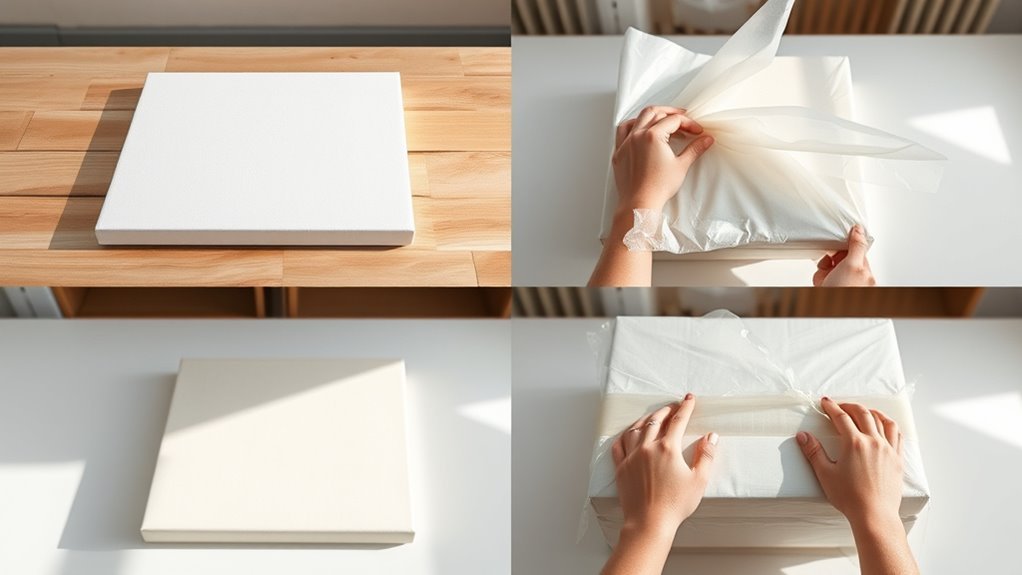
To wrap your canvas art properly, start by covering it with smooth, acid-free glassine paper. Cut the paper slightly larger than the canvas and tape it carefully, making sure not to touch the paint. This step protects your artwork from dirt and moisture during handling.
Next, sandwich the wrapped canvas between two cardboard sheets that are cut a bit bigger than the canvas itself. Secure the edges with sturdy tape to keep everything stable and prevent bending. This adds a solid layer of protection.
Finally, wrap the entire package with bubble wrap. Add a few layers for extra cushioning, and tape it securely to stop any shifting during transit. Keep going to uncover detailed tips for flawless protection and shipping, so your canvas art arrives in perfect condition!
Key Takeaways
- Use acid-free glassine paper to wrap the canvas, cutting it slightly larger for full coverage. Smooth out any wrinkles carefully.
- Secure the protective paper with low-tack or artist’s tape, but be sure to avoid direct contact with the painted surface.
- Next, sandwich the wrapped canvas between two cardboard sheets that are cut slightly larger than the canvas itself. This gives it extra stability.
- Tape around the cardboard edges and reinforce both the top and bottom. This adds protection when you’re handling it.
- Finally, wrap the entire assembly with multiple layers of bubble wrap. Secure it tightly with tape to cushion it during shipping.
Wrap Your Canvas in Protective Paper Without Damaging It
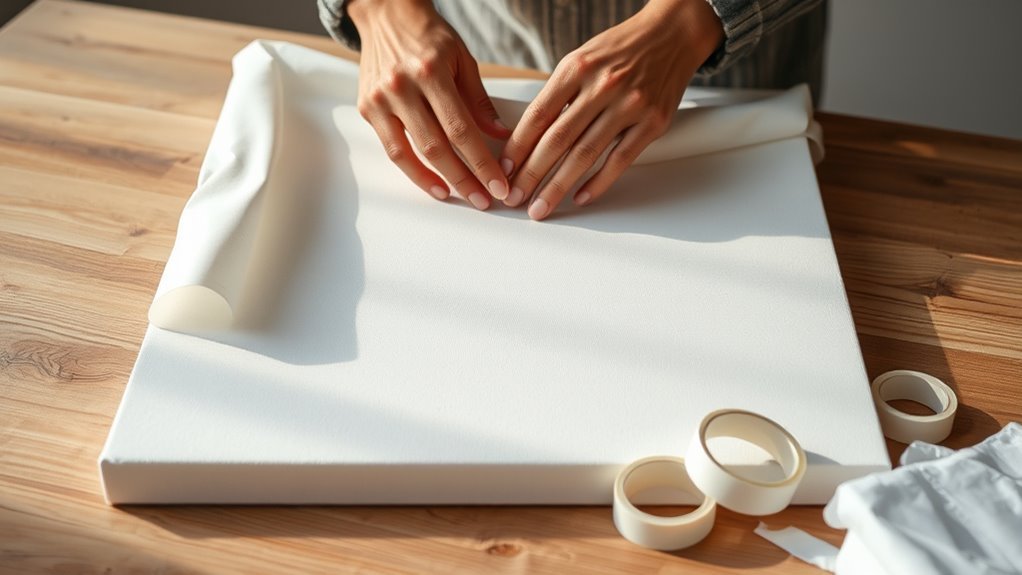
When you wrap your canvas art, choose glassine paper because it’s smooth, acid-free, and won’t stick to the surface. This makes it the perfect protective layer to prevent damage during handling or transport.
Start by cutting the glassine paper slightly larger than your canvas, so you have enough to fully wrap it without stretching or tearing. Lay your canvas flat, then carefully wrap it with the glassine paper. Be sure to smooth out any wrinkles to avoid pressure points that could harm the paint or texture.
Use artist’s tape or low-tack tape to secure the paper, but don’t tape directly onto the painted or textured surface. Adhesive residue could cause damage, and that’s the last thing you want.
Secure the Wrapped Canvas Between Cardboard Sheets for Stability
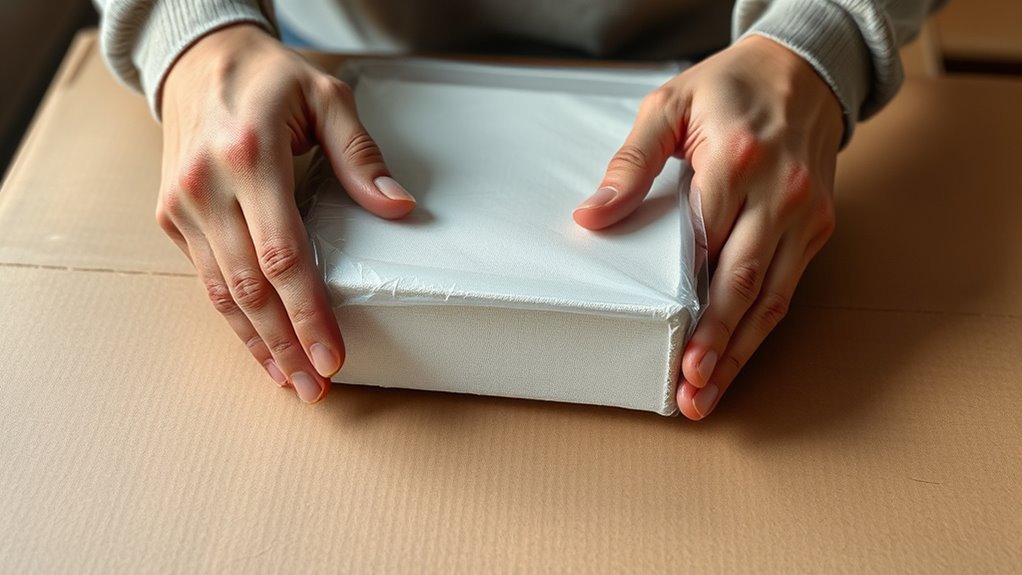
Although your canvas is wrapped securely in protective paper, adding a layer of cardboard on both sides will provide the stability it needs during transport.
Start by tracing the canvas shape onto two cardboard pieces, making each about 1/4 inch larger for a secure fit. Place the wrapped canvas between these cardboard sheets, aligning edges precisely.
Then, tape around the edges firmly with strong packing or artist’s tape. Reinforce the top and bottom edges to keep everything from shifting.
Here’s a quick reference:
| Step | Action |
|---|---|
| Trace & Cut | Slightly larger cardboard pieces |
| Sandwich Canvas & Cardboard | Align edges evenly |
| Tape Securely | Tape edges and reinforce top/bottom |
This method keeps your canvas stable and protected, preventing movement or damage during handling and shipping.
Add Bubble Wrap Cushioning to Protect Canvas During Shipping
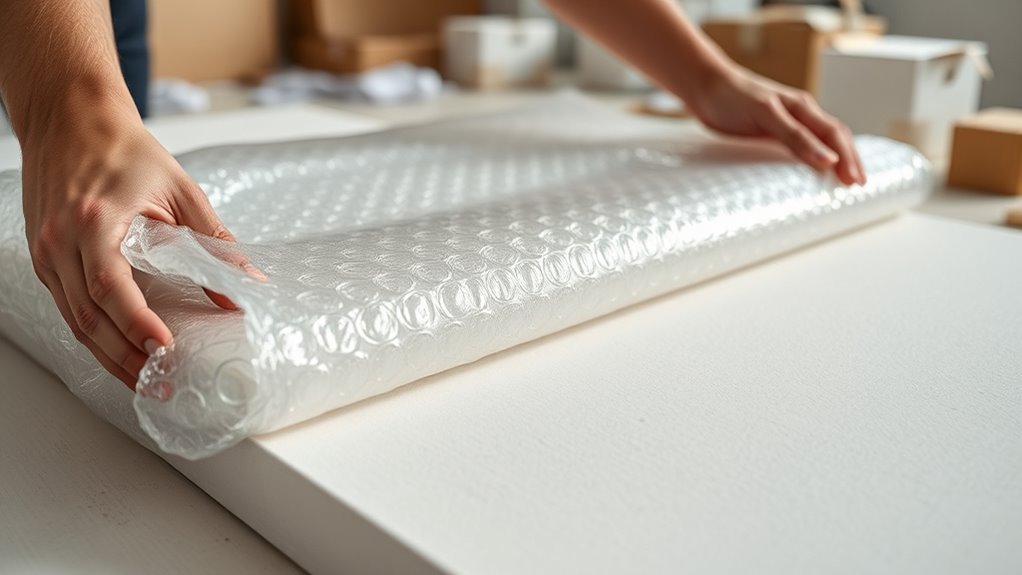
To protect your canvas during shipping, wrap it completely with bubble wrap. Make sure all sides are covered to absorb impacts. Bubble wrap provides essential cushioning that guards your artwork against bumps and shocks while in transit.
Follow these steps for effective bubble wrap cushioning:
- Wrap the entire canvas or framed piece with bubble wrap, covering all edges and corners.
- Use enough layers to create 2-3 inches of cushioning around the artwork.
- Secure the bubble wrap tightly with packing tape or artist’s tape to keep it from shifting.
- Place the bubble-wrapped canvas inside a larger shipping box filled with extra packing material to prevent movement.
Before sealing, gently press the wrapped canvas to test cushioning. This way, you can be sure the bubble wrap absorbs shocks and keeps the artwork stable during shipping. Proper cushioning helps your canvas arrive safe and intact.
Frequently Asked Questions
How to Wrap a Canvas Picture?
You’ll start by wrapping your canvas with kraft or glassine paper, securing it with tape. Then, sandwich it between cardboard pieces and tape again.
Finally, add bubble wrap around the whole package for extra protection. This way, your canvas stays safe and sound during transport.
How to Hang 3 Piece Canvas Art?
First, like a knight preparing for battle, you measure and mark the hanging points on each canvas. Then, attach D-rings and thread wire.
Make sure to level everything carefully. Next, hang the canvases on evenly spaced wall hooks for a flawless display.
It’s all about getting those pieces aligned just right so your art looks amazing!
How to Properly Wrap Artwork?
You’ll want to cover your artwork with protective paper, secure it without touching the surface, sandwich it between sturdy cardboard, then wrap everything in bubble wrap.
Finally, pack it tightly in a box to avoid damage. That way, your artwork stays safe and sound during transit.
How to Paint on a Canvas for Beginners Step by Step?
You’ll start by priming your canvas, then sketch your design lightly. After that, apply paint in thin layers and build colors gradually.
It’s best to work from the background to the foreground. Finally, finish with varnish to protect your painting.
You’ll learn, create, and improve with every stroke. Just take your time and enjoy the process!
Conclusion
Now that you’ve wrapped your canvas with care, secured it snugly between sturdy sheets, and added ample air-filled armor, you’re set to ship safely. These simple steps shield your stunning artwork from scratches, shocks, and smudges.
So, sail smoothly through shipping stress with savvy and skill—your masterpiece will arrive in perfect condition, ready to impress and inspire. Remember, a well-wrapped work wins every time!
When it comes to shipping canvas art, wrapping it properly is key. By following these easy steps, you protect your piece from damage during transit. With the right materials and a bit of patience, your canvas will stay safe and sound.
Wrapping your canvas art not only keeps it scratch-free but also guards against bumps and dirt. So take your time, use the right supplies, and you’ll ensure your artwork arrives looking just as beautiful as when you wrapped it. Trust these simple tips to make shipping your canvas art hassle-free and successful every time!