What Is Glass Art and How Do You Start?
Glass art is a creative craft that involves shaping and assembling molten or cut glass to create beautiful pieces. Techniques like glassblowing, fusing, lampworking, and mosaic assembly are commonly used in this art form. Whether you’re interested in making decorative items or intricate sculptures, glass art offers a unique way to express your creativity and work with vibrant colors and textures.
To start, you’ll need some essential tools, such as glass cutters, safety gear, and a soldering iron. It’s best to begin with simple projects like stained glass suncatchers or panels. These help you practice cutting and joining pieces safely without feeling overwhelmed.
With consistent practice and the right tools, you’ll build your skills and gain confidence. Before you know it, you’ll be ready to create more complex glass artworks as you explore this fascinating craft further.
Key Takeaways
- Glass art involves shaping and assembling glass using techniques like glassblowing, fusing, lampworking, and mosaic assembly.
- Starting requires understanding basic glass melting and shaping processes, along with necessary tools and safety gear.
- Beginners should gather essential tools such as glass cutters, safety gloves, goggles, and soldering irons for simple projects.
- Practicing with scrap glass on small projects like stained glass suncatchers builds foundational skills and confidence.
- Consistent practice and gradual skill development enable exploration of diverse glass art forms and more complex creations.
Glass Art Basics and Main Techniques
Although glass art covers a wide range of methods, you’ll find that glassblowing, fusing, lampworking, and mosaic assembly are the main techniques you’ll want to master.
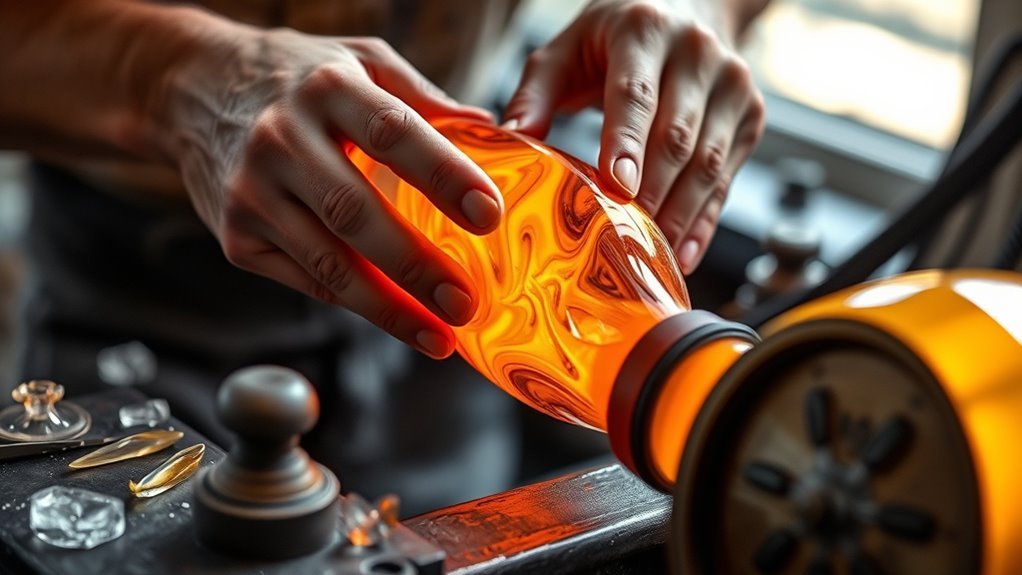
In glassblowing, you use a blowpipe to shape molten glass into organic forms, perfect for creating vessels or sculptures.
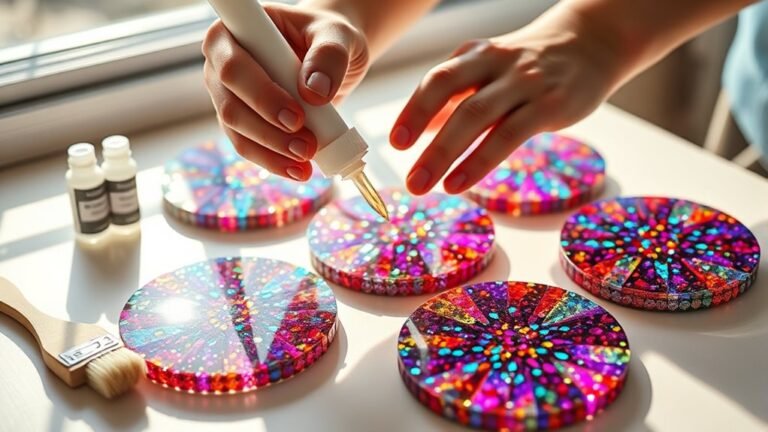
Fusing involves arranging compatible glass pieces, often colored glass, in a kiln where melting bonds them into textured, layered designs.
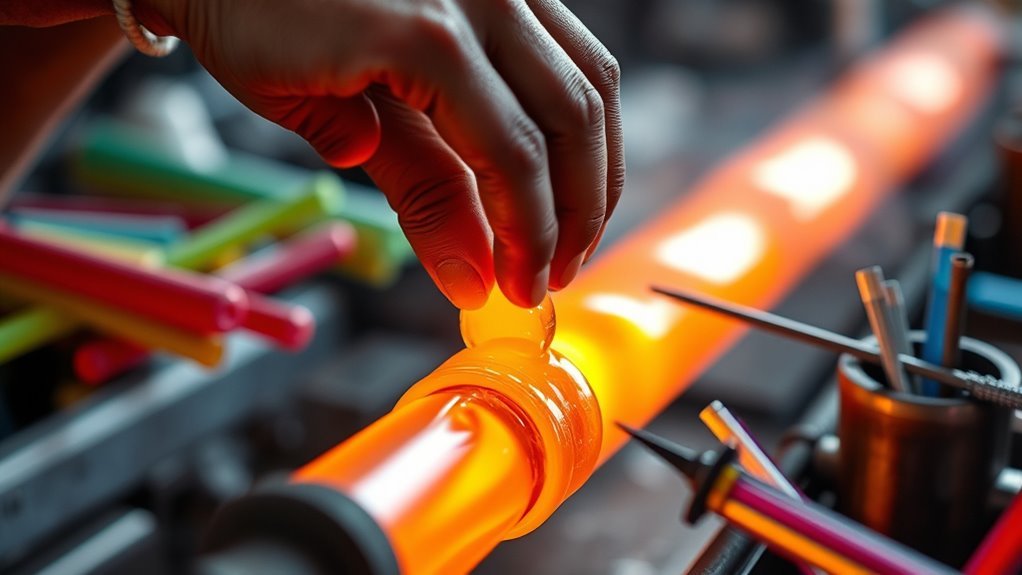
Lampworking lets you manipulate glass rods with a torch, allowing precise shaping for miniature objects or beads.
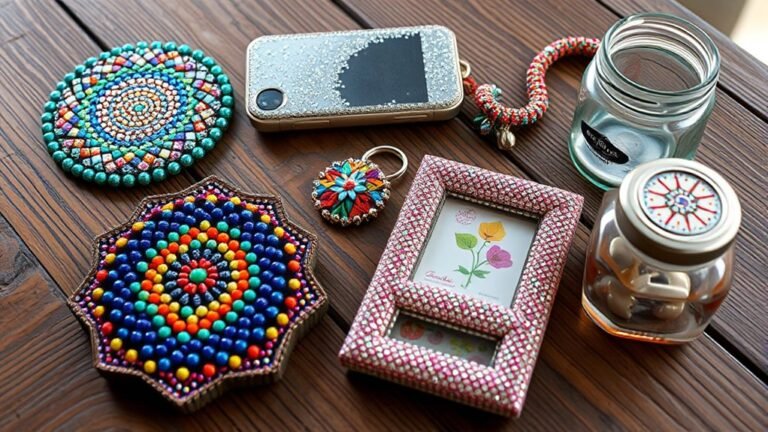
Mosaic assembly requires arranging small glass pieces and beads into decorative patterns, combining colors and textures for intricate designs.
Each of these glass techniques demands specific tools and supplies, from blowpipes and torches to kilns and cutting tools.
Understanding the basics of melting and shaping glass, whether by heat or assembly, sets a solid foundation as you explore the diverse art of glasswork.
Getting Started: Essential Tools and Beginner Projects
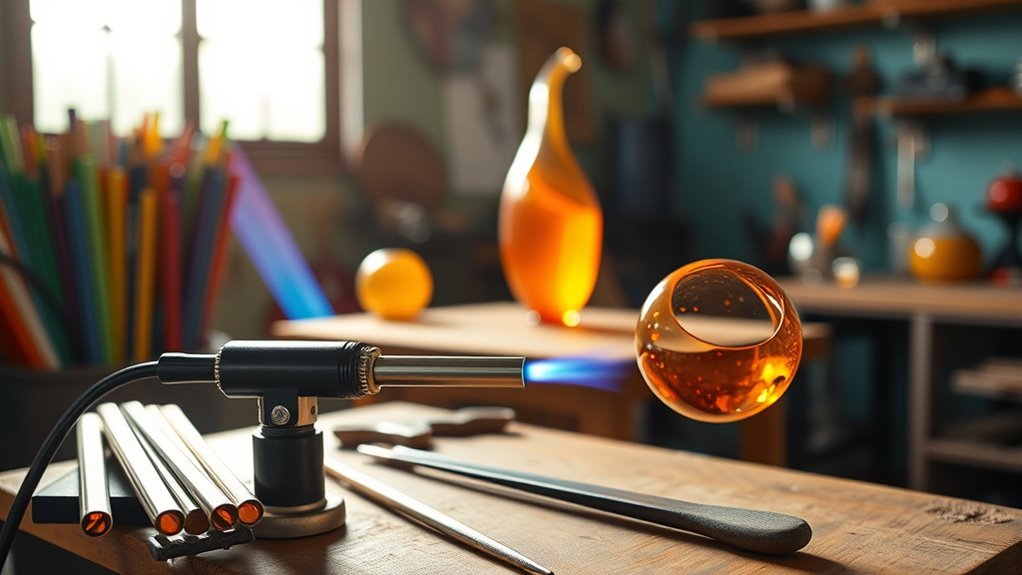
Mastering the basic glass techniques is just the start—you’ll need the right tools to bring your projects to life. For beginner projects, focus on gathering essential tools that make working with glass safe and efficient. Here’s what you’ll need:
- A glass cutter with oil and running pliers for precise cutting of glass pieces.
- A self-healing cutting mat to protect surfaces and ensure clean cuts.
- Safety gear like gloves, goggles, and ventilation to shield you from shards and fumes.
- A soldering iron to assemble stained glass pieces by joining seams smoothly.
Start with simple stained glass suncatchers or panels using scrap glass from local shops or online sources. This lets you practice cutting straight lines, fitting pieces into templates, and soldering without overspending.
As you gain confidence, your glass art skills will grow, making more complex designs achievable. Remember, consistent practice with the right tools and safety gear is key to your success in glass art.
Frequently Asked Questions
What Do You Need to Do Glass Art?
You need essential tools like glass cutters, pliers, and soldering irons, plus safety gear such as goggles and gloves. Get quality glass materials and a sturdy work surface.
It’s also a good idea to learn cutting, foiling, and soldering techniques before you start. That way, you’ll feel more confident and create better glass art.
Is Glass Art an Expensive Hobby?
Glass art can be costly, especially collecting quality glass and essential cutters.
But you can cut costs by choosing cheap kits, scrap supplies, and practicing patiently.
With prudence, your passion won’t break your budget.
What Kind of Glue Do You Use for Seaglass Art?
You’ll want to use a clear, waterproof glue like E6000 for seaglass art. It bonds well, stays flexible, and dries clear.
Always clean and dry your glass before gluing to guarantee a strong, lasting hold. That way, your art will stay put and look great for a long time!
Is Glass Art Difficult?
Glass art is like taming fire in your hands—it can be tough at first.
But don’t worry, you’ll gain control and confidence with practice.
You’ll turn molten challenges into shining masterpieces as you learn each delicate step.
Conclusion
So, you’re ready to become the Picasso of molten sand? Just remember, glass art isn’t about waving a magic wand—it’s about wielding tools that look like they belong in a medieval torture chamber. Start small, or you might end up with a shiny paperweight that screams, “I tried!”
Embrace the mess, the heat, and the occasional singed eyebrow. Soon enough, you’ll be shaping glass like a fiery wizard—minus the cape, hopefully.
Getting started with glass art means patience and practice. You’ll learn to handle hot glass safely and develop techniques like blowing, casting, or fusing. The key is to stay curious and persistent because mastering glass art is a rewarding journey.
In the end, glass art combines creativity and craftsmanship in a unique way. By starting small and embracing the process, you’ll soon create beautiful pieces that reflect your personal style. So grab your tools, prepare for some heat, and dive into the fascinating world of glass art!