What Is Tramp Art and How Is It Made?
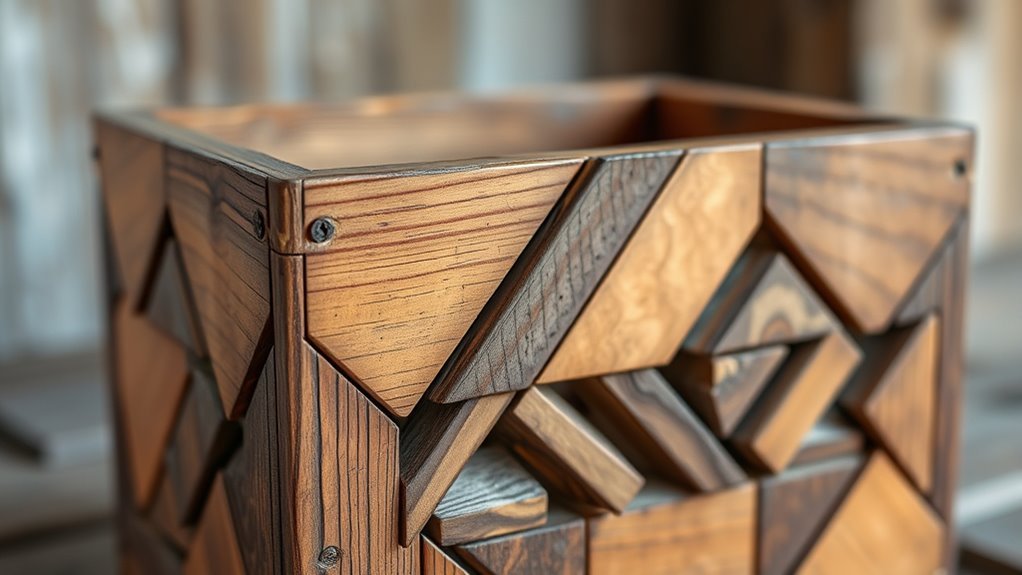
Tramp art is a unique American folk craft that involves layering notched wood scraps, often from cigar boxes, into intricate, pyramidal designs. This creative process uses simple tools like a pocketknife to carve tiny V-shaped cuts, making each piece fit perfectly together. It’s a hands-on art form that turns everyday wood scraps into beautiful, decorative objects.
What’s really cool about tramp art is its roots in immigrant craftsmanship. People used whatever materials they had on hand and transformed them into functional art.
By carefully interlocking and gluing or nailing the pieces, they created detailed works that are both charming and practical.
Keep exploring, and you’ll discover the rich history and fascinating techniques behind this timeless craft.
Key Takeaways
- Tramp art is a folk art style that uses layered, notched wood scraps, often from discarded cigar boxes.
- It started in late 19th century America and was influenced by European chip carving. The art was mainly created by itinerant workers.
- Simple tools like pocketknives are used to make tiny V-shaped notches in wood pieces, which are then layered.
- These notched wood layers are glued or nailed together to form symmetrical, geometric, pyramidal shapes.
- Finished tramp art pieces are both decorative and functional. They really show off a lot of resourcefulness and craftsmanship.
What Is Tramp Art and Where Did It Start?
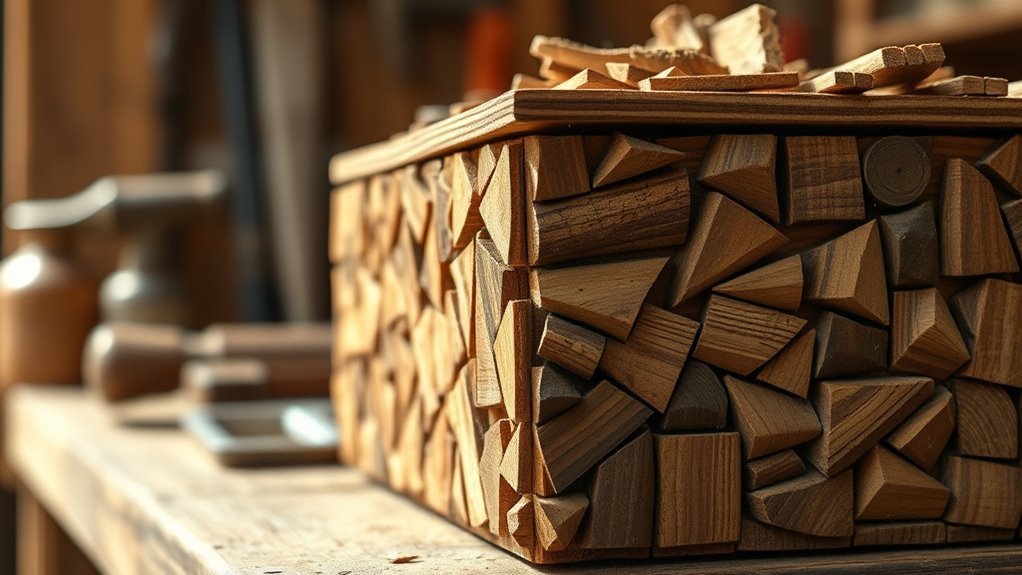
Tramp art is a unique folk art style that emerged in the late 19th century United States, built mainly from layered, notched wood scraps like cigar boxes. You’ll find tramp art rooted in American folk art, where immigrant craftsmen—especially from Germany and Scandinavia—brought chip carving skills that shaped its look.
This outsider art form thrives on resourceful woodworking, turning discarded materials such as wooden cigar boxes into intricate, decorative pieces. Geometric patterns stand out in tramp art, reflecting the chip carving traditions passed down through European folk art.
Originally linked to itinerant workers and hobos, tramp art showcases creativity by repurposing scraps into functional or ornamental objects. When you explore tramp art, you’re seeing a blend of history, craftsmanship, and imagination born from humble beginnings and a knack for making something beautiful from almost nothing.
How Tramp Art Is Made: Tools and Steps
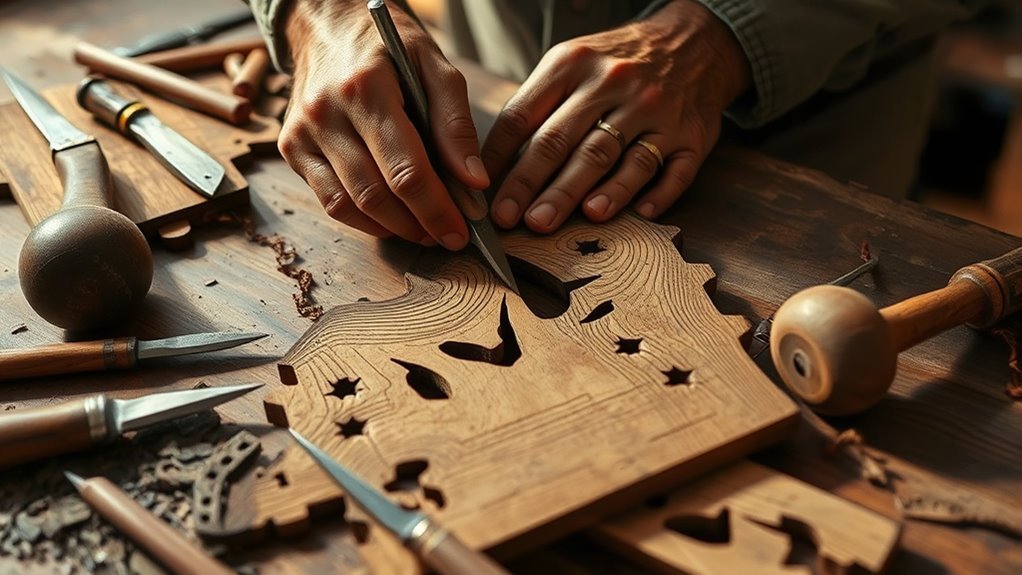
Although the materials are humble, creating tramp art requires skillful use of simple tools like a pocketknife to notch, carve, and shape wood scraps.
You start by making tiny V-shaped cuts or chips using your pocket knife, a technique called notching, which forms the geometric patterns essential to tramp art.
Then, you layer and interlock these notched pieces, often from cigar boxes, building up decorative objects in a modular, symmetrical design.
The pieces are glued or nailed together, creating intricate shapes like stars or hearts.
This layering and interlocking process gives tramp art its distinctive pyramidal look, emphasizing craftsmanship.
Your careful carving and precise use of tools transform simple wood scraps into beautiful, sturdy works of folk art.
Frequently Asked Questions
Why Do They Call It Tramp Art?
They call it tramp art because it originated with wandering, often marginalized people. The term “tramp” reflects its roots among travelers and outsiders, even though many makers were stable workers or immigrants, not just wanderers.
What Is Tramp Art Worth?
You’ll find tramp art values range widely—from a few hundred dollars to over $75,000—depending on craftsmanship, size, history, and provenance. Collectors pay more for rare, well-documented pieces, especially those by notable artisans or with strong historical ties.
What Tools Are Used in Tramp Art?
You might think tramp art needs fancy tools, but it doesn’t. You’ll use simple hand tools like pocketknives, saws, chisels, and files. These let you notch, carve, and shape wood into detailed geometric patterns.
What Is Tramp Art Style?
Tramp art style features layered, notched wood forming geometric patterns like stars and triangles. You create it by stacking and interlocking small, carved wood pieces, often using scavenged materials, resulting in intricate, symmetrical designs.
Conclusion
Now that you know what tramp art is and how it’s made, don’t you find it fascinating how simple materials transform into intricate, beautiful creations?
By layering carved wood from discarded items, you can create something unique and meaningful. Whether you’re a beginner or experienced, trying tramp art lets you connect with a rich history while expressing your creativity.
So, why not pick up some tools and start crafting your own piece of this charming folk art? Exploring tramp art is not just about making something pretty—it’s about embracing a traditional craft that turns everyday wood scraps into detailed, artistic treasures. Give it a try and see how tramp art can inspire your artistic side while preserving a fascinating cultural heritage!