What Is Scale in Art?
Scale in art is all about the size and proportion relationships between elements. It helps you see what’s important and how objects relate to each other in a piece. Understanding scale guides your sense of depth, perspective, and even emotional impact.
Large scale can create awe and make you feel something bigger than yourself. On the other hand, small scale draws you into the fine details and invites closer inspection. Artists use scale to focus your attention and build visual excitement.
If you keep exploring, you’ll uncover how clever use of scale shapes an artwork’s meaning and power. It’s a tool that artists play with to make their work more engaging and meaningful.
So, next time you look at art, think about how scale is telling you a story.
Key Takeaways
- Scale in art refers to the size and proportion relationships between objects within a composition. It influences how viewers perceive the importance and relationship of elements in artwork.
- Scale helps create emphasis, visual impact, and guides viewer focus in a piece. Artists manipulate scale to establish depth, perspective, and emotional responses.
- Understanding scale enhances appreciation of composition, detail, and the artist’s intended message. It’s a key tool that artists use to connect with their audience and tell a story.
What Scale Means in Art: and Why It Matters

Although scale might seem like a simple concept, it plays a crucial role in how you experience art. Scale refers to the size and proportion relationship between objects or figures within a composition.
When artists carefully adjust scale, they guide your eye to understand the importance of each element, creating emphasis and visual impact. This manipulation helps establish depth and perspective, making the artwork feel more dynamic and engaging.
By recognizing scale, you can better grasp how different parts of the piece relate to one another, enhancing your appreciation of the composition. Understanding scale allows you to see beyond surface details and connect with the artist’s intended message.
How Artists Use Scale in Art to Create Impact
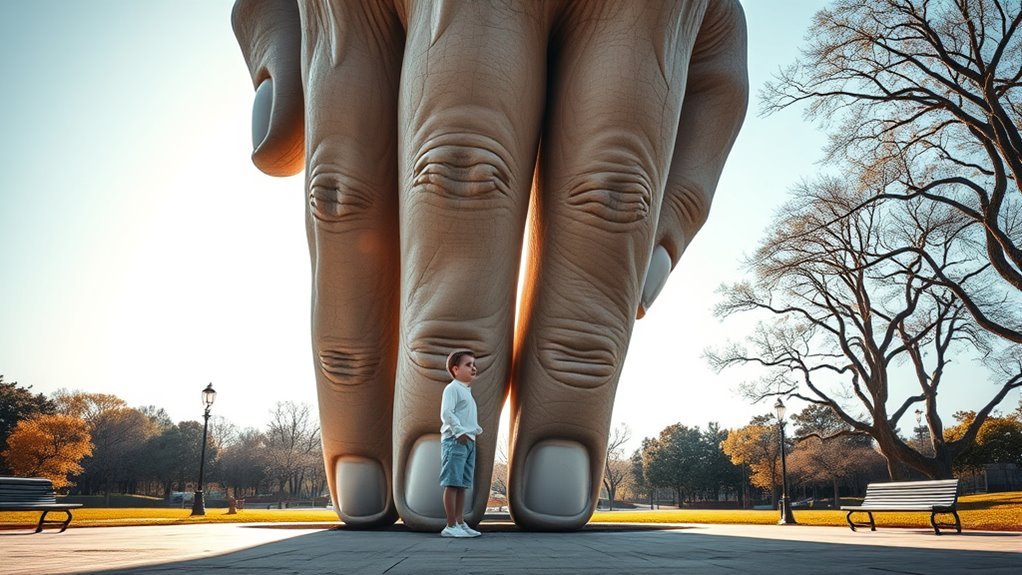
Understanding scale opens the door to seeing how artists create impact through size and proportion. When you notice size relationships in art, you realize how scale helps build emphasis and a clear focal point.
Understanding scale reveals how artists use size and proportion to create emphasis and focus in their work.
Artists use large-scale works to evoke awe and convey monumental importance. This enhances visual impact in a big way.
They also create small-scale pieces to highlight intricate detail. These invite intimate observation, drawing you in closer.
Plus, artists use techniques like forced perspective to shift perception. It changes how you see size and proportion, making things look different than they really are.
Frequently Asked Questions
What Is a Simple Definition of Scale?
Scale is how you compare the size of one thing to another. You use it to show importance or create depth. It helps you understand relationships between objects in a scene or artwork.
What Is Scale in Drawing?
Ever wondered how size changes affect your drawing’s impact? Scale in drawing means adjusting an object’s size relative to others, helping you create depth, emphasize elements, and make your artwork feel more realistic and engaging.
What Is an Example of a Scale in Art?
You can look at Michelangelo’s *David* as an example of scale in art—it’s over 13 feet tall, making its monumental size stand out compared to real human figures, emphasizing grandeur and impressive craftsmanship.
What’s the Difference Between Scale and Proportion in Art?
Imagine a towering mountain beside a tiny flower—that’s scale, the size difference you notice. Proportion, though, is like how each petal fits perfectly on that flower, showing how parts relate within a whole.
Conclusion
When you play with scale in art, you’re holding a magic wand that can change how everything feels. Bigger or smaller, scale shifts your perspective like zooming in or out on a story.
It guides your eye, stirs emotions, and makes the ordinary extraordinary. So next time you look at art, notice how scale shapes your experience.
It’s the silent storyteller that turns simple shapes into powerful messages. Scale in art isn’t just about size—it’s about how size influences meaning, mood, and impact. By adjusting scale, artists can highlight details, create drama, or bring focus to a particular element.
Understanding scale helps you see beyond the surface and appreciate the deeper story art tells. Remember, scale is a key tool that shapes your experience and connects you to the artwork in a meaningful way.