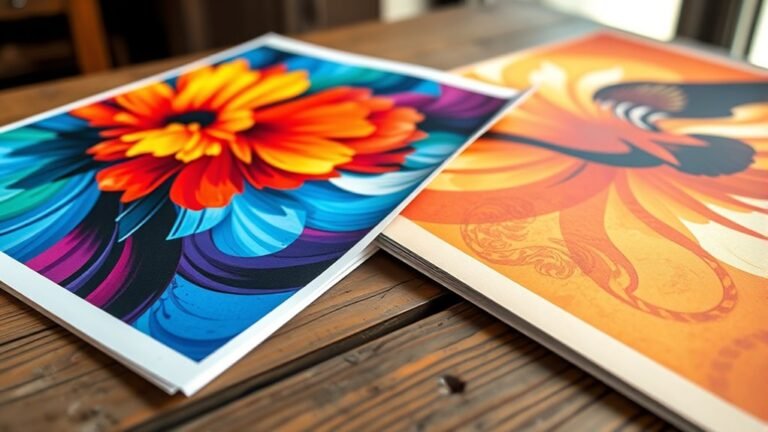
5 Tips to Describe Art Clearly
To describe art clearly, start by closely observing the main subject, light, and contrasts to capture mood and focus. These elements help set the tone and guide the viewer’s eye through the piece.
Using specific color and tone words like cerulean or muted can really paint a vivid picture in someone’s mind.
Pay attention to composition and texture next, noting the balance and surface qualities that add depth. Mentioning mark-making techniques and the artwork’s size also helps convey its physical presence.
Finally, connect these visual details with the emotions they evoke to engage more deeply. Keep exploring different ways to describe art, and you’ll uncover even richer methods to bring it to life.
Key Takeaways
- Identify the main subject and its position to establish focus and structure in the description. This helps the listener or reader know exactly what to look at first.
- Use specific, vivid color and tone words to accurately convey the artwork’s palette and mood. Think about how the colors make you feel or the atmosphere they create.
- Describe the composition and texture to explain how elements are arranged and how surface qualities affect perception. It gives a sense of movement or stillness in the piece.
- Include mark making techniques and artwork size to highlight texture, technique, and physical presence. These details show how the artist worked and the scale of the work.
- Combine detailed visual observations with emotional language to create an engaging and meaningful description. This way, you connect both the eyes and the heart of the audience.
How to Observe Art for Clear Description

When you observe art closely, you’ll catch important details like objects, colors, and textures that shape your overall impression. Start by identifying the main subject and noting its position in the composition, whether it’s at the top, in the foreground, or on the left.
Pay close attention to how the artist uses light and shadow to create mood and direct your focus within the piece. Observe contrasts carefully, as they often highlight key elements.
Next, examine the artist’s techniques—blending, glazing, or impasto—all of which add texture and depth to the surface. These methods influence how you perceive the artwork’s feel and energy.
Finally, consider the style and any symbolic details you notice, as they reveal deeper meaning and context. By focusing on these details and techniques, you’ll be able to describe art clearly and thoughtfully, capturing both what you see and how it impacts you.
Use Specific Color and Tone Words to Describe Art

Noticing the colors and tones an artist chooses helps you bring their work to life in your description. When you use specific color words like cerulean, ochre, emerald, or magenta, you accurately convey the artwork’s palette.
Observing an artist’s color choices lets you vividly capture and convey their unique palette.
Don’t settle for general terms like “blue” or “red”—precise language paints a clearer picture. Also, describe the tone by choosing words such as muted, vibrant, pastel, or saturated to express the artwork’s mood.
Combining these with temperature-related words like cool or warm adds depth to your description. For example, you might say, “a vivid, warm palette of deep orange and subtle pink hues” to evoke a strong image.
Using intensity words like brilliant or subdued helps you specify how bold or soft the colors appear. By carefully selecting your colors and tone words, you create vivid, engaging descriptions that let others see the art through your eyes.
Describe Composition and Texture in Art
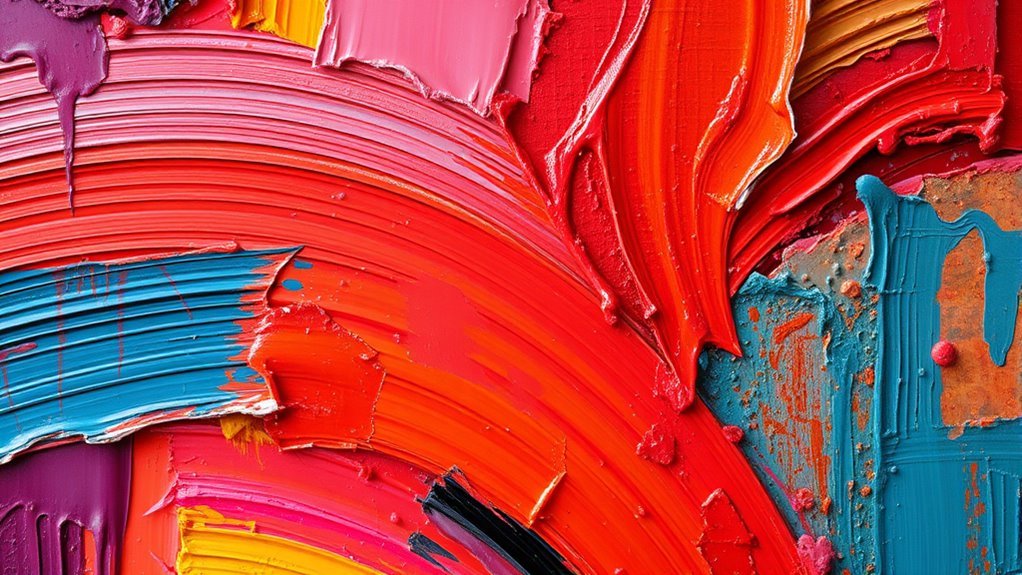
Three key aspects shape how you experience an artwork: its composition, texture, and the way they interact. When you describe composition, focus on how the artist arranges elements within the visual space.
Notice if objects cluster in the foreground, background, or middle ground, and whether the layout is balanced or asymmetrical. Use terms like “central composition,” “rule of thirds,” or “symmetrical layout” to clarify this.
Texture plays an essential role too. Observe if surfaces look smooth, rough, raised, or polished.
Recognize techniques like impasto, which creates thick, tactile paint layers, or glazing, which results in smooth, layered finishes.
Together, they guide your eye and set the mood. To describe them clearly, consider:
- How elements are positioned and balanced in the visual space
- The tactile qualities of surfaces and how texture is achieved
- The way composition and texture combine to create movement or emphasis
This approach helps you capture the artwork’s full impact.
Add Mark Making and Size Details to Your Art Description
Although composition and texture set the foundation of an artwork, adding details about mark making and size brings your description to life. When you describe mark making, focus on techniques like blending, impasto, glazing, or scumbling to reveal the texture and surface quality.
Use precise words such as thick, thin, bold, or delicate to highlight how these marks shape the viewer’s experience. Don’t forget to mention the artwork’s size with exact measurements—say, 50 cm x 70 cm—to give a clear sense of scale.
Whether the piece features large, mural-sized sections or small, intricate details, size influences how the art commands attention. By combining mark making and size, you convey how texture and surface quality interact to enhance the artwork’s visual impact.
This approach ensures your description feels vivid and accurate, helping others fully appreciate the piece’s physical presence and artistic techniques.
Combine Visual Details and Emotion to Describe Art Effectively
Building on the detailed description of mark making and size, you can enrich your portrayal of art by weaving in both visual details and emotional responses.
To describe art effectively, focus on these three key steps:
- Use specific visual details like colors, shapes, textures, and composition to create a vivid mental image. Notice how each element interacts to guide the viewer’s eye.
- Incorporate emotional language that captures the mood or tone. Words like “vibrant,” “haunting,” or “serene” help connect what you see with how the artwork makes you feel.
- Blend descriptive terms with expressive language to highlight symbolic or metaphorical aspects. This balance deepens the emotional impact and invites others to engage more personally.
Frequently Asked Questions
How to Properly Describe Art?
You focus on specific colors, shapes, and textures, describing where elements appear. You analyze the artist’s message and support your observations with clear, concrete details.
Keep your language simple and your description organized. It helps make your ideas easy to follow and understand.
What Are the 5 C’s of Art?
The 5 C’s of art are Color, Composition, Content, Craftsmanship, and Context. You’ll use these to analyze an artwork’s mood, structure, meaning, skill, and background.
They help you describe it clearly and insightfully. Understanding these makes looking at art way more interesting and fun!
What Are the 7 Characteristics of Art?
The seven characteristics of art are line, shape, form, color, texture, space, and value. You use these elements to understand and analyze artwork.
They help you see how artists create meaning and visual interest in their pieces. It’s like unlocking the secrets behind what makes art so engaging and unique.
What Are the 7 Art Terms?
The 7 art terms are line, shape, color, texture, space, form, and value. You use these elements to analyze and describe artwork.
They help you understand how artists create meaning and visual interest in their pieces. It’s pretty cool once you start noticing them!
Conclusion
Now that you’ve got these tips, describing art will feel like a breeze—almost as if you’ve uncovered the secret language of masterpieces! By observing closely and using precise color and texture words, you’ll start to see details you might have missed before.
Don’t forget to note composition and size, too. Blending in emotion helps you connect with the artwork on a deeper level.
With practice, your descriptions will bring any artwork to life with your words. Keep at it, and soon your art descriptions will be so vivid they’ll jump off the page and grab your audience’s heart in an instant! Remember, clear observation, thoughtful word choice, and emotional connection are key to describing art clearly and effectively.