Is Fencing a Martial Art?
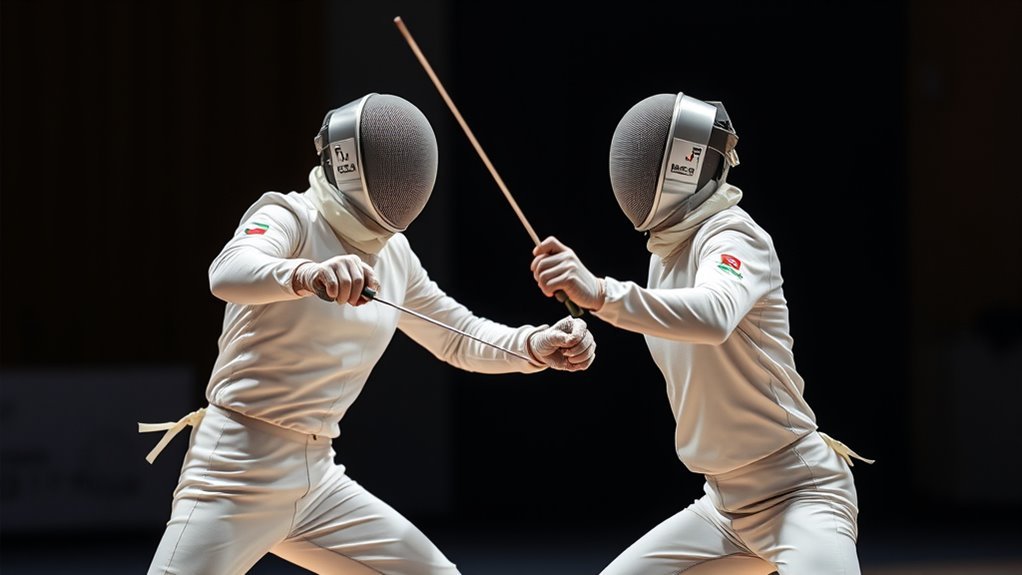
You might not realize it, but fencing is indeed a martial art. Rooted in centuries of swordsmanship, this discipline demands sharp mental focus, discipline, and strategic blade control.
It’s more than just a sport—it’s a practice that hones both mind and body through precise movements and tactical thinking.
You’ll use techniques like thrusting and parrying that mirror real combat, balanced with sport rules and safety measures.
While fencing has evolved into a competitive sport, it still preserves its martial essence through tactical precision and timing.
Keep exploring, and you’ll discover how it masterfully blends tradition with modern game dynamics.
Key Takeaways
- Fencing originates from historical swordsmanship and traditional combat techniques, reflecting core martial principles. It demands discipline, mental focus, strategic attack, and defense like traditional martial arts.
- Techniques such as thrusting, parrying, and riposte derive from effective self-defense methods. Modern fencing adapts these combat skills within regulated sport rules and safety measures.
- So, fencing really preserves the martial essence while mixing in competitive sport dynamics and tactical thinking. It’s a martial art that’s evolved into a fast-paced, exciting sport.
Why Fencing Is Considered a Martial Art
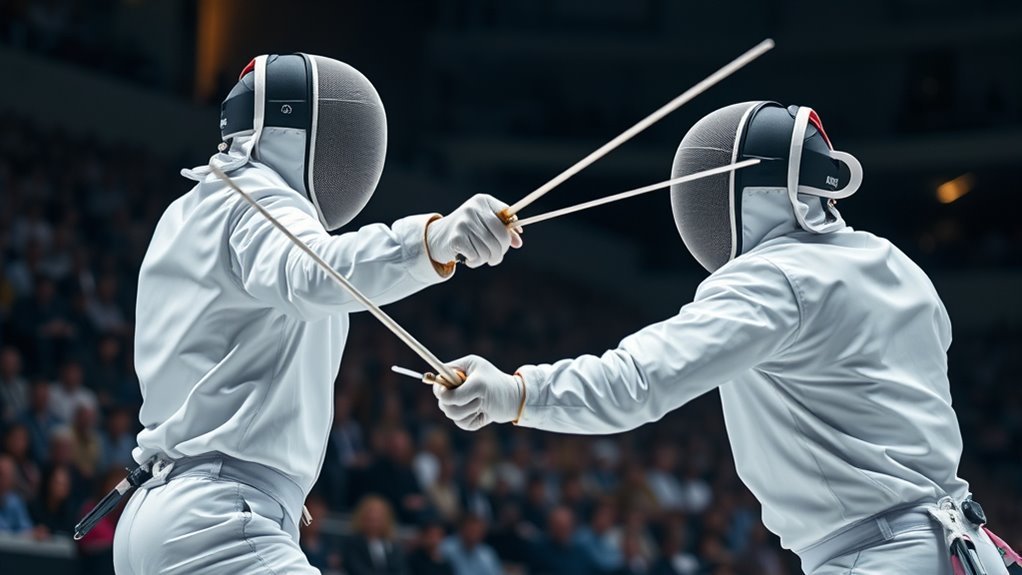
Why do many people consider fencing a martial art? You’ll find that fencing is deeply rooted in historical swordsmanship, using combat techniques developed for real duels and warfare.
As a martial art, it demands discipline and sharp mental focus, much like traditional practices. You’ll master strategic attack and defense, relying on blade feeling to time every move precisely.
Its techniques—thrusting, parrying, and riposte—aren’t just for show; they reflect effective self-defense methods. Even though fencing has evolved into a combat sport, it preserves core martial principles such as working angles and counterattacks.
How Fencing Combines Combat Skills With Sport Rules
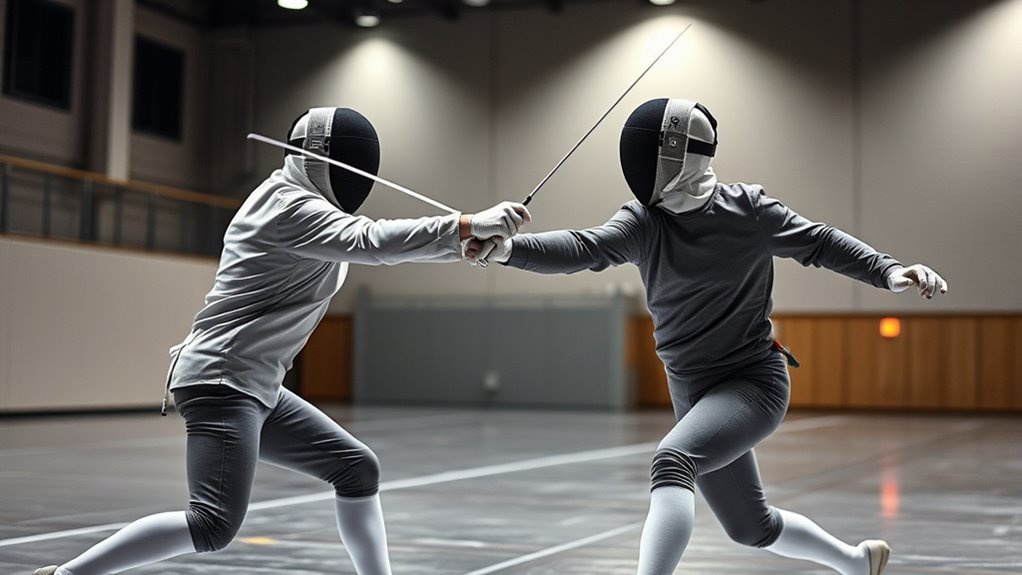
Although fencing has its roots in traditional combat, it adapts these skills within a strict set of sport rules that shape how you execute attacks, parries, and ripostes. You apply combat skills derived from traditional swordsmanship and martial arts, but must follow regulations like right of way and designated target areas.
These sport rules create a tactical environment where your offensive-defensive techniques must be precise and timely. Electrical scoring systems track valid hits, while safety gear protects you, ensuring the martial techniques are performed safely and fairly.
Fencing’s unique blend of martial arts and sport emphasizes strategic thinking and blade control. It requires you to balance aggression with defense under competitive conditions.
This fusion preserves fencing’s martial essence while embracing modern sport dynamics. It’s a cool mix that keeps the tradition alive but makes it exciting as a sport.
Frequently Asked Questions
Is Fencing Good for ADHD?
Yes, fencing is great for ADHD. It sharpens your focus, boosts impulse control, and provides structured routines. Plus, its fast pace helps release energy, improving your mood and concentration while enhancing planning and self-regulation skills.
What’s Better, Jiu Jitsu or Fencing?
You want better? Easy—just pick between rolling around like a human pretzel or stabbing the air with style. Jiu Jitsu builds grit and ground control; fencing sharpens speed and strategy. Your choice, your adventure.
Is Fencing Real Combat?
Fencing isn’t real combat today since it uses protective gear and strict rules, but its roots come from deadly duels. You’ll find its techniques focus more on sport than actual fighting nowadays, prioritizing safety and scoring.
Is Fencing Harder Than Soccer?
Yes, you’ll find fencing harder than soccer because it demands precise technique, quick reflexes, and strategic thinking. It’s a one-on-one duel requiring intense focus, unlike soccer’s endurance and teamwork on a larger field.
Conclusion
When you step onto the fencing strip, you’re not just playing a sport—you’re wielding a martial art’s precision and strategy. Like a chess match in motion, fencing blends combat skills with strict rules, sharpening both body and mind.
So, next time you watch or try fencing, remember you’re engaging in a disciplined dance of attack and defense. It’s more than just a game; it’s a true martial art at its core, combining technique, focus, and respect.
Fencing challenges your reflexes and tactics just like other martial arts do. It demands both physical agility and mental sharpness, proving that beneath the sport lies the heart of a real martial art. So yes, fencing absolutely qualifies as a martial art—one that’s elegant, strategic, and deeply rooted in combat tradition.