What Happened to Hitler’s Art Collection?
You’ll find that Hitler’s art collection was mostly looted from Jewish collectors and museums during WWII. The Nazis took thousands of priceless works, often by force, as part of their campaign to erase Jewish culture. These stolen treasures included paintings, sculptures, and other valuable artifacts.
To protect them from air raids, the Nazis hid these works in secret vaults like salt mines and castles. It was their way of keeping these stolen goods safe during the chaos of war.
After the war, dedicated teams like the Monuments Men worked tirelessly to recover and return many of these pieces. Their mission was tough but crucial in restoring justice.
Even today, some artworks remain missing, and efforts to track them down continue. If you explore further, you’ll discover the fascinating stories behind these recoveries and the ongoing fight to return art to its rightful owners.
Key Takeaways
- Hitler’s art collection grew through looted and confiscated artworks, mainly from Jewish owners and museums during WWII. The Nazis took these pieces without permission, which was a huge loss for many families and institutions.
- The collection was stored in protected locations like salt mines and castles to shield it from Allied air raids. These secret spots helped keep the art safe from bombing.
- After WWII, the Monuments Men led efforts to recover and restitute the stolen art to rightful owners. Their work was crucial in returning many pieces to those who had lost them.
- Nazi records helped trace provenance, but about 70 paintings from Jewish collections remain missing today. It’s sad that not all of these treasures have been found.
- Ongoing investigations continue to locate unreturned artworks, emphasizing justice and cultural preservation. People are still determined to bring these pieces back home where they belong.
How Hitler Amassed and Hid His Art Collection During WWII
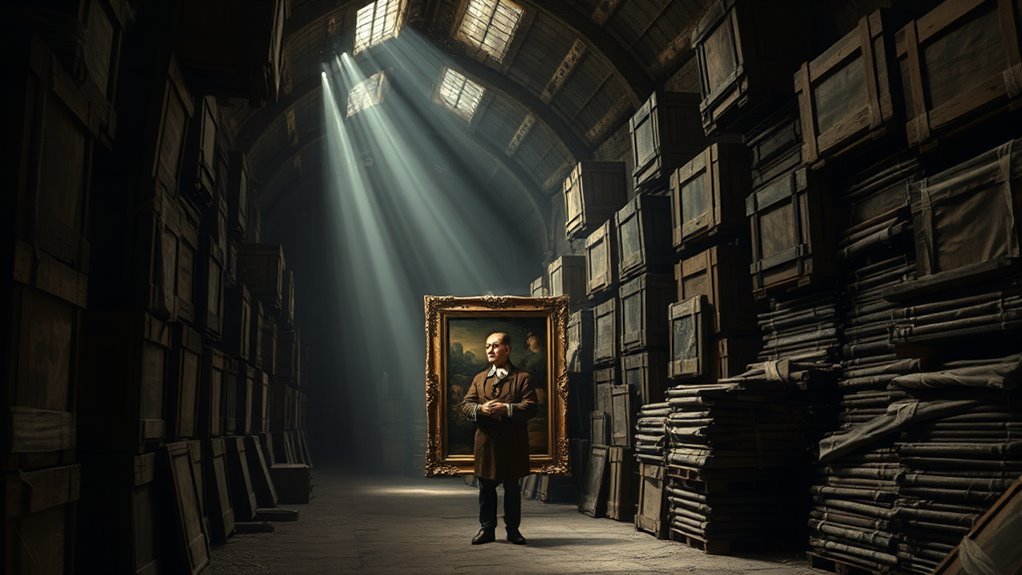
Although Hitler began collecting art before WWII, he rapidly expanded his collection through looting, purchases, and confiscations once the war started. You’d find that Nazi looting targeted Jewish collectors and museums, funneling looted art into Hitler’s art collection, especially for his planned Führermuseum in Linz.
Hitler’s art collection grew swiftly during WWII, fueled by looting Jewish collectors for his Führermuseum plans.
Nazi art dealers like those involved in the Gurlitt collection played key roles, facilitating art theft and benefiting financially. To protect these confiscated artworks from air raids and Allied forces, the Nazis stored much of the collection in salt mines and castles.
This WWII art storage was part of a broader effort to hide and preserve the stolen treasures. You should understand that Hitler’s collection wasn’t just amassed randomly; it was a calculated effort involving systematic art theft across Europe.
These salt mines became secret vaults for some of the most valuable looted art, illustrating the scale and organization behind Nazi looting during the war.
How Hitler’s Looted Art Was Recovered and Restituted After WWII
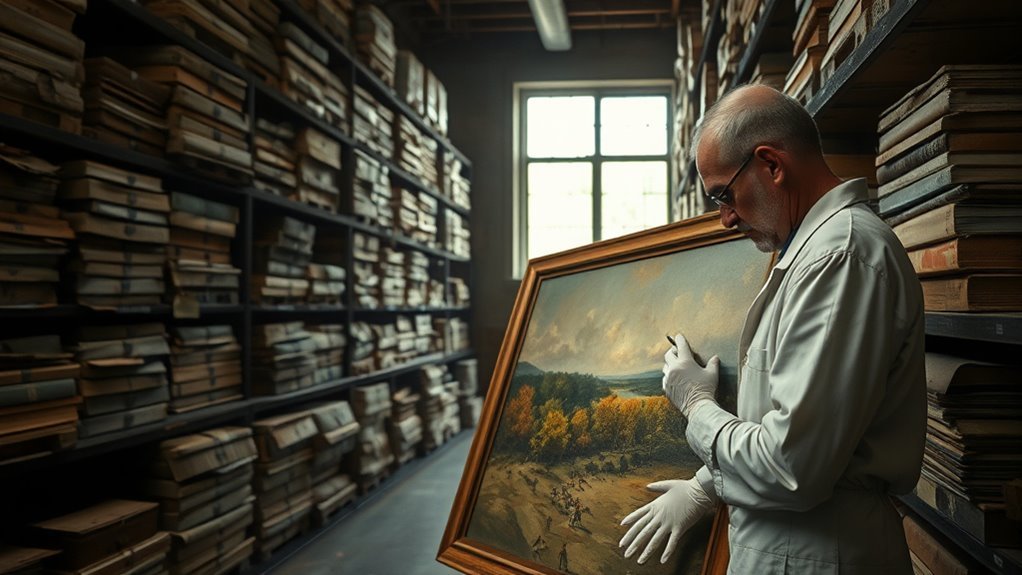
Once the war ended, recovering Hitler’s vast trove of looted art became a top priority for the Allies. The Monuments Men led efforts to locate and secure hundreds of artworks hidden in German castles, salt mines, and private collections.
Much of Hitler’s looted art had been funneled into German museums or Hitler’s private collection, making provenance research essential for identifying rightful owners. Extensive Nazi regime records documented many pieces, which really helped with art restitution efforts.
Despite these successes, about 70 paintings from Jewish art collections, like those of Paul Rosenberg, remain missing. Investigations are still ongoing, pushing hard for restitution.
You can really appreciate how the Monuments Men prevented the destruction of countless cultural treasures through their dedication. Their work laid the foundation for modern restitution, making sure artworks stolen by the Nazis were returned to their rightful heirs.
Though challenges persist, these efforts highlight an essential commitment to justice and the preservation of cultural heritage after WWII.
Frequently Asked Questions
Does Any of Hitler’s Art Still Exist?
Yes, some of Hitler’s art still exists, and you can find his watercolors and paintings on the art market today. Keep in mind, many pieces were lost or confiscated, and some remain missing or unidentified.
It’s kind of wild to think about, but these artworks pop up here and there. People still buy and sell them, even though the history behind them is pretty dark.
How Much Is One of Hitler’s Paintings Worth?
Imagine holding a faded watercolor castle; one of Hitler’s paintings can be worth anywhere from a few hundred dollars to over $100,000.
You’ll find value varies wildly, shaped by size, quality, and history’s shadow.
It’s kind of wild when you think about it—how much history and art can mix to create such a range in price.
Who Rejected Hitler’s Art?
The Vienna Academy rejected your art twice, in 1907 and 1908. They told you to try architecture instead, but you didn’t have the right qualifications.
This rejection changed your artistic path forever.
Who Owns Hitler’s Artwork?
Like a tangled web, Hitler’s artwork ownership is complex—you’ll find heirs, museums, and private collectors all claiming pieces. Some artworks have been returned, while others remain disputed.
These disputes are tangled in legal and ethical battles you must navigate carefully. It’s not always clear who truly owns a piece, making the whole situation pretty tricky.
Conclusion
You might be surprised to learn that over 600,000 pieces of art were looted by the Nazis during WWII, including many from Hitler’s own collection. After the war, countless efforts helped recover and return these priceless works, but thousands remain missing today.
Understanding this vast scale shows how deeply art was entangled in the conflict. It also reminds you that the story of Hitler’s art isn’t just about theft—it’s about cultural loss and ongoing restitution. The legacy of these stolen artworks highlights the importance of preserving history and righting past wrongs.
So, when we talk about Hitler’s art collection, we’re really talking about a massive chapter in art history shaped by war, loss, and the continuous fight to recover what was taken. It’s a story that still affects museums, families, and nations around the world today.