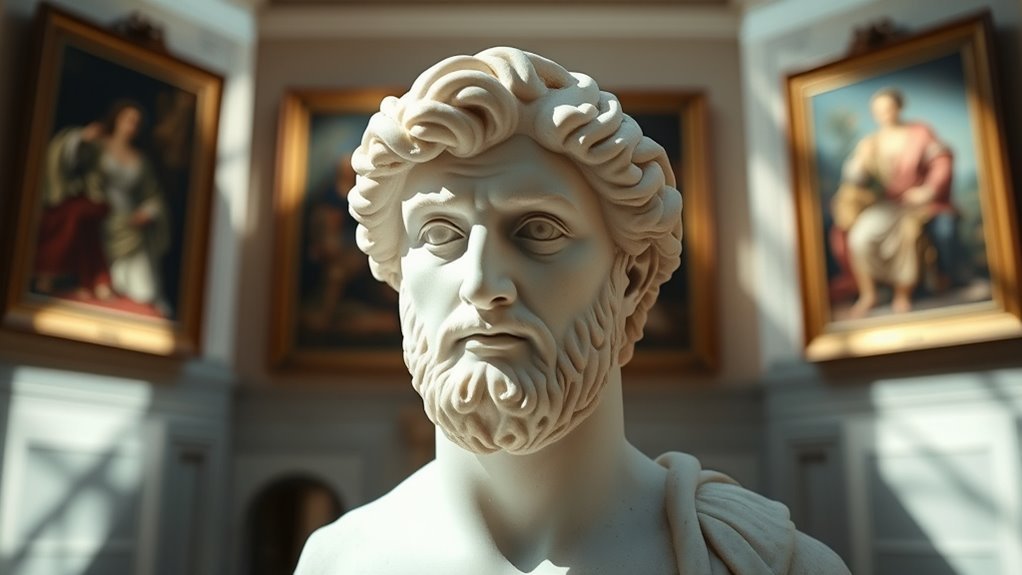
What Is Classical Art and How Can Beginners Understand It?
Classical art is all about harmony, proportion, and idealized beauty. It draws heavily from ancient Greek and Roman traditions, which have influenced art for centuries.
You’ll often see balanced compositions and natural, yet poised figures, usually shown in a contrapposto stance. Plus, the details are super precise, especially when it comes to anatomy.
To start appreciating classical art, try studying iconic works like Michelangelo’s *David*. Also, check out Greek architecture like the Parthenon. These examples really show how timeless beauty and disciplined craftsmanship come together.
Keep exploring, and you’ll find even deeper connections and techniques that make classical art so special.
Key Takeaways
- Classical art emphasizes harmony, proportion, balance, and idealized beauty inspired by Greek and Roman traditions. It’s all about creating a sense of order and perfection.
- Key techniques include the contrapposto stance and frescoes, which help make artworks look natural, poised, and disciplined. These methods were super important back then.
- You can spot classical art by its symmetrical compositions, anatomical accuracy, and timeless beauty, especially in sculptures and architecture. It’s like the art strives to be perfect and balanced.
- If you’re new to classical art, start by checking out famous pieces like Michelangelo’s *David* and the design of the Parthenon. These are great examples that show what classical art is all about.
- Learning about the historical context and craftsmanship behind these works makes them even more interesting. Visiting museums, reading guides, or watching documentaries can really deepen your appreciation.
Defining Classical Art: Key Features and Principles
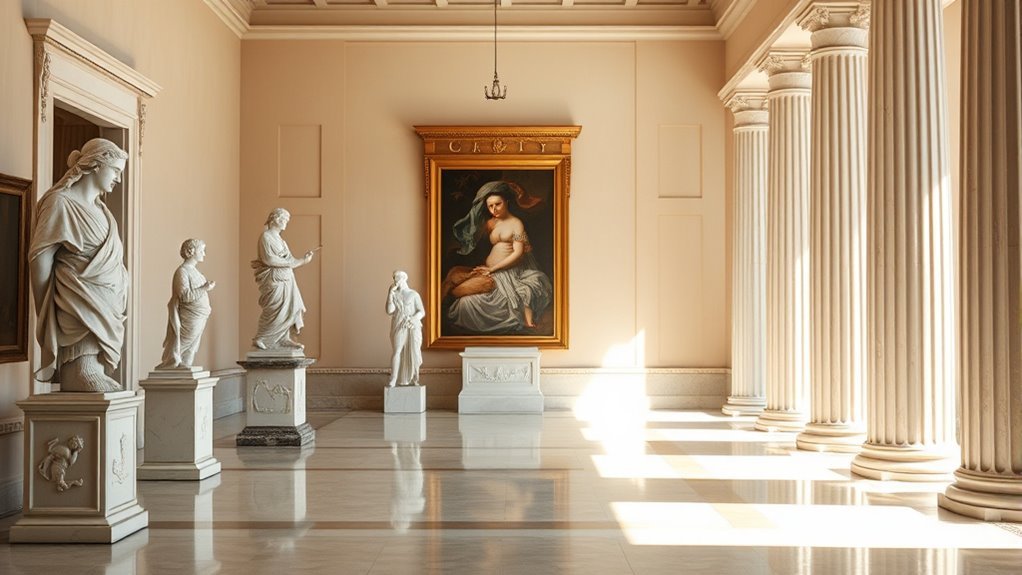
Although classical art draws heavily from Greek and Roman traditions, it goes beyond mere imitation by emphasizing harmony, proportion, and balance to create idealized beauty. When you look at classical art, you’ll notice how artists masterfully capture the human anatomy with precision, presenting figures that are both realistic and idealized.
This isn’t just about copying what’s seen but refining it to express perfect form and symmetry. You’ll find symmetrical compositions and balanced structures that reflect a disciplined approach to design, rooted in those ancient cultures. Techniques like the contrapposto stance give figures a natural yet poised look, enhancing the overall harmony.
Whether in sculpture, painting, or architecture, classical art aims for timeless beauty by combining clarity with artistic discipline. Understanding these key features helps you appreciate how Greek and Roman ideals continue to influence artistic standards focused on proportion and anatomical accuracy, creating works that feel both ordered and alive.
How Beginners Can Start Appreciating Classical Art
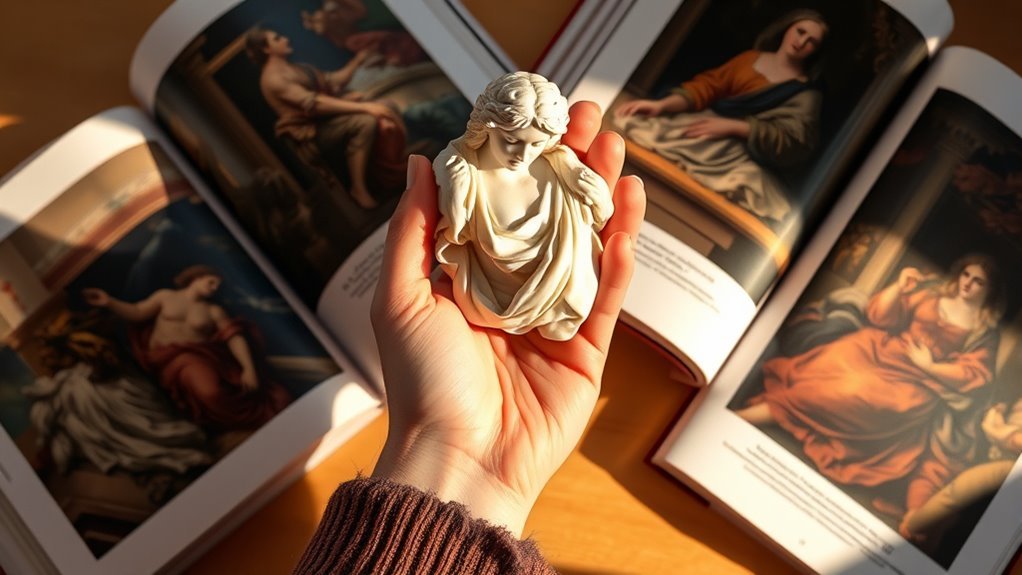
When you start appreciating classical art, focusing on iconic works like Michelangelo’s *David* can help you see how artists emphasize realistic anatomy and proportion. It’s pretty amazing to notice how much detail goes into capturing the human form so accurately.
To deepen your understanding, explore ancient Greek architecture, such as the Parthenon. This building showcases harmony, balance, and symmetry—key principles of classical art that really set the foundation for so much that came after.
Exploring ancient Greek architecture, like the Parthenon, reveals the harmony and balance foundational to classical art.
Learning about techniques like contrapposto and frescoes lets you recognize the craftsmanship behind these masterpieces. Once you know what to look for, you start seeing the skill and intention in every piece.
Visiting museums or browsing online collections of Greek and Roman artifacts is a great way to experience the beauty and skill firsthand. You don’t have to be an expert to enjoy these works; just take your time and soak it all in.
To connect these elements with broader artistic movements, use a beginner’s guide or watch documentaries covering art history. This approach will help you grasp the historical context and key characteristics that define classical art.
Frequently Asked Questions
What Is Classical Art in Simple Words?
Classical art shows you balanced, beautiful images of people and gods from ancient Greece and Rome. You’ll notice perfect shapes, realistic details, and calm scenes that celebrate harmony, order, and human strength.
It’s all about showing things in a way that feels natural and peaceful. The artists wanted to capture the ideal beauty and strength of humans, making their work timeless and inspiring.
How to Understand Art for Beginners?
To understand art, you’ve got to “learn to walk before you run.” Start by learning basic terms, observing details, and exploring history.
Visit galleries and read guides, and soon, you’ll see what the artist’s truly expressing.
What Are the 7 Classical Forms of Art?
The seven classical forms of art are painting, sculpture, architecture, music, poetry, dance, and theater. You’ll explore visual and performing arts that express ideas, emotions, and stories through various creative techniques and mediums.
These forms have been around for centuries, shaping cultures and inspiring people in countless ways. Each one offers a unique way to connect with the world and express what’s inside us.
What Is an Example of Classical Art?
Imagine holding Michelangelo’s David in your hands—it’s a perfect example of classical art. You’ll notice its balanced proportions, realistic anatomy, and idealized beauty.
All these details are crafted to inspire awe and timeless admiration. It’s like holding a piece of history that speaks to the skill and vision of its creator.
Conclusion
Now that you’ve gotten a glimpse into classical art, you’re ready to dive deeper with curiosity and an open mind. Remember, classical art isn’t just ancient history—it’s like discovering a timeless playlist that still resonates today.
By paying attention to balance, harmony, and storytelling, you’ll start seeing why these masterpieces continue to inspire. Each piece has its own story and technique that has influenced art for centuries.
So, keep exploring and let classical art be your artistic time machine to the past! Understanding classical art helps you appreciate the roots of many modern styles and the enduring beauty of its themes. Embracing classical art can deepen your connection to creativity and history, making your artistic journey even more rewarding.