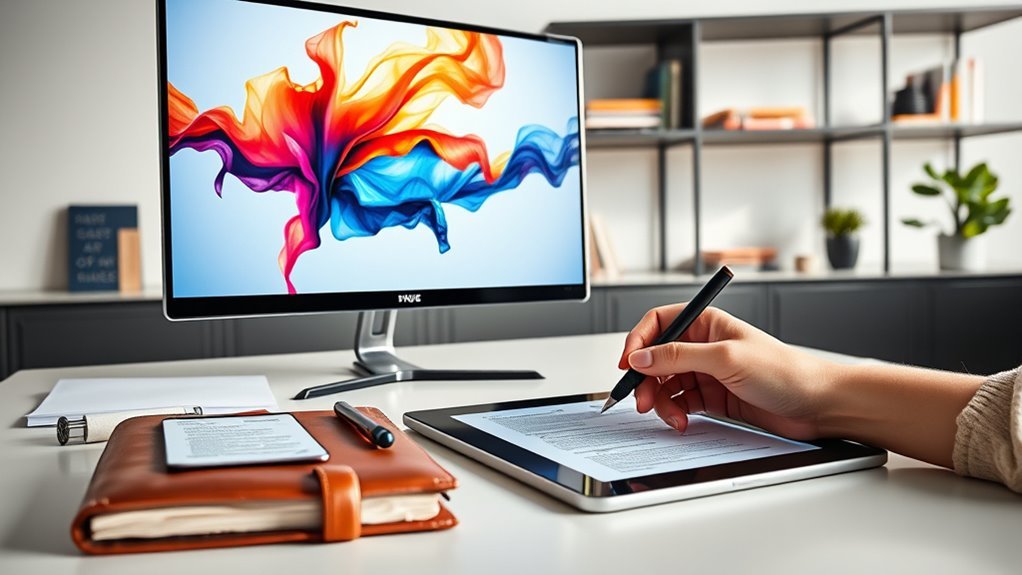
How to Sell AI-Generated Art Legally in 2027
To sell AI-generated art legally in 2027, you need to start by securing explicit commercial rights from your AI tool. This step is crucial because it ensures you have the proper permission to use and sell the artwork.
On top of that, adding your own personal creativity helps strengthen your copyright claim, making your art more uniquely yours.
Always be upfront about AI involvement in your product descriptions. Transparency builds trust with buyers and keeps you in the clear legally.
When it comes to selling, choose reputable platforms like Etsy or Shopify. These sites often have clear policies, but it’s smart to review them regularly.
Also, double-check that the datasets used by your AI tools have clear licenses.
Staying compliant with these guidelines helps you avoid legal trouble and potential platform bans.
Keep these essentials in mind as you explore the best ways to protect and profit from your AI art creations. It’s all about combining creativity with careful legal steps!
Key Takeaways
- Verify the AI tool grants explicit commercial rights for resale to ensure legal profit from AI-generated art. This step is crucial to avoid any legal hiccups down the line.
- Clearly disclose AI involvement in product descriptions to maintain transparency and comply with platform policies. Being upfront helps build trust with your customers.
- Obtain proper licenses and permissions for all datasets and prompts used to protect intellectual property rights. This keeps your work legit and respects creators’ rights.
- Choose reputable platforms like Etsy or Shopify and regularly review their AI art policies for compliance. Policies can change, so staying informed is key.
- Stay updated on legal and platform policy changes in 2027 to manage risks and avoid suspensions. Keeping an eye on the latest rules will help you sell smoothly and confidently.
Securing Legal Rights for Selling AI Art in 2027

Although AI-generated art opens exciting creative possibilities, you must obtain the proper legal rights before selling it in 2027. First, confirm that the AI tool you use grants explicit commercial licensing rights, covering resale and distribution. Without clear AI tool rights, your ability to profit legally is limited.
Make sure to incorporate significant human creativity into your work to strengthen your claim to copyright protection. Pure AI outputs may lack intellectual property status under evolving copyright laws, so adding your personal touch is key.
Always disclose AI involvement in your product descriptions to comply with platform policies and avoid legal pitfalls. It’s a simple step that can save you from headaches down the road.
Stay updated on licensing terms and ensure you have permissions for any copyrighted datasets or prompts used in your art creation. This kind of proactive management safeguards your work and reputation.
Choosing Platforms and Staying Compliant When Selling AI Art

When selling AI-generated art, you need to choose platforms that explicitly allow such sales and enforce clear AI disclosure and licensing policies. Start with platform selection by targeting reputable sites like Etsy, Redbubble, or Shopify, which provide transparent terms of service and support commercial use of AI art.
Carefully review these platform policies to understand your legal rights and any restrictions related to AI-generated content. Always disclose AI involvement in your artwork descriptions to meet compliance and maintain transparency.
Review platform policies thoroughly and always disclose AI use to ensure compliance and transparency.
Licensing agreements vary, so guarantee you grasp how each platform handles intellectual property and commercial licensing. Stay vigilant with policy updates, especially in 2027, as platforms frequently revise rules around AI-generated art.
Adhering to these guidelines helps you avoid account suspension and legal issues. By combining thorough platform research, clear AI disclosure, and adherence to terms of service, you’ll confidently sell your AI-generated art while protecting your legal rights and staying compliant.
Frequently Asked Questions
Can You Legally Sell AI Art?
Yes, you can legally sell AI art if you use AI tools with commercial licenses. Make sure you add your creative input, and disclose AI involvement.
Always check the tool’s terms to guarantee you have rights to commercialize and resell the work. It’s important to be sure you’re covered before selling anything.
Is Selling AI Art Profitable?
Yes, selling AI art can be profitable. You’ll earn high margins by offering unique digital downloads and print-on-demand items on platforms like Etsy.
With smart marketing and quality work, you can attract buyers willing to pay premium prices. It’s all about standing out and connecting with the right audience.
Can I Create Art With AI and Sell It?
Yes, you can create art with AI and sell it legally, as long as you add your own creative input. It’s important to secure proper licenses for the AI tools you use.
Also, make sure to disclose AI involvement on sales platforms. This helps you stay compliant with their policies.
Where Can I Sell My Ai-Generated Art?
You can sell your AI-generated art on platforms like Etsy, Redbubble, and Society6, or use Printful for products.
Digital marketplaces like Gumroad, art sites like DeviantArt, and NFT platforms such as OpenSea also work well.
There are plenty of options out there, so it’s all about finding the one that fits your style and goals best!
Conclusion
By 2027, selling AI-generated art legally means you’ll need to secure clear rights and choose compliant platforms carefully. Did you know that 68% of AI art buyers now prioritize verified ownership before purchase?
Staying informed about copyright laws and platform policies will protect your work and boost buyer confidence. It’s all about making sure your art is both unique and legally sound.
Keep these tips in mind, and you’ll confidently navigate the evolving market. Turning your AI creations into successful, legally sound sales is easier when you understand the importance of clear rights and compliance.
Remember, selling AI-generated art legally involves more than just creativity—it requires knowledge of legal frameworks and choosing the right platforms. By doing this, you can build trust with buyers and maximize your success in the AI art market.