How to Become an Art Teacher Without a Degree in 10 Essential Steps
You can become an art teacher without a traditional degree by following 10 essential steps. These include exploring alternative certification options, building strong art skills, and creating a teaching portfolio that showcases your talents.
Gaining practical experience through volunteering or substitute teaching is also key. Prepare for certification exams and look for roles in charter or community schools where non-traditional paths are often welcomed.
Connecting with other educators and engaging in ongoing professional development will help you grow your career. Keep exploring these strategies to access more detailed guidance and exciting opportunities along the way.
Key Takeaways
– Teach art in community centers, private studios, or online platforms to gain practical experience without a formal degree.
This kind of hands-on experience can really boost your confidence and skills. Plus, it helps you understand different teaching styles and student needs.
– Obtain alternative certification through programs and pass state-specific content exams like Praxis II Art.
These certifications can open doors that a traditional degree might usually hold. They show your commitment and knowledge in the field.
– Develop a strong art portfolio showcasing diverse skills, lesson plans, and documented teaching experiences.
A well-rounded portfolio speaks volumes about your abilities. It’s a great way to prove your readiness to teach, even without a degree.
– Volunteer or substitute teach to build classroom management skills and gain hands-on teaching practice.
Getting real classroom experience is invaluable. It helps you handle different situations and understand student dynamics better.
– Network with art educators, attend workshops, and pursue ongoing professional development to enhance career opportunities.
Building connections and learning continuously keeps you updated and can lead to new opportunities. It’s all about growing and staying passionate!
What Does an Art Teacher Without a Degree Do?

Although you might not have a formal degree, you can still teach art effectively in alternative settings like community centers, private studios, or after-school programs. You’ll rely on your practical art skills and art experience to guide students, focusing on hands-on, creative instruction rather than strict adherence to a standardized curriculum.
Alternative teaching often involves personalized mentorship, where you adapt lessons to each learner’s unique style and pace. Many art teachers without certification build their reputation through community outreach, word-of-mouth, or online platforms.
You might offer private lessons, workshops, or even online courses, working independently without traditional teaching credentials. In these environments, your ability to connect with students and foster creativity is just as important as any formal certification.
Choose the Right Certification Path for Art Teaching

When you decide to pursue a formal teaching role in art, choosing the right certification path is essential to meet your state’s licensing requirements. Many states offer alternative certification programs designed for individuals without a traditional teaching degree.
These programs often combine online art education with passing a state-specific content knowledge exam, such as the Praxis II Art test. To earn teacher licensing, you’ll likely need to complete supervised classroom experience or student teaching hours to gain practical skills.
Make sure you research your state requirements thoroughly, as each state has unique rules for certification. Alternative certification routes provide flexible options that align with your background and career goals, allowing you to enter the classroom sooner.
Explore Teaching Opportunities in Charter and Alternative Schools
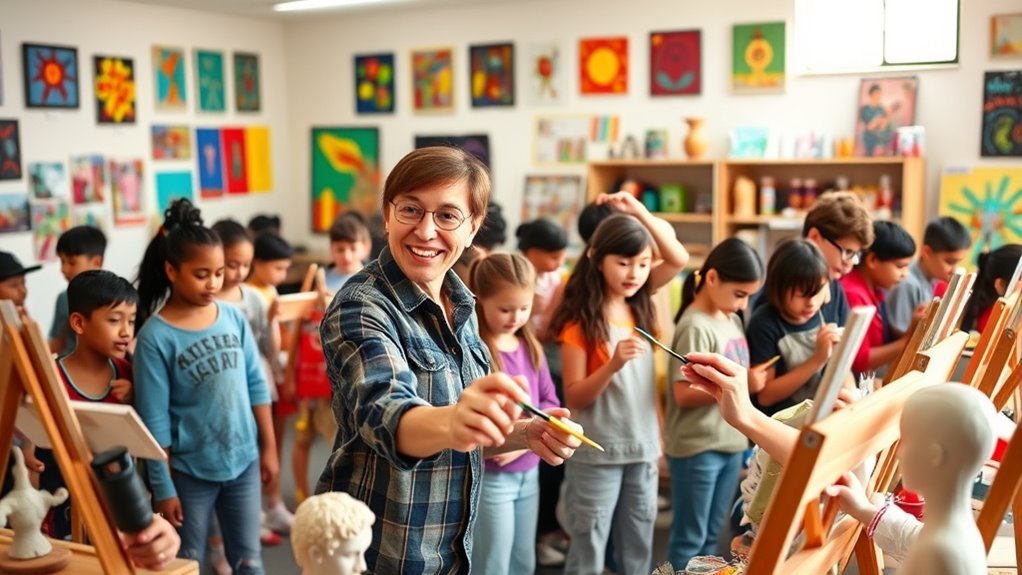
You can find teaching opportunities in charter and alternative schools that often don’t require a traditional teaching degree. Many offer flexible certification paths like on-the-job training or provisional licenses.
It’s a good idea to check each school’s specific requirements to see what fits your situation. That way, you’ll know exactly what you need to qualify.
Charter School Flexibility
Since charter schools often have more flexible hiring standards than traditional public schools, you can find teaching opportunities without a formal teaching certification. Many charter schools welcome candidates who take a non-traditional route to art education, valuing teaching flexibility over strict credentials.
Some schools provide pre-designed lesson plans, while others let you develop your own, giving you creative control in the classroom. Depending on the charter school, alternative certification or relevant industry experience might meet teaching requirements, making it easier to start teaching art without a degree.
Keep in mind that hiring criteria vary widely, so research each charter school’s policies carefully. Embracing the unique environment of charter schools can open doors for you to share your passion for art education without following the conventional path.
Alternative Certification Paths
How can you start teaching art without a traditional degree? Many charter schools offer alternative certification paths that value your art skills and teaching experience over formal credentials.
These schools often don’t require a full teaching degree, providing opportunities for art teachers to enter the profession through flexible certification programs or on-the-job training. Charter and alternative schools typically use adaptable school curriculum, allowing you to focus on creative instruction rather than strict lesson plans.
Build Your Art Skills and Art Teaching Portfolio
You’ll want to sharpen your artistic techniques across different mediums to show your versatility. Start creating teaching samples like lesson plans and student projects to prove you can guide others.
Don’t forget to document your classroom experiences to highlight your growth and effectiveness as an instructor. It really helps to have clear examples when you’re building your portfolio.
Develop Artistic Techniques
Why is developing strong artistic techniques essential for becoming an effective art teacher? You need solid art skills and proficiency to confidently guide others through art education.
Focus on mastering various artistic techniques like shading, perspective, and color theory. Regular art practice helps you refine your art methods and boosts your overall art development.
Don’t limit yourself to one medium; explore painting, drawing, sculpture, and digital art to expand your expertise. Participating in workshops, classes, or online courses is also a great way to stay updated on new trends and methods.
Make sure to document your progress and completed projects—it really showcases your commitment and proficiency. By continuously developing your artistic techniques, you build a strong foundation that enhances both your teaching ability and your credibility as an art instructor.
Create Teaching Samples
Although developing strong artistic techniques is essential, creating teaching samples plays an equally important role in building your art teaching portfolio. Your teaching samples should demonstrate how effectively you convey art concepts and engage students.
Focus on these key elements when building your art portfolio:
- Include diverse artwork to showcase your technical skills and creative range.
- Develop clear lesson plans that align with curriculum standards and grade levels.
- Add examples of student projects to highlight your teaching impact.
- Incorporate a documented process explaining your techniques, reflections, and artistic growth.
Make sure to regularly update your portfolio with new work and teaching samples. This way, you reflect your evolving skills and teaching philosophy. It keeps your portfolio a dynamic tool that really shows your ability as both an artist and educator.
Document Classroom Experiences
When you document your classroom experiences, you create a powerful record that highlights both your art skills and teaching abilities. Start by photographing student artwork, lesson plans, and teaching activities to showcase your practical skills.
Keep detailed classroom documentation, including a journal or digital portfolio with lesson reflections and student feedback. Collect samples of student projects and assessments to demonstrate your ability to plan and execute diverse art lessons.
Recording videos of your teaching sessions can also highlight your classroom management and instructional techniques. Organize all these materials systematically to build a thorough teaching portfolio.
This portfolio will not only reflect your growth but also serve as a valuable tool to share with potential schools or clients. It proves your capability as an art teacher without a degree.
Gain Practical Classroom Experience: Volunteering and Substituting
Gaining practical classroom experience is essential if you want to become an art teacher without a degree, and volunteering or substituting offers a direct path to achieve this. By volunteering, you get firsthand exposure to classroom management and student engagement, helping you sharpen your teaching skills.
Substitute teaching takes this further by placing you in real classroom situations where you can adapt to different teaching styles and student needs. Before you start, be prepared for background checks and fingerprinting, which many districts require to ensure student safety.
Both volunteering and substituting help you build a solid teaching portfolio and gain valuable practical experience. Here’s how you can benefit:
- Practice managing diverse classrooms
- Engage students through art activities
- Develop adaptable teaching skills
- Understand different grade-level dynamics
These experiences will really strengthen your ability to teach art effectively, even without a formal degree. It’s all about getting that hands-on practice!
Develop Lesson Plans and Classroom Management Skills
How do you create lesson plans that truly engage your students and keep your classroom running smoothly? Start by clearly defining your objectives, listing materials, and outlining step-by-step instructions.
Incorporate various teaching strategies like demonstrations, guided practice, and student critiques to boost student engagement and cater to different learning styles. Mixing things up keeps everyone interested and helps reach all kinds of learners.
Effective classroom management depends on establishing routines early—set clear expectations for clean-up, handoffs, and behavior to foster a respectful, focused environment. These routines support creative exploration by providing a safe, predictable space.
Use formative assessment tools such as reflections and progress checklists to monitor student growth and adapt lessons accordingly. This ongoing assessment makes sure your lesson plans stay flexible and responsive to each student’s needs.
How to Prepare for Art Teaching Certification Exams
Although preparing for art teaching certification exams can feel overwhelming, breaking down the process into manageable steps will help you stay focused and confident. Start by reviewing your state’s exam content areas, including art history, studio techniques, and classroom management. This guarantees you target your study efficiently.
Next, create a study schedule that lets you consistently cover all topics over several weeks. Using practice tests is vital—they familiarize you with the exam format and sharpen your time management skills.
Finally, register early and confirm all exam details to avoid last-minute stress.
Here’s how to prepare effectively:
- Understand key content knowledge like art theory and teaching methods.
- Build a study schedule tailored to all exam subjects.
- Take full-length practice tests regularly.
- Confirm exam dates, locations, and requirements early.
Following these steps will strengthen your exam preparation and boost your confidence on test day.
Network With Art Educators and Join Teaching Communities
You’ll want to connect with experienced art teachers who can offer guidance and support. Joining online groups lets you share ideas, get feedback, and stay updated on teaching strategies.
These connections can open doors to new opportunities and help you grow as an educator. It’s a great way to stay inspired and keep learning from others in the field.
Connect With Art Teachers
When you connect with experienced art teachers through social media groups and professional associations, you gain access to valuable insights and mentorship opportunities that can guide your journey. Building strong connections with art educators opens doors to practical advice and support as you navigate alternative teaching paths.
To make the most of networking, focus on these key actions:
- Join professional associations and teaching communities to exchange resources and ideas.
- Attend workshops and conferences to expand your network and learn from seasoned art teachers.
- Seek mentorship from established educators who can offer guidance and feedback.
- Collaborate on projects or job shadow to gain hands-on experience.
Engage in Online Groups
Since connecting with others is essential for growth, engaging in online groups dedicated to art education can considerably enhance your journey as a non-traditional art teacher. These online communities offer a space for networking with experienced educators, sharing resources, and gaining peer support to tackle challenges unique to your path.
By joining teaching forums and social media groups, you’ll discover alternative teaching options and valuable insights about certification requirements. Many groups host webinars and workshops that promote your professional growth and expand your teaching strategies.
Building strong relationships in these communities can also lead to mentorship opportunities, collaborative projects, and job leads. Actively participating in these groups ensures you stay informed, supported, and connected throughout your unconventional teaching career.
Keep Learning Through Professional Development and Workshops
Although you may not have a formal degree, staying engaged in professional development and workshops helps you keep up with new art techniques and teaching strategies. These opportunities provide valuable continuing education that sharpens your skill-building and deepens your understanding of art education.
Plus, many workshops offer certifications that boost your credibility and open doors for career advancement.
To make the most of professional development, focus on:
- Participating in workshops and online courses to learn the latest tools and methods.
- Attending art education conferences for networking and fresh teaching insights.
- Engaging in personal art projects alongside skill-building sessions to enhance your abilities.
- Pursuing certifications through continuing education to strengthen your qualifications.
Apply for Art Teaching Jobs and Grow Your Career
Building on the skills and certifications you’ve gained through professional development, it’s time to start applying for art teaching jobs and expanding your career opportunities. Focus on gaining experience by volunteering, substitute teaching, or leading private art classes to build a strong portfolio.
Your portfolio should showcase lesson plans, student work, and your own art samples to highlight your teaching abilities and creativity. Target states and schools that don’t require formal degrees, especially alternative or private institutions, to increase your chances.
Networking plays an essential role—connect with local art communities, attend workshops, and join online groups to discover job openings and gain valuable advice. Keep updating your certifications and refining your skills to qualify for better positions and enhance your credibility.
Frequently Asked Questions
Is There a Way to Become an Art Teacher Without a Degree?
Yes, you can teach art without a degree by working at community centers, private studios, or charter schools that don’t require formal credentials. Build your skills, create a strong portfolio, and explore alternative certification programs to boost your chances.
It’s all about finding the right place that values your talent and experience. Keep practicing, networking, and showing off your work—you’ll find opportunities!
What Are the Steps to Becoming an Art Teacher?
You start by gaining art skills, then explore alternative certifications or private school opportunities. Build a portfolio, gain teaching experience, and network.
Some states allow teaching without degrees, so research local regulations carefully before applying. It’s a good idea to check what your area requires before you move forward.
Can I Be an Art Teacher Without Being Good at Art?
Yes, you can teach art without being a great artist. Focus on understanding art concepts, planning lessons, and inspiring creativity.
Honestly, your communication skills and passion for teaching matter more than personal artistic talent. So don’t worry too much about being a master artist yourself!
How Difficult Is It to Become an Art Teacher?
Becoming an art teacher is like climbing a steep mountain—it’s tough but rewarding. You’ll face challenges, especially without formal credentials.
Yet with passion, persistence, and creativity, you can still inspire and teach effectively. It’s all about finding your own way to connect with students and share your love for art.
Conclusion
Becoming an art teacher without a degree might feel like painting with a limited palette, but with determination and the right steps, you can create a masterpiece career. Each certification, experience, and connection adds a vibrant stroke to your journey.
Keep sharpening your skills and building your network—your passion for art will be the brush that colors the future of your students. Step boldly, and watch your teaching dreams come to life.
Remember, becoming an art teacher without a degree is totally possible when you focus on gaining the right experience and certifications. Stay committed, keep learning, and don’t be afraid to connect with others in the art education community. Your dedication will open doors and inspire your students to see the beauty and value in art. So go ahead, start your journey with confidence, and turn your passion for art into a rewarding teaching career.