Top 3 Deadliest Martial Arts Explained
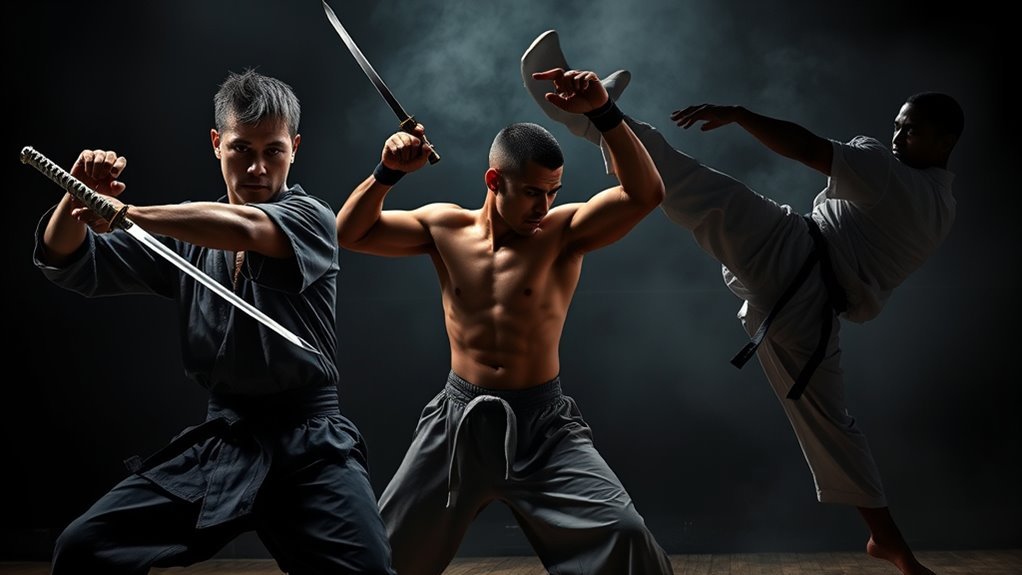
The top three deadliest martial arts combine lethal techniques and fast neutralization to keep you safe in any threat. These martial arts focus on real-world effectiveness, making them essential for self-defense. Whether you’re a beginner or an experienced fighter, understanding these styles can give you an edge.
Brazilian Jiu-Jitsu excels in close combat, using joint locks and chokeholds to control and subdue opponents. It’s all about technique and leverage, not just strength. This makes it effective even against larger attackers.
Krav Maga emphasizes rapid strikes to crucial points with disarmament skills. It’s designed for quick, efficient defense in dangerous situations. You’ll learn to react fast and disable threats immediately.
Sambo blends joint locks, throws, and strikes for aggressive defense. It’s a versatile martial art that combines different fighting elements.
Together, these arts offer practical skills you’ll want to understand more deeply for your protection.
Key Takeaways
- Krav Maga focuses on rapid strikes and disarmament techniques targeting vulnerable areas for swift threat neutralization. It’s all about ending the fight quickly and efficiently.
- Sambo combines joint locks, throws, and strikes, emphasizing aggressive, lethal self-defense with a high competition success rate. This martial art really brings the heat when it comes to close combat.
- Brazilian Jiu-Jitsu excels in ground control, using leverage and submissions like chokeholds to neutralize larger opponents effectively. It’s perfect if you want to dominate an opponent without relying on strength alone.
- Deadly martial arts prioritize attacks on vital points such as eyes, throat, and groin for maximum incapacitation. These strikes are designed to stop a threat fast.
- Combining techniques from Krav Maga, Sambo, and Brazilian Jiu-Jitsu enhances real-world combat effectiveness and self-protection. Mixing these styles gives you a serious edge in any situation.
What Makes a Martial Art Deadly: Key Criteria Explained
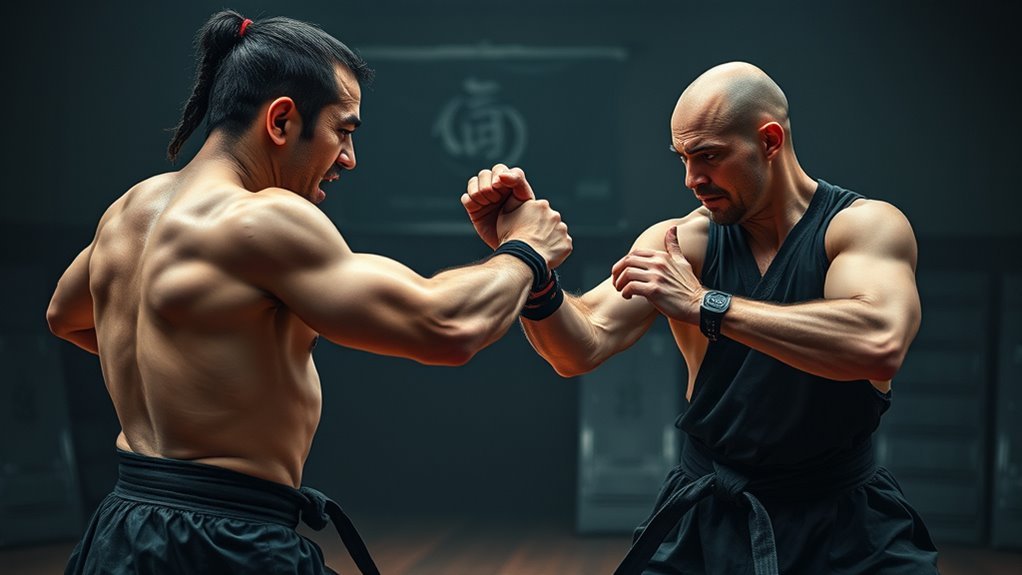
Although many martial arts teach self-defense, only those with techniques that can cause severe injury or incapacitation truly qualify as deadly. You’ll recognize deadly techniques by their focus on strikes to crucial areas, joint locks that immobilize, and aggressive tactics designed for rapid neutralization.
Deadly martial arts emphasize strikes to vital points, immobilizing joint locks, and swift, aggressive neutralization tactics.
These methods go beyond basic defense, emphasizing lethal applications in combat situations. Weapon training often plays a key role, enhancing the art’s potential deadliness.
To master such arts, you need sharp situational awareness and intense training that hones your skill and mental intent. The effectiveness of deadly martial arts depends less on the style itself and more on how well you understand and execute its techniques.
While practicing, you must respect safety precautions because improper use or unsupervised training can lead to serious harm. In sum, what makes a martial art deadly is its combination of practical self-defense, targeted strikes, joint manipulation, and readiness for real combat challenges.
Why Brazilian Jiu-Jitsu Is Deadly in Close Combat
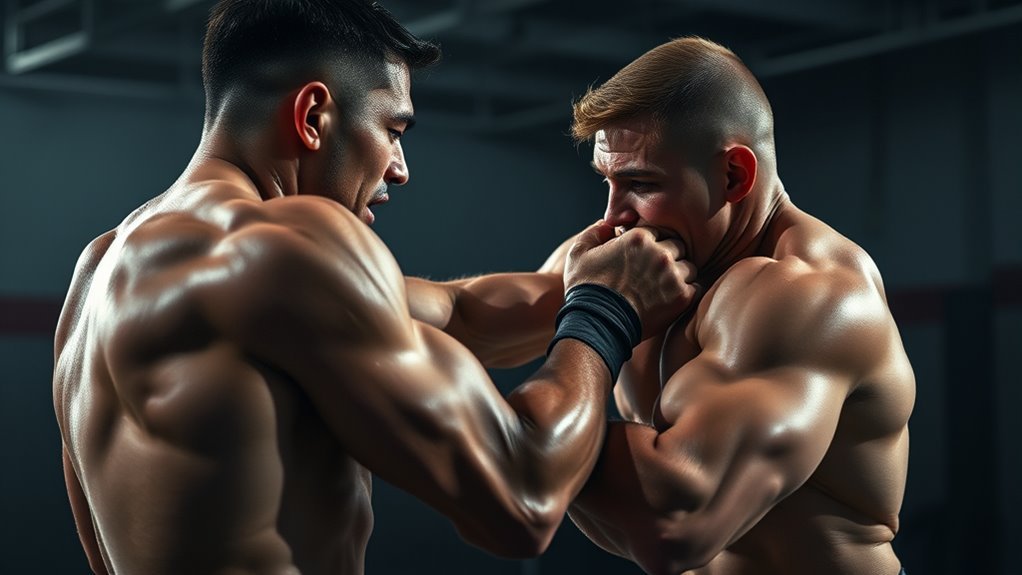
When you find yourself in a close-quarters fight, Brazilian Jiu-Jitsu stands out because it focuses on ground control and submission techniques that quickly incapacitate an opponent. BJJ’s core strength lies in ground fighting, where you use leverage and control rather than brute force to dominate your attacker.
By applying submission holds like joint locks and chokeholds, you can incapacitate your opponent efficiently, often forcing them to submit or lose consciousness. These techniques make BJJ especially deadly in close combat since you minimize striking and maximize control to neutralize threats.
Whether you’re smaller or less strong, BJJ’s emphasis on technique allows you to defend yourself effectively against larger aggressors. Its rapid progressions from positional dominance to submissions give you a decisive advantage in real-world self-defense situations.
Mastering these elements guarantees you can control, disable, and end a fight swiftly, making Brazilian Jiu-Jitsu a crucial martial art for close combat scenarios.
How Krav Maga and Sambo Deliver Lethal Self-Defense Skills
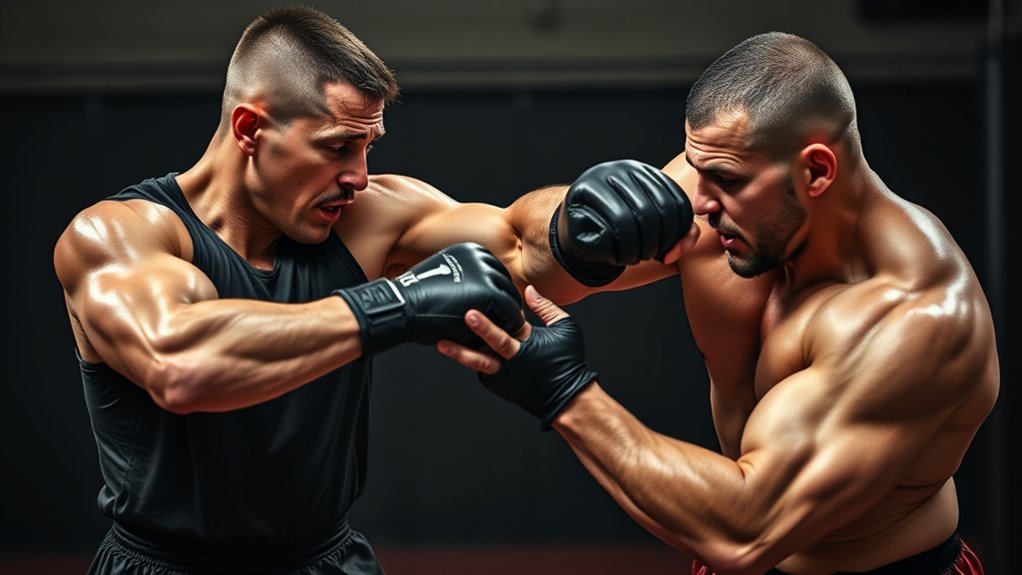
Brazilian Jiu-Jitsu teaches you to control and subdue an opponent through technique, but sometimes you need a more aggressive approach to end a fight quickly. That’s where Krav Maga and Sambo come in.
Brazilian Jiu-Jitsu focuses on control, but Krav Maga and Sambo bring the aggression needed to finish fights fast.
Krav Maga focuses on rapid strikes and disarmament techniques that target vulnerable areas like the eyes, groin, and throat, making it highly effective lethal self-defense. You learn to neutralize threats decisively by exploiting these weak points with swift, powerful attacks.
Sambo complements this with its blend of joint locks, powerful throws, and hard strikes. Its aggressive tactics provide exceptional combat lethality, proven by a 97% success rate in international competitions.
When you combine Krav Maga’s emphasis on practical, real-world defense with Sambo’s submission holds and striking power, you get a formidable skill set. Both arts prepare you to respond instantly and effectively, ensuring you can protect yourself with lethal self-defense when necessary.
Frequently Asked Questions
What Are the Top 3 Best Martial Arts?
The top three best martial arts you should focus on are Krav Maga, Brazilian Jiu-Jitsu, and Muay Thai. They offer practical self-defense, ground control, and powerful striking.
These styles make you effective in real-life situations and competitions. Plus, each one brings something unique to the table, so you get a well-rounded skill set.
What’s the Worst Fighting Style?
You might find that some consider Tai Chi the worst fighting style for combat because it focuses on slow, meditative movements.
Despite its health benefits, it lacks practical effectiveness in real, high-pressure fights or self-defense situations.
It’s kind of like practicing dance moves when you actually need to throw a punch fast.
Which Martial Art Is Most Powerful?
You’ll find Krav Maga most powerful for self-defense because it focuses on real-world, life-saving techniques.
However, your skill and situation matter most—no martial art is unbeatable without sharp training and quick thinking.
What Is the Most Brutal Karate Style?
Kyokushin Karate is the most brutal karate style you’ll ever face—it hits like a freight train. You’ll endure full-contact sparring and powerful strikes that test your endurance, toughness, and resilience in every grueling session.
It’s not for the faint of heart. But if you want to push your limits and build serious strength, this style will get you there. Just be ready to work hard and take hits like a champ.
Conclusion
You hold the power of a silent storm in your hands—each move a lightning strike, precise and unstoppable. Brazilian Jiu-Jitsu wraps you in a serpent’s grip, while Krav Maga and Sambo arm you like a sharp sword in the night.
These martial arts aren’t just skills; they’re the rhythm of survival, the dance of danger mastered. When you step into this world, you wield the deadly art of control, ready to strike or defend with fierce grace.
Mastering these deadly martial arts means understanding both offense and defense on a whole new level. Whether it’s the grappling precision of Brazilian Jiu-Jitsu, the brutal efficiency of Krav Maga, or the powerful throws of Sambo, each art equips you with techniques designed for real-world threats.
In the end, these top three deadliest martial arts teach more than fighting—they teach survival, control, and confidence. Step into their realm, and you’re not just learning to fight; you’re embracing the ultimate dance of danger and defense.