
How to Build an Art Portfolio in 5 Simple Steps
To build a strong art portfolio, start by defining its purpose and who you want to impress. Knowing your audience helps you choose the right pieces and style to highlight. Your portfolio should clearly showcase your unique skills and creativity.
Next, pick 15-25 of your best works. Focus on quality over quantity here—it’s better to have fewer standout pieces than a lot of average ones. This selection will truly represent your artistic style and strengths.
Then, organize your work to tell a story of growth. Place your strongest pieces at the beginning and end to make a great first and last impression. Label each piece with clear, consistent details so viewers understand what they’re looking at.
Finally, don’t hesitate to ask for feedback and refine your portfolio regularly. Keep updating it as you grow, and you’ll discover how to make your portfolio truly stand out. Just keep at it, and your art will shine through!
Key Takeaways
– Define your portfolio’s purpose and audience to tailor content and format appropriately.
This way, you make sure everything you include really speaks to who you want to reach.
– Select 15-25 high-quality artworks that showcase your skills and unique artistic voice.
Pick pieces that truly represent what you can do and what makes your art stand out.
– Organize pieces chronologically or thematically to create a cohesive narrative of your development.
It helps to tell your story clearly, showing how you’ve grown or what ideas you explore.
– Present your work professionally with consistent labels including titles, dates, and mediums.
This makes your portfolio look polished and helps viewers understand each piece better.
– Seek regular feedback and update your portfolio to reflect growth and remove weaker pieces.
Getting opinions from others keeps your collection fresh and focused on your best work.
Define Your Portfolio’s Purpose and Target Audience

Why does your art portfolio exist? You need to pinpoint its purpose first—whether it’s for art schools, professional work, or exhibitions. Defining this helps you tailor your portfolio content effectively.
Identify your art portfolio’s purpose to effectively tailor its content for schools, professionals, or exhibitions.
Next, consider your target audience carefully. Are you presenting to art educators, gallery owners, or potential employers? Knowing their preferences guides your presentation and selection process.
Every opportunity comes with specific guidelines about format, size, and piece count, so make sure to follow them closely. Align your portfolio with your artistic goals, ensuring the main message or theme resonates with your audience.
Customization is key; don’t use a one-size-fits-all approach. Adapt your portfolio for each opportunity to highlight the skills and styles most relevant to the viewer.
Select and Curate Artwork That Highlights Your Best Skills

After defining your portfolio’s purpose and audience, it’s time to select and curate artwork that truly showcases your strengths. Make certain your portfolio includes 15-25 pieces that highlight your best skills, focusing on quality over quantity.
Choose work that demonstrates both your technical ability and unique artistic voice. Don’t hesitate to remove weaker or redundant pieces to keep your collection strong and cohesive.
Curate a variety of styles, mediums, and subject matters to show versatility and a broad range of art skills. This variety helps potential viewers appreciate your all-encompassing ability.
Regularly update your portfolio by replacing outdated work with newer pieces that better reflect your current style. By carefully selecting and curating your artwork, you guarantee your portfolio makes a lasting impression and effectively highlights your best skills.
Organize Your Work to Showcase Growth and Storytelling
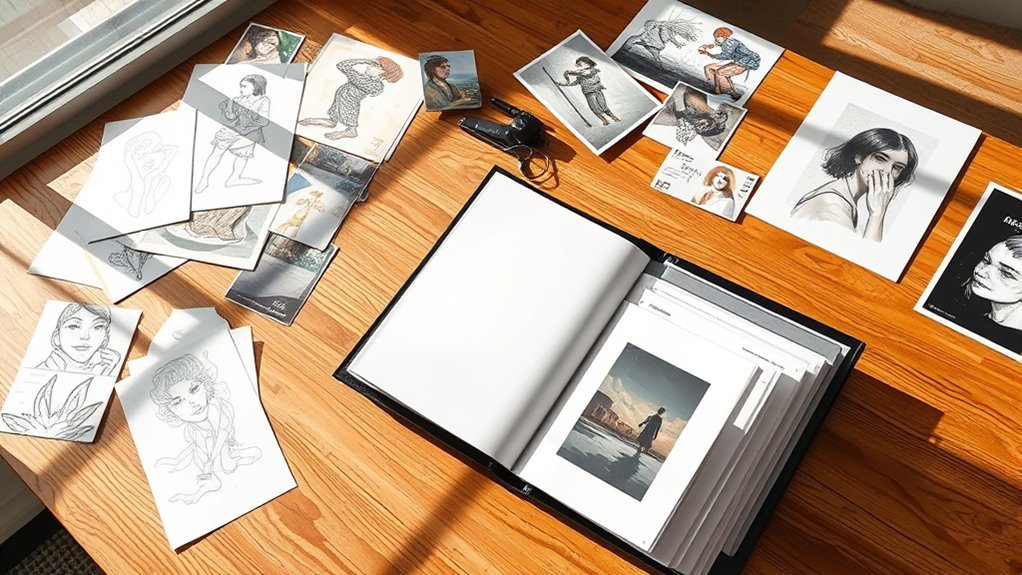
While selecting strong pieces is essential, organizing them effectively can elevate your portfolio by telling a clear story of your artistic growth. Start by arranging your artwork in chronological order to highlight your artistic development, moving from early studies to recent projects.
This structure provides a natural flow that guides viewers through your creative journey. Group related works to establish thematic consistency, enhancing the visual story you want to convey.
Incorporate process images alongside finished pieces to offer insight into your techniques and growth. Make sure to place your strongest and most relevant work at the beginning and end of your portfolio—this growth showcase leaves a lasting impression.
Thoughtful portfolio organization not only demonstrates your evolving skills but also strengthens storytelling, making your body of work compelling and cohesive. By carefully curating the sequence and connections between pieces, you invite viewers to experience your artistic journey in a clear, engaging way.
Write Clear Labels and Present Your Artwork Professionally
When you present your artwork, clear and consistent labels help viewers understand and appreciate each piece quickly. Your labels provide essential context through titles, creation dates, and mediums, enhancing the overall presentation.
Clear, consistent labels give viewers essential context, helping them quickly understand and appreciate your artwork.
To keep your portfolio professional and organized, focus on clarity and consistency. It really makes a difference in how your work is received.
Here are three key points to guide your labeling:
- Use a consistent format and font style throughout your labels to maintain a polished, professional look that supports your portfolio’s visual appeal.
- Place labels logically—beneath or beside each piece—ensuring they don’t distract but improve organization and accessibility.
- Keep descriptions brief and informative; add extra explanations only if requested, so they complement rather than clutter your presentation.
Gather Feedback and Update Your Portfolio Regularly
Although building your portfolio takes time, regularly gathering feedback and updating your work keeps it fresh and relevant. Seek constructive feedback from peers, mentors, or industry professionals to spot strengths and areas that need refining.
Set a routine review process every few months to assess your portfolio and make necessary updates. Incorporate recent work to demonstrate ongoing growth and skill demonstration, which highlights your current artistic development.
Removing outdated or weaker pieces maintains portfolio relevance and showcases your best abilities. Use the insights gained from feedback to tailor your portfolio for specific opportunities, ensuring your work aligns with evolving goals.
This ongoing cycle of feedback and updates drives portfolio improvement, helping you present a polished and dynamic collection. By actively refining your portfolio, you not only track your progress but also make a compelling case for your skills and artistic vision.
Frequently Asked Questions
How to Create a Simple Art Portfolio?
You create a simple art portfolio by selecting your best pieces and organizing them logically. Be sure to label each with titles and dates so everything is clear.
Choosing an easy format like a PDF or an online platform works great. And don’t forget to update it regularly to keep your work fresh and interesting.
What Are the 5 C’s of Art?
The 5 C’s of art are Composition, Color, Contrast, Creativity, and Craftsmanship. You’ll want to master these to arrange elements, use hues effectively, and create depth.
They also help you showcase originality and perfect your technique in any artwork you make. Getting a good handle on these will really boost your skills!
What Is the 70 30 Rule in Art?
The 70/30 rule in art means you’ll showcase seventy percent of your strongest, sharpest, and most striking work.
The other thirty percent lets you experiment, explore, and express evolving ideas. This way, your portfolio stays fresh and focused.
What Are the 5 Steps of Art?
The five steps of art are brainstorming ideas, sketching your concept, executing the final piece, refining your work, and presenting it.
You’ll find this process helps keep your creativity focused and your artwork polished and complete.
It’s a simple way to stay organized and make sure your vision comes to life just the way you want. Give it a try!
Conclusion
Think of your art portfolio like a garden: it needs careful planning, nurturing, and regular tending to truly bloom. Just like a gardener picks the best flowers to create a vibrant display, you’ll choose and arrange your artwork to tell your unique story.
Remember, a well-curated portfolio doesn’t just show your skills—it invites viewers into your creative world. Keep refining it often, and you’ll see your artistic journey grow stronger with every update. Building an art portfolio takes time, but with patience and care, it becomes a powerful tool that highlights your creativity and talent. So, nurture your collection, stay inspired, and watch your art portfolio flourish beautifully.