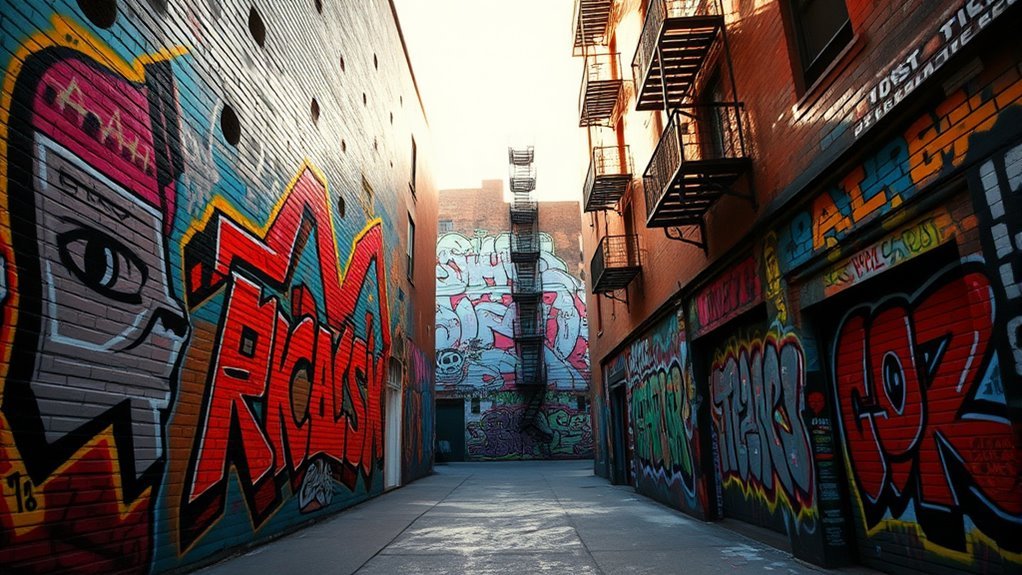
Should Graffiti Be Considered Art?
You should definitely consider graffiti as a powerful form of art. It demands impressive technical skill and creativity, turning urban spaces into vibrant expressions of culture and social messages.
Graffiti is more than just spray paint on walls—it’s a dynamic way to communicate ideas and emotions.
It shapes communities by inspiring fashion, music, and conversation, while sparking debate about its legitimacy. Some dismiss it as vandalism, but many recognize its cultural impact and artistic value.
Keep exploring, and you’ll discover how graffiti truly influences society and art in ways you might not expect. It’s an evolving art form that challenges traditional boundaries and invites everyone to join the conversation.
Key Takeaways
- Graffiti showcases advanced technical skill and creativity. It really takes it beyond just vandalism and into the realm of respected art.
- Renowned artists like Banksy have helped make graffiti popular as contemporary public art. It carries a lot of cultural and social meaning.
- Graffiti often reflects social issues and community identity. It’s a powerful way for people to express themselves and even push for change.
- Sure, there’s controversy around it, but graffiti showing up in galleries and museums says a lot. It’s becoming more accepted as real art.
- Graffiti also shapes culture in a big way. It inspires new trends and sparks conversations about society and city life.
Why Graffiti Stands Out As Art
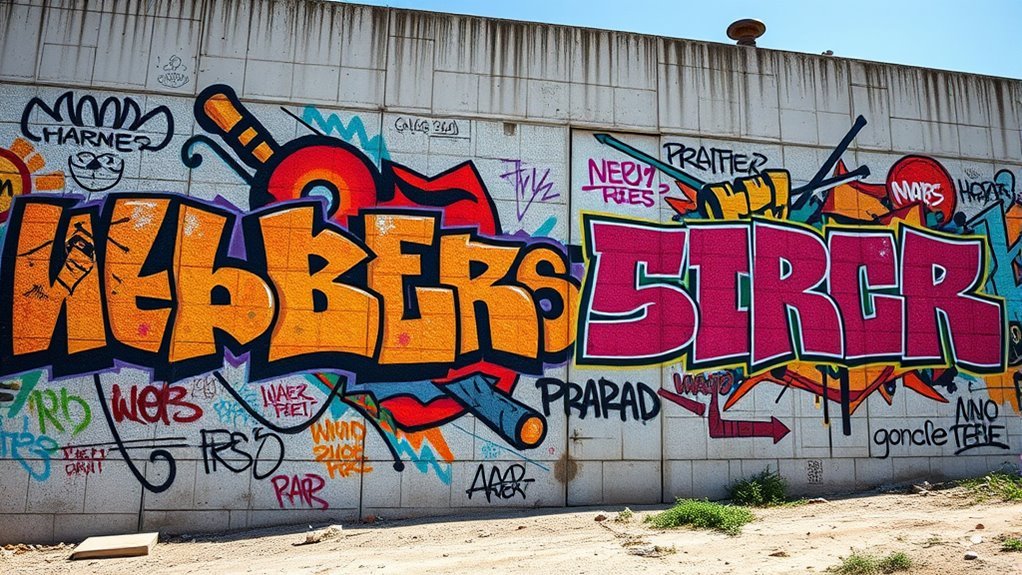
Although some may dismiss it as mere vandalism, graffiti stands out as a vibrant art form because it demands impressive technical skill and creativity. When you explore graffiti techniques, you’ll notice the mastery behind spray paint control, stencil work, and layered compositions.
Graffiti showcases remarkable creativity and technical skill through expert spray paint control and intricate stencil work.
These skills transform simple urban walls into intricate designs that captivate with their visual expression. Street art, especially murals, offers a dynamic form of public art that combines artistic innovation with powerful social messages.
Artists like Banksy and Basquiat elevated graffiti from the streets to the domain of contemporary art, proving its artistic skill and cultural relevance. You’ll see how mixed media and digital projections push graffiti’s creative boundaries even further.
When you appreciate graffiti, you’re witnessing an evolving art form where technical expertise meets bold expression. It’s what makes graffiti a significant and respected form of public art worldwide.
How Graffiti Shapes Culture: And Why It Sparks Debate
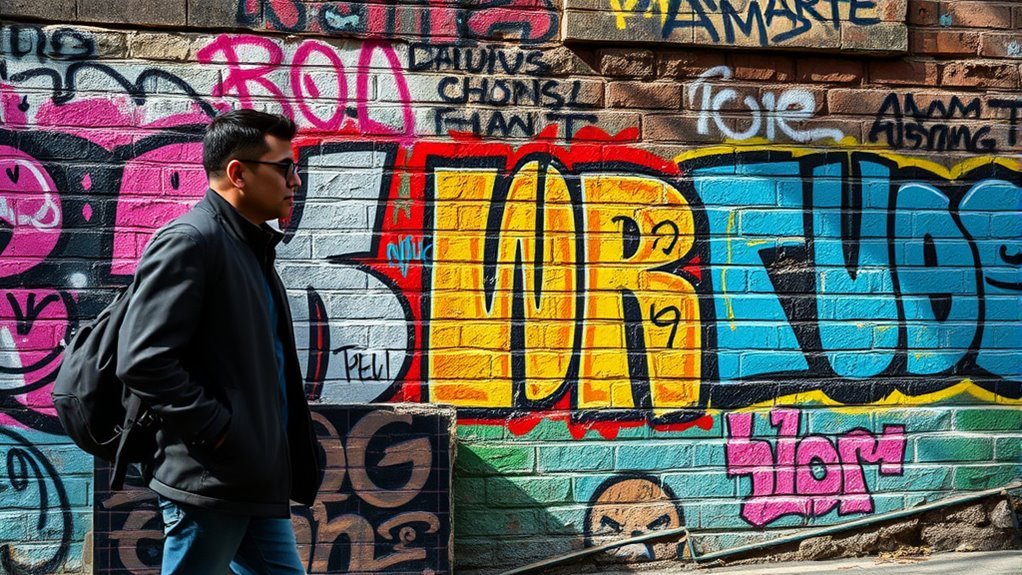
Graffiti does more than showcase artistic skill—it actively shapes culture by reflecting social issues and community identity. When you engage with graffiti culture, you see how street artists use vibrant colors and bold designs to offer social commentary on urban life.
This form of public expression brings attention to pressing social issues, making graffiti a powerful vehicle for community identity. You’ll notice how urban art influences mainstream culture, inspiring fashion, music, and contemporary art trends.
However, this influence sparks debate because some question graffiti’s artistic legitimacy, while others defend its role as a tool for social activism. Murals honoring figures like George Floyd underline graffiti’s impact in highlighting systemic problems worldwide.
As graffiti gains recognition in galleries and museums, you’re witnessing its transformation from street vandalism to celebrated cultural expression. Understanding this helps you appreciate graffiti’s complex role in shaping culture and why it continues to provoke strong opinions.
Frequently Asked Questions
Why Should Graffiti Be Considered Art?
You should consider graffiti art because it showcases creativity, technical skill, and powerful messages. It transforms public spaces and gains recognition in galleries and auctions.
Is Graffiti an Art or Not?
Of course, graffiti’s not art—unless you count vandalism as creativity!
But if you appreciate skill, bold messages, and cultural impact, you’ll realize graffiti is art, whether on a gallery wall or a city street corner.
What Type of Art Is Graffiti Considered?
Graffiti is considered urban or street art, often rooted in personal expression and subculture. You’ll see it as an illegal, spontaneous form emphasizing identity and social messages.
It’s quite different from authorized, collaborative street art. That kind usually has permission and is more planned out. Graffiti tends to be raw and unfiltered, reflecting the artist’s voice directly.
Why Isn’t Graffiti Art?
Think about a canvas torn without consent—graffiti isn’t art because you’re defacing property, causing damage, and breaking laws.
Its unauthorized nature strips away the respect and legitimacy that true art demands from you.
Conclusion
You can’t deny graffiti’s gritty grip on culture, grabbing attention and giving voice to the vibrant and voiceless. Though some see it as defacement, you’ll find it’s a dynamic dialogue, daring and daringly different.
Graffiti’s bold brushstrokes break boundaries, blending rebellion with raw beauty. So next time you pass a painted wall, pause and ponder—maybe what you see isn’t just scribbles, but a spirited story, shouting and shining through the streets.
In the end, graffiti is more than just markings on a wall. It’s a powerful form of artistic expression that reflects culture, challenges norms, and tells stories often left unheard. Whether you call it art or vandalism, there’s no denying graffiti’s impact on the urban landscape and its role in giving voice to the voiceless through creativity and rebellion. So, next time you see graffiti, take a moment to appreciate its boldness and beauty—it might just change how you see street art forever.