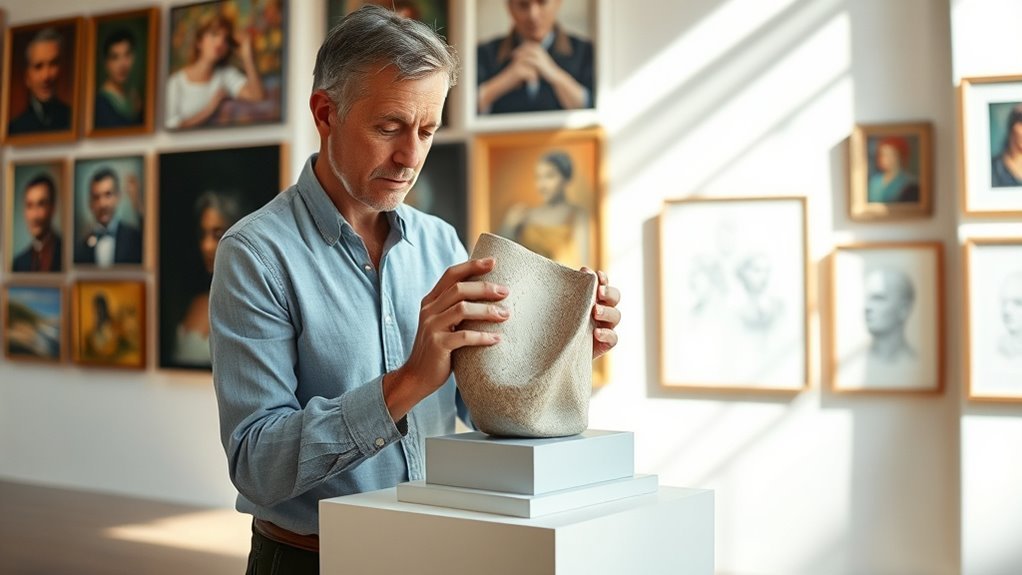
What Does an Art Curator Do?
As an art curator, you play a key role in managing and preserving artwork collections. This means making sure each piece is handled and stored properly to maintain its condition over time.
Your job also involves digging into the provenance and history of the artworks, which helps you create exhibitions that really tell a story and engage visitors.
You work closely with designers, conservators, and educators to make sure the exhibitions are not just beautiful but also educational.
There’s a lot of behind-the-scenes work too, like handling budgets, arranging loans, and keeping detailed documentation.
All these tasks come together to keep everything running smoothly. If you want to see how these pieces fit into the bigger picture, keep exploring this fascinating role!
Key Takeaways
- Select and organize artworks to create engaging and educational exhibitions. It’s all about telling a story that connects with the audience.
- Research provenance and historical context to ensure authenticity and accurate interpretation. This helps make sure every piece has its rightful place and meaning.
- Manage logistics, budgeting, and loan agreements for smooth exhibition operations. Keeping everything running without a hitch is key.
- Develop and enforce collection policies, including handling, storage, and acquisitions. These rules help protect the collection for the long haul.
- Collaborate with conservators to preserve and maintain artwork condition and accessibility. Teamwork here ensures the art stays in great shape and available for everyone to enjoy.
Daily Responsibilities of an Art Curator

While you might think an art curator’s job is all about choosing beautiful pieces, their daily responsibilities go far beyond that. Your daily tasks involve selecting and organizing artworks to create engaging exhibitions that tell a cohesive story.
An art curator’s role extends beyond selecting pieces to crafting meaningful, cohesive exhibitions that captivate audiences.
You conduct in-depth research on each piece, exploring provenance and historical context to guarantee accurate interpretation. Collaboration is key—you work closely with designers, conservators, and educators to develop interpretive materials like labels and catalogs that enhance public programming.
Alongside the creative side, you handle essential administrative duties such as managing shipping logistics, budgeting, and loan agreements. Documentation is another important part of your role, as you maintain detailed records of the art collection to support both current and future exhibitions.
Balancing these creative and organizational tasks ensures that both artworks and audiences receive the care and attention they deserve. It really makes your role crucial to the museum’s success.
How Art Curators Manage, Research, and Preserve Collections

Because managing an art collection requires careful attention, you’ll spend a lot of time researching each piece’s provenance to confirm its authenticity and history. Provenance research is vital for maintaining the collection’s integrity and guiding acquisitions.
In your collection management role, you develop and enforce collection policies to guarantee consistent care, including proper handling, storage, and collection documentation. You regularly conduct collection assessments to identify gaps, recommend acquisitions, and manage loans.
Your work includes conservation collaboration, partnering with conservators to monitor environmental conditions and determine restoration needs. This teamwork supports effective artwork preservation, ensuring pieces remain stable and accessible for public display.
Frequently Asked Questions
Do Art Curators Make Money?
Yes, you can make money as an art curator. Salaries vary widely based on experience and location, ranging from $40,000 to over $100,000.
There are also opportunities to boost your income through consulting, speaking, and freelance projects. So, if you’re passionate about art, there’s definitely potential to earn well in this field.
What Does It Take to Become an Art Curator?
You’ll need a degree in art history or fine arts, gain experience through internships, and build a strong portfolio.
Pursuing advanced degrees and networking with professionals will boost your chances of becoming a successful art curator.
It’s all about combining your education with real-world experience. Plus, making connections in the art world really helps you stand out.
How Much Do Art Curators Earn?
You’ll earn like a brushstroke on a canvas—varied and vibrant—ranging from $40,000 to over $100,000 yearly. Location, experience, and institution type shape your salary, with big cities often boosting your pay considerably.
It really depends on where you are and what kind of place you work for. Plus, the more experience you have, the better your chances of earning on the higher end. So, keep building those skills and connections!
What Is the Highest Paid Job in Art?
The highest-paid job in art is typically a museum director or art gallery executive, where you can earn $200,000 to over $1 million.
Combining business skills with art expertise lets you maximize your income effectively.
It’s a great way to blend your passion for art with savvy management.
Plus, these roles often come with perks beyond just the paycheck.
Conclusion
As an art curator, you’ll juggle many tasks daily—from researching artwork to preserving collections and organizing exhibitions. Imagine you’re preparing a new exhibit on contemporary artists; you’d select pieces, write descriptions, and guarantee everything’s displayed perfectly.
Your role is essential in bringing art to life for visitors while protecting it for future generations. By managing and interpreting art, you help others connect with creativity in meaningful ways every day.
In short, being an art curator means balancing creativity with responsibility. You don’t just handle art; you tell its story, making sure each piece speaks to the audience. This role is key to preserving cultural heritage and inspiring people through art exhibitions and collections. It’s a rewarding job that blends research, preservation, and public engagement all in one.