What Is Foreshortening in Art?
Foreshortening in art lets you create the illusion of depth by distorting objects based on perspective. It’s a powerful technique where parts closer to you appear larger, while those farther away shrink.
This contrast adds realism and drama to your work, making your scenes more engaging.
You’ll notice it helps capture unusual angles and spatial relationships clearly.
By mastering foreshortening, your drawings become more dynamic and three-dimensional. It’s all about playing with perspective to bring life and movement to your figures and objects.
Keep exploring this technique, and you’ll uncover practical ways to make your art stand out.
Foreshortening is a key skill that adds depth and excitement to any piece you create.
Key Takeaways
- Foreshortening is a technique that creates the illusion of depth by distorting objects based on perspective. It helps depict spatial relationships accurately by reducing the size of distant parts.
- Overlapping shapes and tapering forms are key visual cues for recognizing foreshortening. These tricks help our eyes understand what’s closer and what’s farther away.
- Artists use simple shapes and perspective rules to master foreshortening in drawings. It’s all about breaking down complex forms into easier parts to capture depth.
- Foreshortening adds realism and dynamic drama by enhancing three-dimensional appearance. It makes artwork feel more alive and engaging.
What Is Foreshortening : And Why Should You Care?

Although it might seem tricky at first, foreshortening is a powerful technique that helps you create the illusion of depth by distorting objects or body parts based on perspective. When you understand foreshortening, you can accurately depict spatial relationships, making your drawings appear three-dimensional.
This technique gives your artwork a sense of realism and drama, especially when you draw figures or objects from unusual angles. To master foreshortening, you must recognize key visual cues like size reduction and overlapping forms, which signal depth and perspective changes.
Key Techniques Artists Use To Master Foreshortening
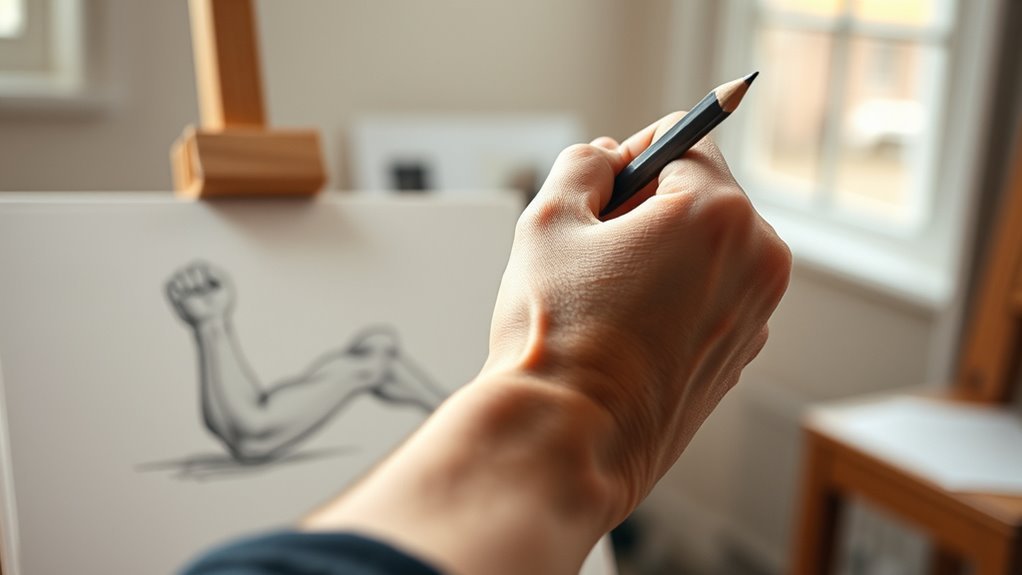
Mastering foreshortening means breaking down complex forms into simple shapes like cylinders and boxes, which makes it easier to visualize and depict depth. You’ll want to use overlapping shapes to clearly show spatial relationships, reinforcing the illusion of depth in your work.
Following the form by drawing through objects—over, under, and around—helps emphasize their three-dimensionality. Applying perspective is essential: reduce size and compress shapes as they recede in space.
Paying close attention to visual cues like overlaps, tapering, and contour shifts in master artworks really enhances your understanding. By combining these techniques, you’ll accurately represent form and depth, making your foreshortened figures convincing and dynamic.
Frequently Asked Questions
What Is an Example of Foreshortening in Art?
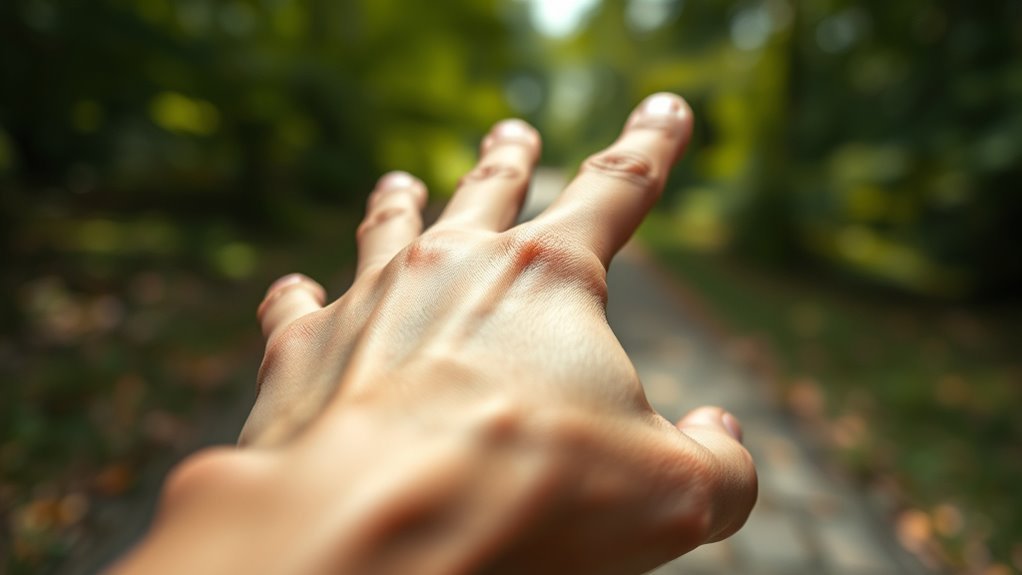
An example of foreshortening is when you see a hand reaching toward you in a painting, making it look bigger than the arm. It creates depth by compressing parts closer to your viewpoint.
What Is Foreshortening a Technique?
You might think foreshortening just distorts shapes, but it’s a technique because you actively manipulate proportions to create depth. You’ll use it to make objects appear realistically three-dimensional, enhancing perspective and visual impact in your art.
Is Foreshortening Difficult?
Yes, foreshortening is difficult because you have to accurately judge distorted proportions and perspective. It takes practice and keen observation to master, even for experienced artists who sometimes struggle with it. Keep practicing!
What Does Foreshortening Look Like?
You might think foreshortening looks confusing, but you’ll notice parts like an arm seem shorter or squished, with closer areas bigger and overlapping shapes creating depth. It makes images feel dynamic and three-dimensional.
Conclusion
So, now that you know foreshortening is just the fancy way artists trick your eyes into seeing depth, you’ll never look at a drawing the same way again. Next time someone shows you a weirdly squished arm or leg, you can smugly nod and say, “Ah, yes, foreshortening—mastering it separates the pros from the stick figures.”
Embrace it, or keep drawing flat, lifeless shapes. Your call, Picasso. Foreshortening is a key technique in art that helps create a sense of depth and realism by altering proportions based on perspective. When you master foreshortening, your drawings jump off the page with dynamic energy and believable form. So the next time you see a foreshortened figure, remember—it’s not just a weird squish, it’s an artist’s secret weapon to bring art to life!