What Is Glass Art and How Is It Created?
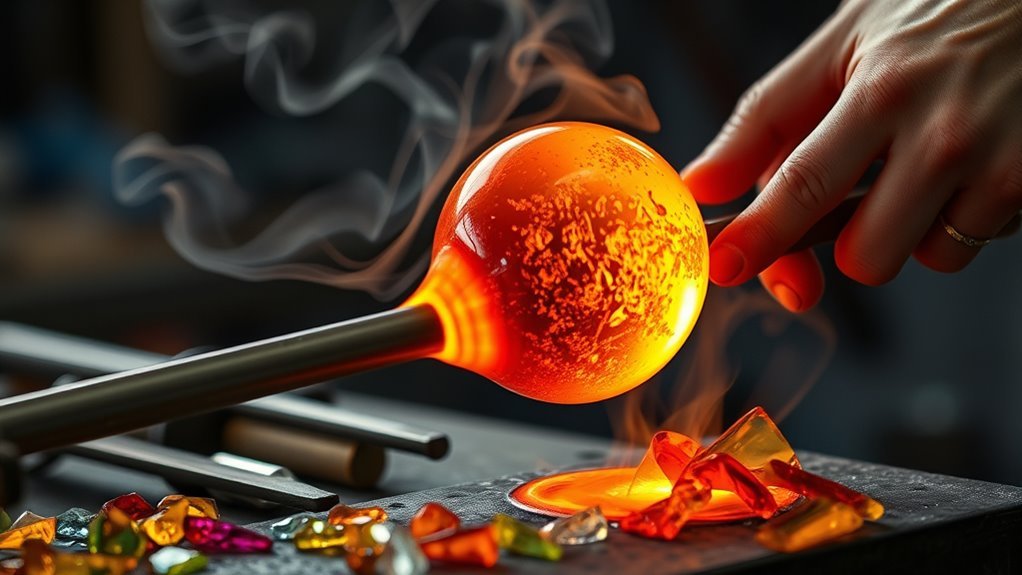
Glass art transforms simple glass into vibrant, expressive pieces using techniques like blowing, fusing, and casting. It’s all about taking molten glass gathered from a furnace and shaping it by heating, adding color, and using gravity and timing to create something truly unique.
This art form combines both traditional skills and modern methods, making each piece a special work of creativity.
You’ll work closely with the glass as it cools, shaping and refining it carefully. After the shaping process, the piece is slowly cooled to prevent cracks and then finalized with detailed tools.
It’s a fascinating process that invites you to explore how glass art really comes to life.
Key Takeaways
- Glass art transforms functional glass into decorative pieces using traditional and innovative techniques like blowing, casting, and fusing. It’s pretty fascinating how artists can turn something so everyday into a work of art.
- It includes vibrant stained glass, fused layers, and both hot and cold methods to create texture and detail. There’s a lot of variety in how glass can be manipulated.
- Molten glass is gathered on a blowpipe, shaped with heat and gravity, and colored using powdered glass or metal oxides. The process takes skill and a steady hand.
- Post-shaping processes like annealing cool the glass slowly to prevent cracks and ensure durability. This step is super important to keep the piece strong.
- The art form ranges from delicate vessels to large installations, emphasizing light interaction and individual artistic expression. Each piece tells its own unique story through light and form.
What Is Glass Art? Definition and Styles
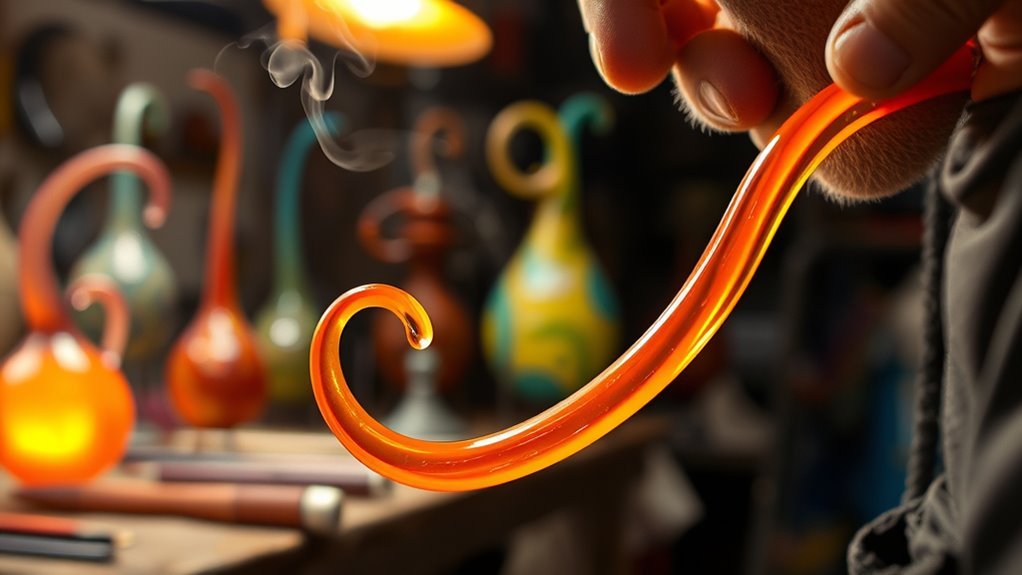
Although you might think of glass as just a functional material, glass art transforms it into stunning works that highlight both beauty and meaning. When you explore contemporary glass art, you’ll see artists blending traditional techniques with innovative approaches to create diverse styles.
From the vibrant colors of stained glass windows to the smooth layers of fused glass, each piece emphasizes the surface of the glass and its interaction with light. Hot glass methods like blowing and casting allow dynamic shaping, while cold techniques add texture and detail.
Art glass ranges from delicate vessels to large installations, reflecting individual expression beyond industrial production. By understanding these techniques and styles, you’ll appreciate how glass art elevates a simple material into a mesmerizing form of artistic exploration.
How Artists Create Unique Pieces From Molten Glass
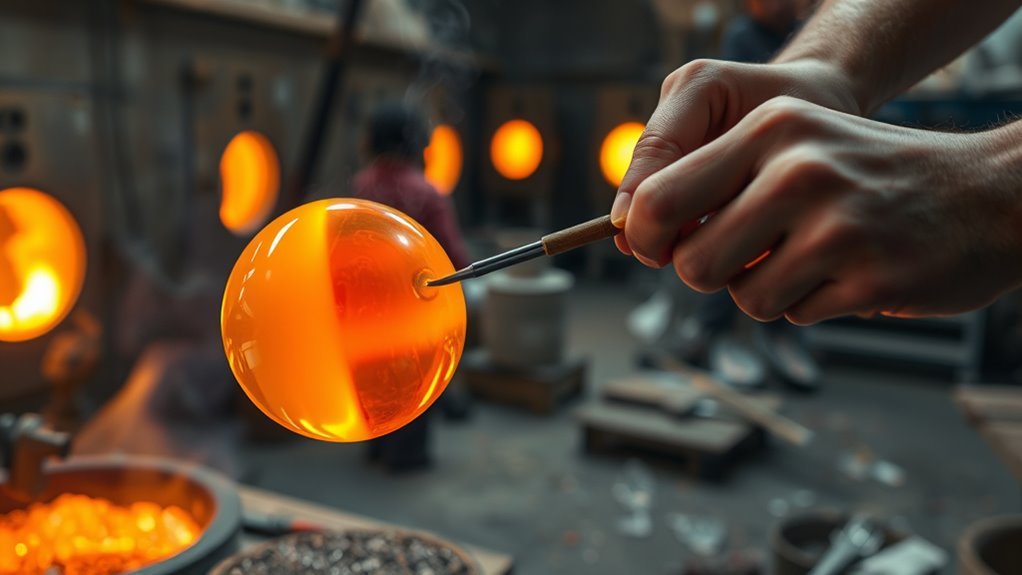
When artists gather molten glass from a furnace using a steel blowpipe, they step into a world where intense heat meets delicate control. The glass is malleable, allowing glass artists to use techniques like blowing, paddling, and molding to shape it.
Colors and patterns emerge by adding powdered glass or metal oxides before the shaping starts. Gravity and timing play pivotal roles, often requiring teamwork for perfect results.
After shaping, the piece undergoes annealing, slowly cooling in a kiln to prevent cracks. Using specialized tools, artists masterfully transform molten glass into unique art.
| Glass Technique | Purpose |
|---|---|
| Blowing | Expands glass |
| Paddling | Flattens surfaces |
| Tweezing | Detailed shaping |
| Annealing | Stabilizes glass |
Frequently Asked Questions
How Do They Make Glass Art?
You make glass art by heating raw materials until molten, then shaping the glass using blowing, molding, or casting. You add colors and patterns, then cool it slowly to prevent cracks and create unique, beautiful pieces.
Is Glass Art an Expensive Hobby?
Yes, glass art can be an expensive hobby because you’ll need costly raw materials, specialized tools, and professional equipment. Plus, creating intricate pieces requires time and skill, which can also drive up your overall expenses.
What City Is Known for Glass Art?
You’ll find Venice, Italy, especially the island of Murano, famous for its exquisite glass art. Murano’s artisans have crafted unique techniques and stunning pieces for centuries, making it a world-renowned glassmaking hub you’ll want to explore.
What Is the Purpose of Glass Art?
You’ll find glass art’s purpose is to capture light’s dance and color’s whisper, letting you experience emotions and ideas through shimmering forms that challenge space, preserving tradition while sparking your imagination with vibrant innovation.
Conclusion
Now that you know what glass art is and how it’s made, you can really appreciate the skill behind each shimmering piece. From molten glass to a finished masterpiece, artists blend ancient techniques with modern flair—kind of like a Renaissance painter with a smartphone.
So next time you see a glass sculpture, remember the fiery dance and creativity that brought it to life. Glass art is not just about beauty; it’s about the craftsmanship and passion poured into every creation.
You might even feel inspired to try your hand at this timeless craft! Whether it’s glassblowing, fusing, or casting, each technique offers a unique way to express creativity. Embracing glass art connects you to a rich history while celebrating contemporary innovation—all in one dazzling form.