What to Include in an Art Portfolio: Top 10 Must-Haves
You need to include diverse, original artworks that showcase your skills, creativity, and personal voice. Make sure to match each school’s portfolio requirements and deadlines to stay on track.
Use clear labels with titles, mediums, and brief explanations. Present your work professionally with high-quality photos to make a strong impression.
Show your growth by mixing techniques and documenting your process. This helps demonstrate your development as an artist over time.
Always seek feedback to refine your portfolio continuously. Keep these essentials in mind, and you’ll discover how to make your portfolio truly stand out.
Key Takeaways
- Include a diverse range of artworks showcasing various mediums, techniques, and personal creative voice. This variety really helps to show off your skills and style.
- Present observation-based pieces demonstrating accuracy in proportion, perspective, and detailed textures. These kinds of works highlight your attention to detail and technical ability.
- Organize work logically with clear labels featuring titles, mediums, materials, sizes, and dates. It makes everything easier to understand and appreciate.
- Add artist statements or brief descriptions to explain intentions and highlight unique perspectives. Sharing your thoughts can really connect the viewer with your art.
- Provide high-quality photos with natural lighting and minimal editing to enhance visual presentation. Good photos make your work look its best, so don’t skip this step.
Understand Portfolio Requirements Before Starting
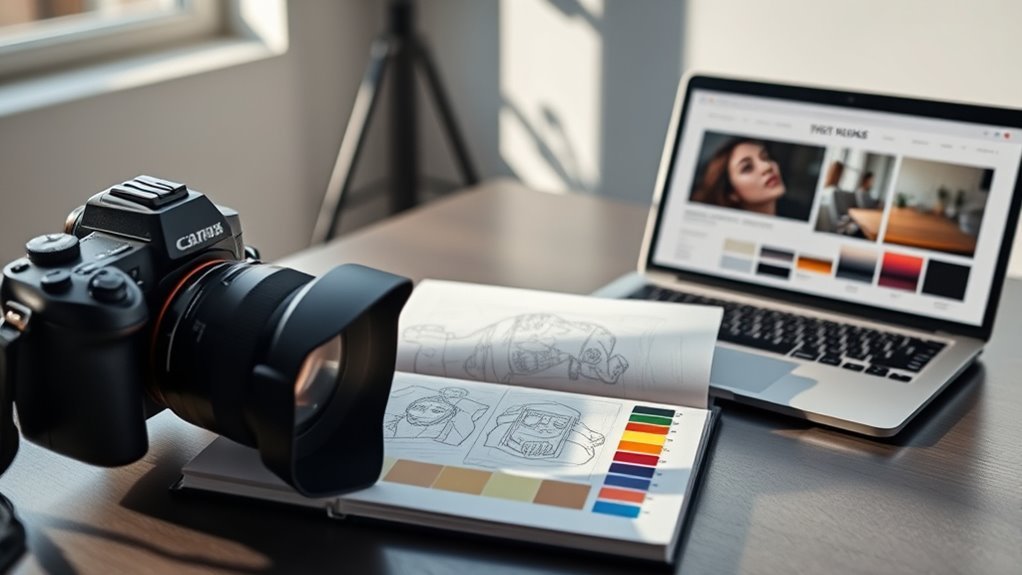
Before you begin assembling your art portfolio, make sure you thoroughly review each school’s specific requirements. Each program has distinct guidelines about the number and types of artworks they want.
Carefully review each school’s unique portfolio requirements before assembling your artwork to ensure you meet their expectations.
You’ll want to read all application instructions carefully to understand any preferred mediums, formats, or themes. Matching your chosen work to the portfolio requirements is vital to avoid rejection during the review process.
Don’t forget to note submission deadlines so you can plan your timeline efficiently. Also, familiarize yourself with any additional documentation the school might require, like labels, artist statements, or process descriptions.
Staying organized and aligned with the portfolio requirements will help you present your best work and increase your chances of acceptance.
Try Different Mediums and Techniques to Stand Out

Once you’ve aligned your portfolio with the specific requirements, focus on showcasing your versatility by trying different mediums and techniques. Diverse art portfolios stand out because they reflect your adaptability and creativity.
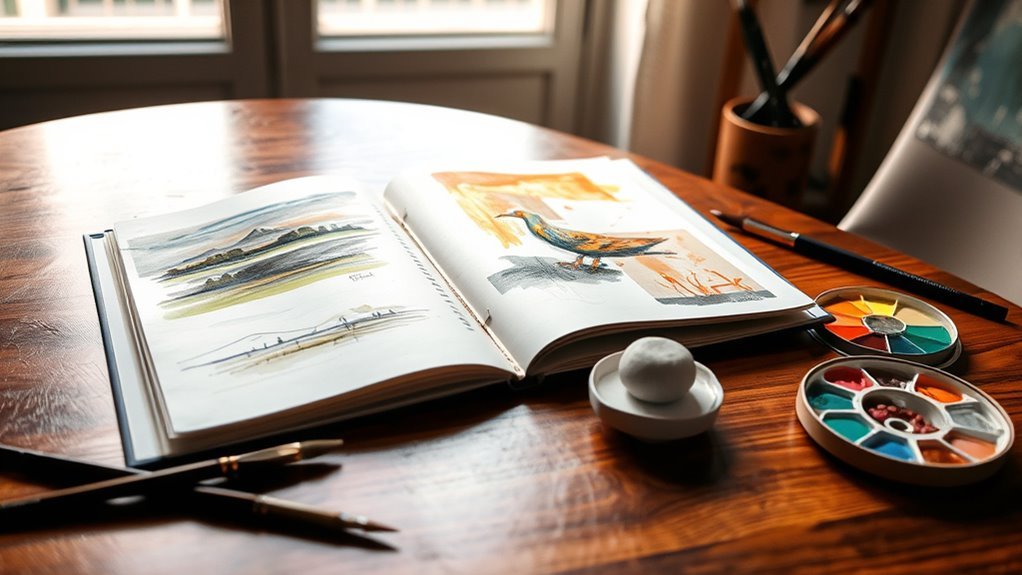
Experiment with drawing, painting, sculpture, digital art, and printmaking to show range. You can also try watercolor washes, charcoal shading, mixed media, and digital manipulation to add skill depth.
Don’t be afraid to use unconventional materials and textures to highlight innovation. Playing around with various styles shows you’re willing to explore new ideas.
Make sure to document your process too — it reveals your growth and learning. Mixing mediums and techniques not only enriches your portfolio but tells a story about your artistic journey.
This approach helps you capture attention and proves you’re a dynamic artist ready to take on new challenges.
Showcase Your Personal Point of View in Your Portfolio
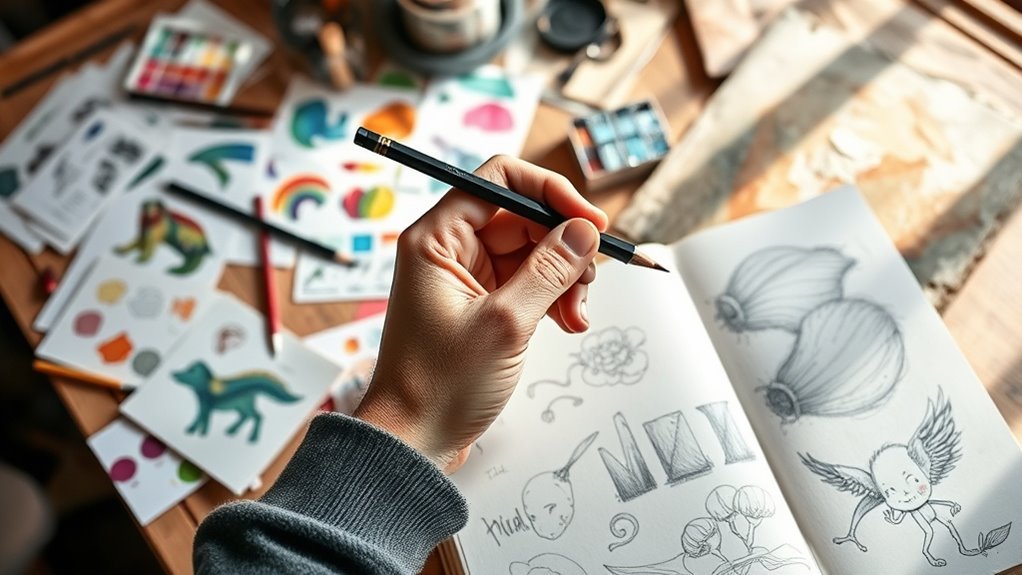
Although technical skill is important, your portfolio truly shines when it reflects your personal point of view. Including works that express your unique perspective helps showcase your personal voice clearly.
Choose pieces inspired by your experiences and passions that reveal how you see the world. Use your art to convey emotions or messages tied to your values and outlook.
Differentiating your work with original concepts emphasizes your creative approach. Adding brief artist statements or explanations can clarify your intentions and deepen the viewer’s understanding.
| What to Include | Why It Matters |
|---|---|
| Unique perspective | Highlights your personal voice |
| Experience-inspired pieces | Shows authentic connection |
| Emotional or value-driven work | Communicates deeper meaning |
| Artist statements | Clarifies your creative intentions |
Choose Original Work From Real-Life Observation
How do you prove your ability to see and interpret the world around you? Choosing original work from real-life observation is key.
Art schools, art teachers, and art professors look for a portfolio that shows your skill in capturing authentic scenes with accuracy and creativity. Including original observational pieces highlights your personal artistic voice and technical foundation.
Make sure your portfolio includes:
- Drawings or paintings from real-life subjects
- Work demonstrating accurate proportion and perspective
- Pieces showing detailed textures and lighting
- Art that reveals your unique interpretation
- Originals that reflect your commitment to observation
This approach not only enhances your art portfolio but also proves you can translate the world around you into compelling original work.
Show Your Skills and Creative Growth
To impress reviewers, you need to show not just your current skills but also how you’ve grown as an artist. Your art portfolio should include a variety of works that highlight your skills across different techniques and mediums like drawing, painting, digital art, and sculpture.
Choose pieces that clearly demonstrate your creative growth and improvement over time—show experimentation, increasing complexity, and thoughtful development. Including process sketches or development studies can reveal your problem-solving approach and creative thinking.
Don’t hesitate to feature original ideas that showcase your unique artistic voice and personal evolution. And hey, regularly updating your portfolio with fresh work will further emphasize your ongoing development and expanding capabilities. It makes it clear you’re dedicated to refining your craft and pushing your artistic boundaries.
Organize Your Portfolio Logically and Cohesively
You want to arrange your artwork in a way that creates a smooth, logical flow, starting with your strongest pieces. Grouping related works together helps build a cohesive visual story that highlights your themes and skills.
Make sure each piece has clear labels to guide viewers through your artistic journey. This way, people can easily follow along and appreciate the progression you’ve created. It’s all about making the experience enjoyable and engaging!
Logical Artwork Arrangement
Why should your artwork follow a specific sequence? When you arrange your artworks logically, you guide viewers through your portfolio smoothly. This makes your creative journey easy to follow.
This thoughtful order highlights your skills and keeps your audience engaged from start to finish.
To arrange your artworks effectively:
- Start with your strongest pieces to grab attention immediately.
- Group related works to emphasize common themes or techniques.
- Mix diverse pieces strategically to showcase your range without disrupting flow.
- Maintain consistent spacing, borders, and labeling for a clean, organized look.
- Create a clear progression that visually connects each piece to the next.
Cohesive Visual Narrative
Building on a logical arrangement, crafting a cohesive visual narrative helps your portfolio tell a compelling story. Organize your artworks in a sequence that creates smooth visual flow, guiding viewers through your artistic development.
Group related pieces together to emphasize themes, techniques, or media. This strengthens the narrative coherence and makes your portfolio easier to follow.
Start with your strongest or most eye-catching work to make a memorable first impression. Use a logical structure—whether chronological or thematic—to clearly demonstrate your progression and ideas.
Including brief captions or titles adds context and enriches the storytelling. By thoughtfully arranging your work, you create a cohesive visual narrative that not only highlights your skills but also engages and resonates with your audience.
In the end, this approach really makes your portfolio stand out. It’s all about making the viewer’s experience as smooth and meaningful as possible.
Label Each Artwork With Titles and Context
Make sure you clearly label each artwork with a descriptive title that reflects its theme. Include key details like the medium, materials, size, and date to give viewers important context.
Adding brief explanations can help share your artistic intent without distracting from the piece itself. This way, people get a better understanding of what you’re trying to express. It keeps the focus on the art while still providing meaningful insight.
Clear Artwork Identification
How can you guarantee your artwork communicates clearly to viewers? Clear artwork identification is essential, especially when meeting art school portfolio requirements.
By labeling each piece thoughtfully, you make it easier for reviewers to grasp your intent and technique.
Here’s how to assure clarity in your portfolio:
- Give each artwork a clear, descriptive title to highlight its focus.
- Include the medium or materials used, adding context to your technique.
- Add brief descriptions or artist statements for selected pieces to share your creative process.
- Use neat, legible labels placed consistently, preferably on the back or near the artwork without blocking natural light.
- Opt for professional formatting, like printed or neatly handwritten labels, to boost presentation quality.
These steps help your portfolio speak clearly and professionally.
Medium And Materials Notation
Clear identification of your artwork sets the foundation for effective communication, but adding detailed medium and materials notation brings deeper insight into your creative choices. Label each piece with a clear title that reflects its subject or concept.
Always include the medium you used—whether it’s oil paint, charcoal, or digital illustration—to highlight your technical skills. When relevant, note specific materials or techniques to showcase versatility and depth.
Keep your medium and materials notation consistent in style and placement throughout your portfolio to maintain professionalism and clarity. While you don’t need lengthy descriptions here, brief context can help explain your approach if necessary.
This precise labeling ensures viewers understand not just what your art depicts but also how you brought it to life. It’s a simple step that really makes a difference.
Contextual Descriptions Included
Although your artwork’s visual impact speaks volumes, including contextual descriptions with each piece deepens viewers’ understanding and engagement. Label each artwork with a clear title and medium to offer essential context.
Brief descriptions or artist statements reveal your concept, inspiration, and techniques, making your portfolio more personal and insightful. Use contextual descriptions to highlight your creative process or the significance behind each work, helping others connect with your art.
Keep these notes neat, concise, and consistently placed for easy navigation. For complex or experimental pieces, detailed notes communicate your artistic intent effectively.
- Clear titles and medium labels
- Brief artist statements explaining concepts
- Highlights of creative process or personal meaning
- Consistent, concise, and neat contextual descriptions
- Detailed notes for complex or experimental works
Present Finished Pieces With Professional Photography
When you present your finished artwork, professional photography can make all the difference in showcasing your pieces effectively. Using natural, diffused lighting helps evenly illuminate your artwork, minimizing harsh shadows and glare.
Capture high-resolution images with a good camera or smartphone, making sure your artwork fills the frame without any distracting backgrounds. It’s also a good idea to take shots from multiple angles and close-ups to highlight textures and craftsmanship accurately.
In your portfolio, these clear, sharp images really elevate your presentation and give viewers a true sense of your work. When editing photos, keep it minimal—just enough to correct color balance and contrast—so you maintain an honest representation of your artwork.
Focusing on professional photography in your portfolio boosts the overall impact and professionalism of your presentation. It’s a simple step that can make your artwork stand out in the best way.
Seek Feedback From Experienced Artists and Educators
You should get feedback from trusted artists and educators to spot your portfolio’s strengths and weaknesses. Constructive critique helps you choose the most impactful pieces and sharpen your presentation.
Their professional guidance guarantees your work meets admissions standards and showcases your skills effectively. It’s always great to have experienced eyes look over your work—they can offer insights you might miss on your own.
Trusted Sources Matter
Because experienced artists and educators offer objective insights, seeking their feedback can dramatically improve your portfolio’s quality. Trusted sources help you see your work from a fresh perspective, pointing out areas you might miss.
They guarantee your portfolio meets the standards expected by art schools and programs, increasing your chances of success.
Here’s why trusted sources matter:
- Identify weaknesses and suggest improvements
- Help select your strongest pieces
- Align your portfolio with industry standards
- Guide presentation and layout choices
- Strengthen your artistic voice through expert advice
Constructive Critique Benefits
Although receiving feedback can feel challenging, seeking constructive critique from experienced artists and educators sharpens your portfolio by revealing strengths and areas needing improvement. Constructive critique offers an external perspective that highlights details you might overlook, such as technical accuracy or conceptual clarity.
By regularly obtaining feedback from trusted professionals, you can better select your most compelling works and refine how you present them. This process guarantees your portfolio aligns with industry standards and meets the expectations of admissions committees.
Embracing constructive critique not only helps you grow but also strengthens your artistic voice. Ultimately, it increases your chances of creating a standout portfolio that truly represents your skills and vision.
Professional Guidance Importance
When you seek feedback from experienced artists and educators, you gain valuable insights that sharpen both your technical skills and artistic expression. Professional guidance helps you refine your portfolio by highlighting strengths and pinpointing areas for improvement.
It also guarantees your work meets industry standards and program expectations. By consulting mentors regularly, you can confidently select the most impactful pieces to showcase. Building relationships with professionals deepens your understanding of effective presentation and artistic growth.
Here’s why professional guidance is essential:
- Identifies strengths and growth opportunities
- Aligns your portfolio with industry standards
- Helps choose the most compelling artworks
- Enhances your presentation skills
- Supports continuous artistic development
Embrace professional guidance to elevate your portfolio and artistic journey.
Refine Your Portfolio Continuously Based on Reviews
To keep your portfolio strong and relevant, you should regularly seek feedback from trusted mentors or peers. Use their critiques to refine your work, removing pieces that no longer represent your evolving style or skills.
Incorporate suggested improvements to boost technical quality and guarantee thematic consistency. Continuously reviewing your portfolio helps you present your best self and adapt your selection for specific programs or opportunities.
Refinement is key to showcasing growth and professionalism. Keep at it, and your portfolio will always reflect your best work.
Frequently Asked Questions
What Should a Good Art Portfolio Consist Of?
A good art portfolio should showcase your skills, style, and story through strong, stunning, and selective pieces. You’ll want clear, crisp images, diverse designs, and detailed descriptions that demonstrate your growth and creative grit.
What Is the 70 30 Rule in Art?
The 70/30 rule in art means you should showcase 70% of your strongest, polished work and 30% experimental or in-progress pieces. This balance highlights your skill while showing your creativity and growth as an artist.
What Are the 5 C’s of Art?
You’ll find that 90% of viewers notice strong composition first. The 5 C’s of art are Composition, Contrast, Color, Content, and Craftsmanship—they help you create balanced, engaging, and meaningful artwork that truly stands out and connects emotionally.
What Not to Put in an Art Portfolio?
Don’t include unfinished sketches, fan art, or unrelated pieces. Avoid low-quality photos, blurry images, and overloading your portfolio. Focus on polished, original work that highlights your strengths and aligns with your artistic goals.
Conclusion
Remember, your art portfolio speaks for you—make it count! Studies show that 85% of art schools place high importance on originality and personal voice, so don’t just showcase skills; reveal your unique perspective.
Keep experimenting, refining, and seeking feedback to create a portfolio that truly stands out. With careful attention to detail and continuous improvement, you’ll boost your chances of making a memorable impression and achieving your artistic goals.
Keep creating and stay inspired! Building a strong art portfolio takes time and dedication, but by focusing on originality and personal voice, you’ll make your work unforgettable. Whether you’re applying to art schools or showcasing your talent, remember that your portfolio is your story—tell it with passion and purpose.