How to Cite Art Step by Step
To cite art correctly, start by gathering key details like the artist’s full name, the artwork’s title, creation date, medium, and location. These elements are essential for any citation style you use.
Knowing what to include makes the process a lot easier.
In MLA, you list the artist’s last name first and italicize the artwork’s title.
APA style is a bit different—it uses the artist’s initials, the year in parentheses, and italicizes the title in sentence case, with the medium in brackets.
Chicago style goes further by including the artist, title, date, medium, dimensions, and location.
Following these steps guarantees accurate citations.
Once you get the hang of it, you’ll see how each style adapts to different types of art references.
It’s really not as complicated as it seems!
Key Takeaways
- Include the artist’s full name and the artwork’s title in italics or quotation marks based on citation style.
- Specify the creation year or approximate date to provide historical context for the artwork.
- Identify the medium used, such as oil paint or sculpture, to clarify the artwork’s form.
- Mention the museum, gallery, or collection where the artwork is housed to complete the citation.
- Follow specific formatting guidelines for MLA, APA, or Chicago style to ensure accuracy and consistency.
It’s pretty straightforward once you get the hang of it. Just remember to keep each part clear and consistent with the style you’re using.
Identify Essential Information for Art Citation
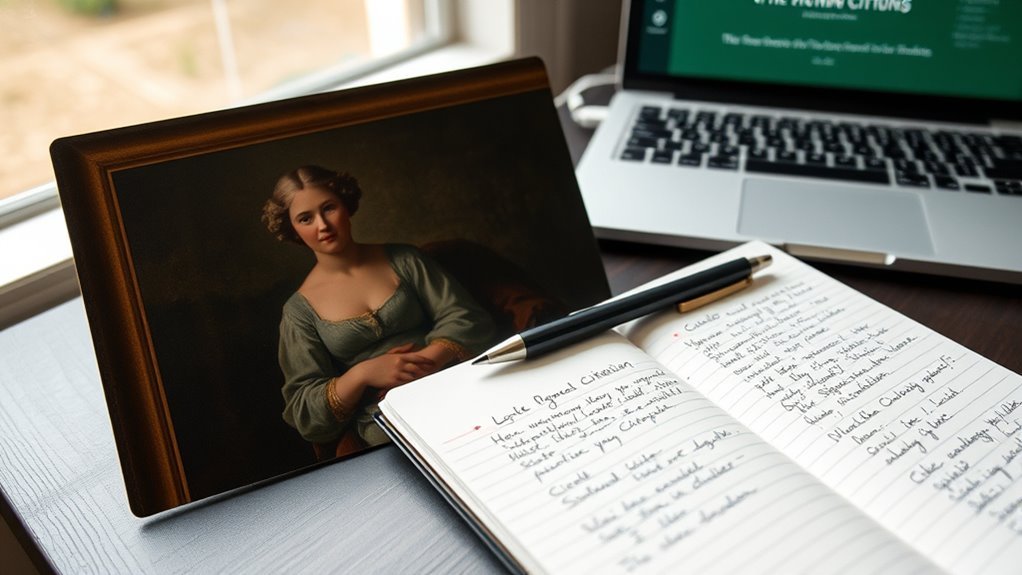
When citing a piece of art, what key details do you need to include? First, identify the artist’s full name because it anchors your citation. Next, note the title of the artwork—remember, depending on the citation style, it may need italics or quotation marks.
Including the creation date or approximate year is vital to place the artwork in its historical context. Don’t forget the medium, such as oil paint, sculpture, or digital, as it helps accurately identify the piece.
You should also specify the location where the artwork is housed, whether it’s a museum or a private collection. This information serves as the source for your research paper and guarantees your citation is complete.
Collecting these elements—artist, title, medium, location, and creation date—prepares you to format your citation properly according to your chosen citation style. This step is fundamental for giving credit and guiding readers to the original artwork.
Format Art Citations in MLA, APA, and Chicago Styles

Several citation styles guide you in formatting art citations, each with distinct rules. In MLA style, you list the artist’s last name, first name, italicize the artwork title, include the creation year, and mention the museum or source.
If the artist isn’t known, start with the artwork’s description or title. APA style calls for the artist’s last name and initials, year in parentheses, the title in italics with sentence case, the medium in brackets, and the museum or location.
Chicago style offers Notes and Bibliography formats, emphasizing thorough details: artist, italicized title, creation date, medium, dimensions, and location. For online sources, include URLs in Chicago style but omit them if you viewed the work in person.
Whichever citation format you use, guarantee consistency throughout your bibliography. Mastering these styles helps you accurately credit artwork and support your art history research with reliable references.
Frequently Asked Questions
How to Properly Cite Art?
You properly cite art by including the artist’s full name, title, date, medium, and location. Mention how you accessed it—online or in person—and follow your required citation style.
If you found it online, don’t forget to add URLs and access dates. That way, your citation is complete and clear!
How to Cite Step by Step?
First, gather details and record the source. Then, follow the style rules that apply to your citation.
Make sure to include access information, like where and when you found the artwork. Double-check everything for accuracy.
This way, you’ll create a clear and consistent citation. It helps identify the artwork and shows readers where you found it, making it easier for them to verify your research.
How to Cite Art in MLA Text?
You’ll cite art in MLA by listing the artist’s last name first, the artwork’s title italicized, publication or website info, date, and URL.
Don’t forget the access date for online sources. It’s super important to include that!
How to Cite Art in APA 7?
Want to credit art properly in APA 7? You’ll cite the artist’s name, year, and italicize the title.
Include the museum and location for physical art, or add a URL plus access date for online pieces. It’s pretty straightforward once you get the hang of it!
Conclusion
Now that you know how to identify essential information and format art citations in MLA, APA, and Chicago styles, you’re all set to give proper credit to artists. Did you know that nearly 70% of students feel unsure about citing artwork correctly? Don’t be part of that statistic!
With these clear steps, you’ll confidently include art citations in your work, making your research more credible and professional every time. Keep practicing, and it’ll soon become second nature!
Remember, mastering how to cite art properly not only helps you avoid plagiarism but also shows respect for the artist’s creative work. Whether you’re writing a paper, creating a presentation, or sharing art online, accurate art citations boost your credibility. So stick with these guidelines, and citing artwork will feel effortless before you know it!