How Can You Sell Prints of Your Art in 10 Essential Steps?
To sell prints of your art successfully, start by creating a cohesive collection with clear themes and sizes that work well for prints. Choosing the right prints for your art is key because it helps attract the right buyers and makes your work stand out.
Next, pick reliable printers who use quality materials to ensure your prints look professional and last long.
Setting your prices thoughtfully is important too—consider your costs and what your audience is willing to pay.
Building an engaging online presence is a must. Showcasing your work on a website or social media platforms helps people discover your prints easily.
Don’t forget to promote your prints through social media and local events; it’s a great way to reach more potential customers.
Finally, listen to customer feedback. It can help you refine your offerings and build loyalty over time.
Keep following these steps, and you’ll find even more ways to grow your print sales effectively.
Key Takeaways
- Create a cohesive art collection with clear style and consistent themes to attract and retain buyers. This way, people know what to expect from your work and feel connected to your art.
- Choose appropriate print sizes and formats, balancing quality, cost, and customer preferences. Think about what your audience would like and what fits best with your pieces.
- Select a reliable printer offering high-quality, color-accurate, and archival print options. It’s important your prints look amazing and last a long time.
- Build an online presence with a professional website, social media integration, and regular portfolio updates. Keeping things fresh helps keep your audience interested.
- Promote prints through social media, local events, collaborations, and actively engage customers for feedback and loyalty. Being involved and approachable makes a big difference in building your fanbase.
Why Sell Art Prints? Understanding Their Value and Market
Although original artworks hold unique value, selling art prints lets you extend your reach and share your creations with a broader audience. When you sell your art prints, you open up opportunities beyond one-of-a-kind pieces, making your work accessible to more people.
Selling art prints expands your audience and makes your unique creations accessible to many more people.
Selling prints allows you to offer affordable options like notecards or mats, which attract fans and collectors who might not invest in originals. By producing limited or open editions with high-quality scans, you maintain authenticity and appeal.
Selling prints not only boosts your visibility but also creates additional revenue streams. More print sales mean higher profits and scalability, empowering you to explore merchandise or upselling opportunities.
Plus, creating unique styles or limited editions helps you stand out in the market. Ultimately, selling prints lets you share your art widely while growing your audience and income.
Identify Your Target Audience for Art Prints
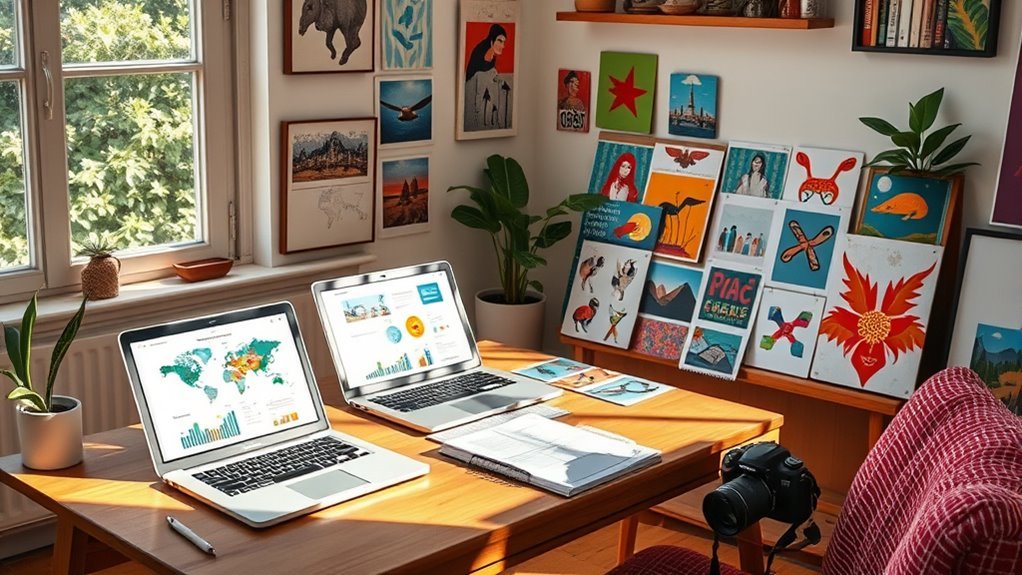
Selling art prints opens up many possibilities, but to make the most of them, you need to know who will buy your work. Identifying your target audience helps you focus your marketing efforts where they matter most.
Start by understanding your artwork’s theme and style. Different themes—like environmental or floral—attract specific groups.
Research your potential buyers’ interests, income, and location to tailor your marketing channels effectively.
| Aspect | What to Think About |
|---|---|
| Artwork Theme | Matches audience interests |
| Buyer Demographics | Age, income, location |
| Shopping Preferences | Online, galleries, or local markets |
| Marketing Platforms | Social media, websites, or events |
Recognizing your ideal collectors’ preferences guides you in choosing the right platforms and pricing. This focused approach boosts sales and builds lasting connections with your audience.
Create a Cohesive Art Collection Tailored for Prints
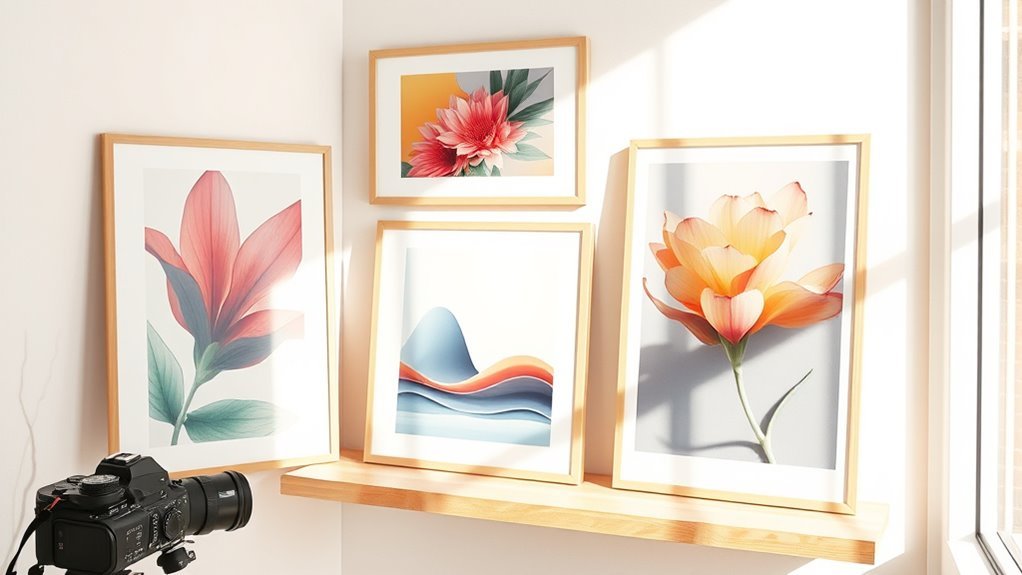
You’ll want to define your artistic style clearly to create a recognizable collection. Choose mediums that reproduce well as prints to keep quality consistent.
Then, develop thematic series that tell a story and appeal to your audience. This way, your collection feels connected and engaging.
Define Your Artistic Style
When you define your artistic style, you create a cohesive collection that makes your prints instantly recognizable and easier to market. Focus on producing 10-20 related pieces that share a consistent style or theme, such as landscapes, abstracts, or social commentary.
Narrowing your art to one medium and style helps build a strong brand. It attracts targeted buyers interested in your unique vision.
To maintain consistency and manage time, aim to complete each artwork in under four hours. Regularly refining your style and developing thematic series enhances your portfolio’s professionalism, making selling art prints more straightforward.
Select Print-Friendly Mediums
Although many art mediums translate well into prints, choosing one that preserves your work’s details and textures is essential for high-quality reproductions. Opt for mediums like pastels, acrylics, or paintings that maintain their vibrancy and fine elements when printed.
To sell prints effectively, focus on creating a cohesive collection with a consistent style that resonates with your audience. Use high-resolution scans or photos to capture your artwork accurately, ensuring every nuance is visible in the final print.
Select print substrates such as fine art paper or canvas that complement your chosen medium and elevate the overall presentation. By developing a series of 10-20 print-friendly pieces, you create a visually harmonious collection that appeals to buyers and boosts your success in selling prints.
Develop Thematic Series
Building on your choice of print-friendly mediums, shaping a thematic series helps bind your work into a recognizable collection that buyers can connect with. Creating 10-20 related artworks around a clear theme makes selling more effective and builds your brand identity.
Focus on a consistent style or subject matter to attract targeted audiences and simplify marketing. A focused series also makes packaging and pricing easier, which galleries and online buyers love.
Plus, releasing series periodically encourages repeat sales and deeper engagement with your work. It’s a smart way to keep people coming back for more.
- Develop a consistent style or subject
- Limit series to a specific concept or topic
- Create 10-20 related pieces per series
- Package and price your series cohesively
- Release new series periodically for repeat buyers
Choose the Best Print Sizes and Formats
Selecting the right print sizes and formats plays an essential role in attracting buyers and ensuring your art looks its best. To sell prints successfully, start with small to medium sizes like 11×14 or 16×20 inches. These sizes appeal to a broad audience and keep framing costs reasonable.
Limiting your options to one or two sizes simplifies inventory and production. Always match print sizes to your artwork’s resolution to avoid pixelation and maintain quality. Also, consider common framing standards in your target market to meet customer expectations.
Use a ruler or measuring tool to pick sizes that highlight your art’s composition.
| Print Size (inches) | Ideal Use |
|---|---|
| 8×10 | Small spaces, affordable art |
| 11×14 | Popular, versatile choice |
| 16×20 | Statement pieces |
Find a Reliable Printer for Your Art Prints
Finding a reliable printer is one of the most vital steps to guarantee your art prints look professional and true to your original work. A trusted printer guarantees color accuracy, sharp details, and high-quality materials that make your art stand out.
To find the right fit, start by seeking recommendations from fellow artists or photographers who’ve had positive experiences. Don’t forget to check online reviews and testimonials to confirm the printer’s reputation.
When evaluating printers, consider these key factors:
- Visit local print shops to inspect sample prints and material quality firsthand.
- Confirm availability of high-resolution scanning or photography services.
- Make sure they offer various print mediums like fine art paper, canvas, or textured surfaces.
- Verify archival-quality options to preserve your art prints over time.
- Look for consistent customer satisfaction and responsiveness.
Choosing a reliable printer is essential to delivering art prints that truly represent your creative vision. It’s worth taking the time to find someone who gets your work and can bring it to life exactly as you imagine.
Decide Whether to Offer Framed or Unframed Prints
When you decide how to sell your art prints, consider whether to offer them framed, unframed, or both. Framed prints let customers display your art right away, making them appealing for convenience. However, they come with higher shipping and handling costs and require sturdy packaging to prevent damage.
On the other hand, unframed prints reduce shipping expenses and give buyers the flexibility to choose their own frames. Keep in mind, unframed prints are more vulnerable during transit, so you’ll need to package them carefully.
Offering both framed prints and unframed prints broadens your market reach, catering to different preferences. To figure out what works best, test how customers respond to each option. This approach helps you identify which format sells better and maximizes your profits.
Balancing convenience, cost, and customer choice will guide you in deciding whether to offer framed prints, unframed prints, or both. It’s all about finding the sweet spot that works for you and your buyers.
Set Competitive Prices for Your Art Prints
You’ll want to set prices that reflect both the cost of production and the value your art holds for buyers. Start by considering the story behind your work and how much demand there is.
As you gain recognition, you can adjust your prices to match your growing reputation. It’s all about finding that sweet spot where your art feels worth it to both you and your customers.
Pricing Strategies Explained
Although pricing art prints can seem intimidating, setting competitive prices is essential to attract buyers and build your reputation. To price your prints effectively, start by researching similar artwork and understanding your target audience.
Remember, beginning with accessible prices can help you sell artwork and grow your customer base. Use discounts or limited-time promotions to encourage early sales. As your reputation grows, gradually raise prices by highlighting scarcity or limited editions.
Here are key pricing strategies to take into account:
- Reflect concept, demand, and perceived value
- Start with lower prices for unknown works
- Research comparable prints and audience preferences
- Offer promotions to boost initial sales
- Increase prices with reputation and limited editions
These steps help you price prints competitively and successfully sell artwork.
Balancing Cost And Value
Balancing the cost of producing your art prints with the value buyers perceive is key to setting competitive prices. When selling your art, you need to factor in printing, framing, and shipping costs without undervaluing your work.
Start with lower prices if you’re new to attract buyers and build recognition. Then, raise them as your reputation grows.
Choose affordable, high-quality materials and consider offering unframed prints to reduce shipping expenses. This also gives buyers the flexibility to frame your art their way.
Regularly research market trends and competitor pricing to keep your pricing competitive while reflecting your art’s value.
Build an Online Presence to Showcase Your Prints
When aiming to sell your art prints, building a strong online presence plays a crucial role in showcasing your work effectively. Your online presence acts as a central hub where potential buyers can explore your art, learn about you, and easily make purchases.
Building a strong online presence is key to showcasing your art and connecting with potential buyers effectively.
By connecting your website with social media, you create a seamless experience that keeps your audience engaged and drives traffic across platforms. It’s all about making it easy and enjoyable for people to see what you offer.
To build a compelling online presence, focus on these key steps:
- Create a simple website with professional photos, a brief bio, and print collection details. Keep it clean and easy to navigate so visitors can find what they’re looking for without hassle.
- Link your website to social media accounts like Instagram to showcase ongoing work. This helps you stay connected with your audience and share fresh content regularly.
- Regularly update your portfolio to keep visitors interested and improve sales chances. New work or seasonal prints can spark excitement and repeat visits.
- Share behind-the-scenes content and process videos on social media to engage followers. People love seeing how art comes to life—it adds personality and builds trust.
- Optimize your site with clear contact info, shop links, and SEO best practices for visibility. The easier you make it for people to reach you and find your prints, the better.
This approach guarantees your prints reach a wider, engaged audience. And that’s exactly what you want when you’re sharing your art with the world.
Promote Your Prints Through Social Media and Local Events
You’ll want to share process videos and behind-the-scenes shots on social media to keep your audience engaged. It’s a great way to show what goes into your work and build a connection with your followers.
Don’t miss local art fairs and markets where you can connect with buyers face-to-face. These events are perfect for meeting people who appreciate your prints and want to support your art.
Plus, teaming up with cafes or shops lets you showcase your prints in your community. It’s an easy way to reach new customers and get your work seen by more people.
Social Media Content Ideas
Five creative social media content ideas can help you promote your art prints effectively and connect with your audience. Using social media strategically allows you to showcase your work, build interest, and boost sales.
Here are some content ideas to get you started:
- Share behind-the-scenes videos or time-lapse clips showing your printmaking process.
- Post high-quality images of your prints styled in homes or galleries to inspire buyers.
- Use Instagram Stories and Reels to announce new print collections or run limited-time promotions.
- Share live updates, photos, and videos from local events to increase your visibility.
- Collaborate with local businesses and promote these partnerships through your social media channels.
These social media content ideas can help you engage followers and expand your reach efficiently. Give them a try and see what works best for you!
Engaging Local Art Events
Building a strong social media presence sets the stage for connecting with your local community through art events. Promote your prints at local art fairs and community events to meet potential buyers face-to-face.
Announce your participation on social media to draw in crowds and share event highlights. Offering special discounts or exclusive prints at these events encourages immediate sales.
Capture and post photos from the events to build ongoing interest. It’s a great way to keep the buzz alive even after the event ends.
| Action | Benefit |
|---|---|
| Promote at local fairs | Direct access to buyers |
| Use social media | Increase event visibility |
| Offer event discounts | Boost sales at the moment |
| Share event photos | Build awareness post-event |
| Attend community events | Strengthen local connections |
Collaborations With Local Venues
Partnering with local venues like cafes, galleries, or community centers can really boost your art print sales and visibility. These collaborations give you a chance to showcase your work to a built-in audience while connecting directly with potential buyers.
Make sure to promote your partnerships on social media. This will help drive more foot traffic and create buzz around your prints.
Engage with the community by hosting or joining events at these venues. It makes your art more memorable and accessible.
Use clear signage and QR codes to guide interested customers to buy online or get in touch.
- Display prints prominently in collaborating venues
- Promote collaborations through targeted social media posts
- Host or join art events at local venues
- Use signage and QR codes for easy purchasing
- Leverage venues’ established customer base for referrals
Collect Customer Feedback and Grow Your Print Sales
When you gather feedback from your customers, you gain valuable insights that help tailor your art prints to their preferences. Collect customer feedback through surveys, reviews, and direct conversations to learn about preferred print sizes, framing options, and pricing.
Use this input to refine your product offerings. You can adjust print formats or introduce new themes that really resonate with your audience.
Tracking common suggestions or complaints lets you enhance customer satisfaction and loyalty. This makes it easier to sell your work consistently.
Encourage buyers to share photos of your prints displayed at home. It gives you real-world insight into how people like to present your art.
Regularly engage with your customers via email or social media, asking for their opinions. This ongoing dialogue makes them feel involved and increases the chances they’ll buy again.
Frequently Asked Questions
How Do I Start Selling Prints of My Art?
Start by creating high-quality scans or photos of your art. Choose printing materials and decide on printing methods.
Then, sign and number your prints to make them special. Finally, set prices and sell through online shops or local galleries to reach buyers.
It’s pretty straightforward once you get the hang of it! Just take it step by step.
What Kind of Prints Sell the Most?
You’ll sell the most prints that are popular, affordable, and high-quality. Focus on landscapes, florals, or abstracts.
Offer smaller sizes, and use archival paper. Limited editions and trending themes also catch buyers’ eyes and wallets.
What Is the Best Platform to Sell Art Prints?
The best platform depends on your goals: use Etsy for affordable, craft-focused prints; Saatchi Art for serious collectors; Society6 to avoid handling logistics; or create your own site for full control over branding and pricing.
Each option has its perks, so think about what matters most to you. Are you after ease, exposure, or complete control?
That way, you can pick the platform that fits your art and your business style perfectly.
Do You Need a License to Sell Art Prints?
You don’t always need a license to sell art prints if you created the work yourself.
But if you don’t own the copyright, you have to get permission or a license to avoid legal trouble.
It’s pretty important to make sure you’re covered before selling. Otherwise, things can get messy.
Conclusion
Think of selling art prints like planting a garden—you nurture your audience, choose the right seeds (your prints), and watch them grow. Just like a gardener who saw a 40% increase in blooms after switching to better soil, refining your strategy can bloom your sales.
By knowing your market, creating beautiful collections, and promoting smartly, you’ll cultivate a thriving art print business that keeps customers coming back for more. Keep tending to it!
With the right approach, selling prints of your art becomes a rewarding journey. Understanding your target audience, offering high-quality prints, and marketing effectively will help your art prints stand out. Consistency and care in your art print business will lead to loyal customers and steady growth. So, keep nurturing your passion and watch your art print sales flourish!