What Are Art Commissions and How Do They Work?
Art commissions let you get a unique piece tailored exactly to your vision and preferences, giving you something truly special compared to ready-made art that’s already created and can’t be changed.
When you commission art, you’re basically working directly with an artist to bring your ideas to life in a way that fits exactly what you want.
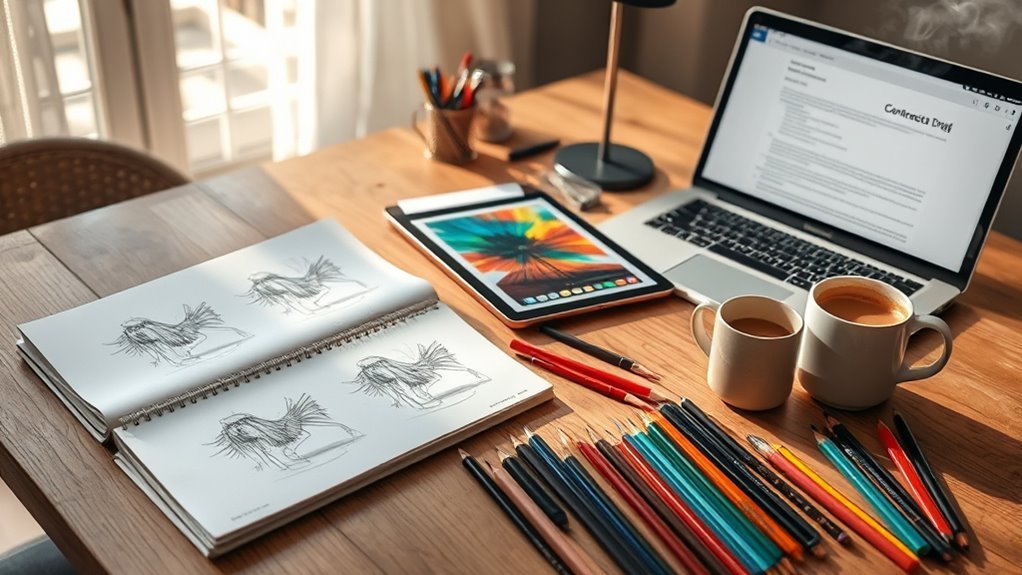
You start by sharing your ideas with an artist, who then creates initial sketches for your approval.
Once you agree and pay a deposit, the artist provides progress updates until the final work is completed and delivered.
This personalized process guarantees a one-of-a-kind artwork made just for you. Keep exploring to understand the full commissioning experience.
Key Takeaways
- Art commissions are custom artworks created specifically based on a client’s vision and preferences. They involve collaboration and ongoing communication between the artist and client throughout the process.
- The process starts with the client sharing ideas, followed by initial sketches and agreement on terms. This helps make sure everyone is on the same page from the beginning.
- Progress updates allow client feedback and adjustments before finalizing the artwork. This way, the client can be involved and suggest changes along the way.
- Final artwork is delivered after approval, with payments made according to the contract. It’s a smooth process that ensures both sides are happy with the result.
What Is an Art Commission? How It Differs From Ready-Made Art
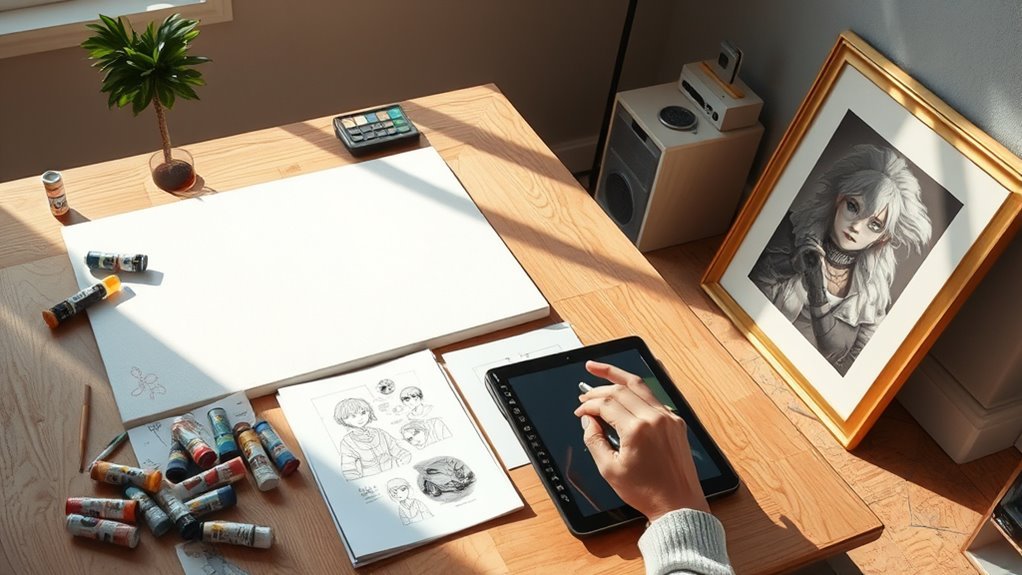
Although you can buy ready-made art off the shelf, an art commission is a custom piece created just for you. Unlike ready-made art, which is pre-existing and sold as-is, an art commission involves a personalized creation tailored to your specific vision and client specifications.
An art commission is a unique, personalized creation made specifically to match your vision and needs.
You work closely with the artist through collaboration and ongoing artist-client communication, ensuring the custom artwork reflects exactly what you want. This tailored art approach means the artwork process is unique to you, resulting in a piece that fits your style or needs perfectly.
Commissions vs. ready art differ mainly in how the art is made—commissions are created from scratch based on your input, while ready-made art is mass-produced or one-of-a-kind but not customizable. Because artists often have limited slots for commissions, this exclusivity adds value to your custom piece.
Choosing an art commission means investing in a truly unique, meaningful work made just for you, not just picking something off the shelf. It’s about having a piece that speaks to you personally, created with your ideas in mind.
How Art Commissions Work: a Step-By-Step Guide From Request to Approval

When you decide to commission a piece of art, the process starts with you sharing your vision with the artist—discussing details like the subject, size, and style.
Your client request leads to initial sketches, guaranteeing your ideas align before moving forward. After contract signing and a deposit, the artist provides progress updates, inviting your feedback.
You’ll approve each stage, allowing adjustments if needed. Once you give client approval on the final artwork, the artist proceeds with delivery, and you complete the final payment.
| Step | Artist’s Role | Your Role |
|---|---|---|
| Client request | Listen to your vision | Share details |
| Initial sketches | Create and share sketches | Review and provide feedback |
| Contract signing | Draft contract, request deposit | Sign contract, pay deposit |
| Progress updates | Show work-in-progress | Approve or request adjustments |
| Delivery | Send final artwork | Confirm satisfaction, pay final |
This clear, step-by-step process ensures your commissioned art meets your expectations.
Frequently Asked Questions
How Much Money Does a Commission Artist Make?
You can make anywhere from $50 to several thousand dollars per commission, depending on your skill and demand.
Many artists charge $20 to $50 hourly, earning between $200 and $2,000 or more per project. It really just depends on the complexity and how much time you put in.
What Is the 70 30 Rule in Art?
Think of the 70/30 rule as your art’s financial compass—it means you keep 70% of the treasure, letting 30% cover costs or fees.
It helps you sail smoothly between profit and expenses, ensuring fair rewards.
It’s a simple way to keep things balanced and fair for everyone involved.
How Much Does It Cost to Commission a Piece of Art?
You’ll typically pay anywhere from $50 for simple pieces to thousands for detailed, large works. Expect a 25-50% non-refundable deposit upfront.
Plus, there might be extra costs like framing or shipping, depending on your artist’s rates. It really varies, so it’s good to ask about all the fees before you start.
Do You Own the Art if You Commission an Artist?
You own the artwork you commission, but you don’t own the copyright. You also don’t own reproduction rights or commercial use rights—unless you explicitly negotiate and include those rights in your agreement with the artist.
Conclusion
Getting an art commission is like planting a seed—you start with your idea, nurture it through collaboration, and watch it grow into a unique creation just for you.
Unlike buying ready-made art, commissioning lets you shape the final piece to fit your vision perfectly. By understanding the process from request to approval, you can confidently bring your artistic dreams to life.
Turning a simple idea into a meaningful work that speaks directly to you is what makes art commissions so special. When you commission art, you’re not just getting a product—you’re creating a personalized masterpiece.
So, whether it’s a portrait, a landscape, or something abstract, knowing how art commissions work helps you communicate your vision clearly and ensures the final artwork truly reflects your style and story.