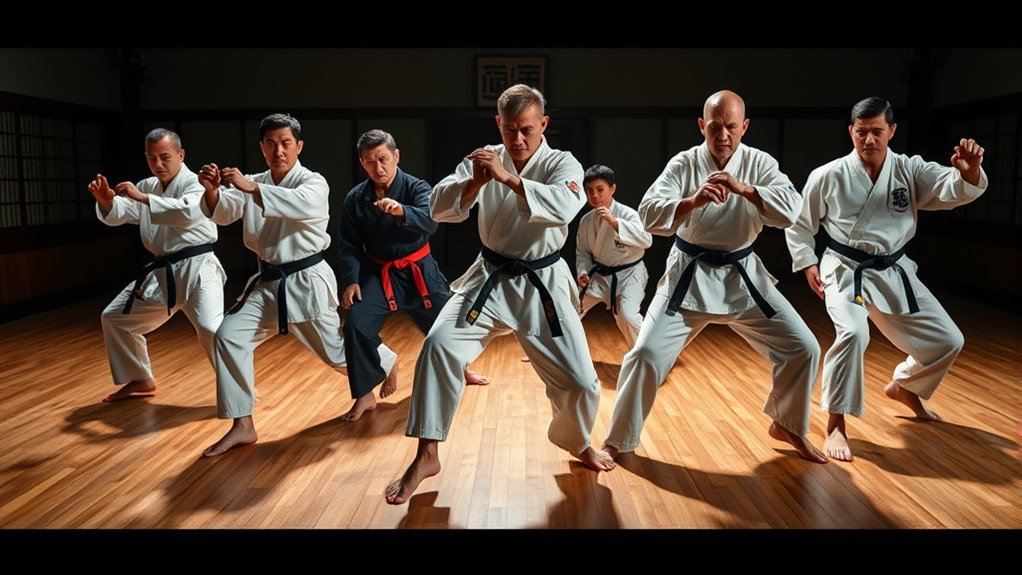
7 Hardest Martial Arts to Learn
You’ll find the seven hardest martial arts challenge you physically, mentally, and technically. These disciplines push your limits in unique ways, making them some of the toughest to master.
Whether it’s grappling, striking, or internal energy work, each martial art demands something special from its practitioners.
Brazilian Jiu-Jitsu tests your precision and patience over years, while Muay Thai demands toughness and endurance.
Karate and Judo push your timing and coordination to the limit.
Aikido and internal arts like Tai Chi focus on flow, sensitivity, and deep internal control.
These arts require dedication, resilience, and constant adaptation.
Keep exploring to uncover what makes each unique and demanding. The journey through these martial arts is as challenging as it is rewarding.
Key Takeaways
- Brazilian Jiu-Jitsu is highly technical, requiring over 8–10 years of training and precise technique mastery. It’s definitely one of the hardest martial arts to learn.
- Mastery of traditional Karate demands years of consistent effort to refine precision, power, coordination, and internal strength. You really have to stick with it to get good.
- Muay Thai is physically and mentally demanding. It requires endurance, pain tolerance, and mastery of multiple striking techniques, all while facing a high risk of injury.
- Internal martial arts like Tai Chi need long-term dedication. You have to develop subtle internal awareness, control, and mind-body integration, which takes time and patience.
- Judo’s difficulty lies in mastering perfect timing, explosive coordination, and balance. These skills are crucial to execute throws that can end matches instantly.
Why Some Martial Arts Are Harder to Learn Than Others
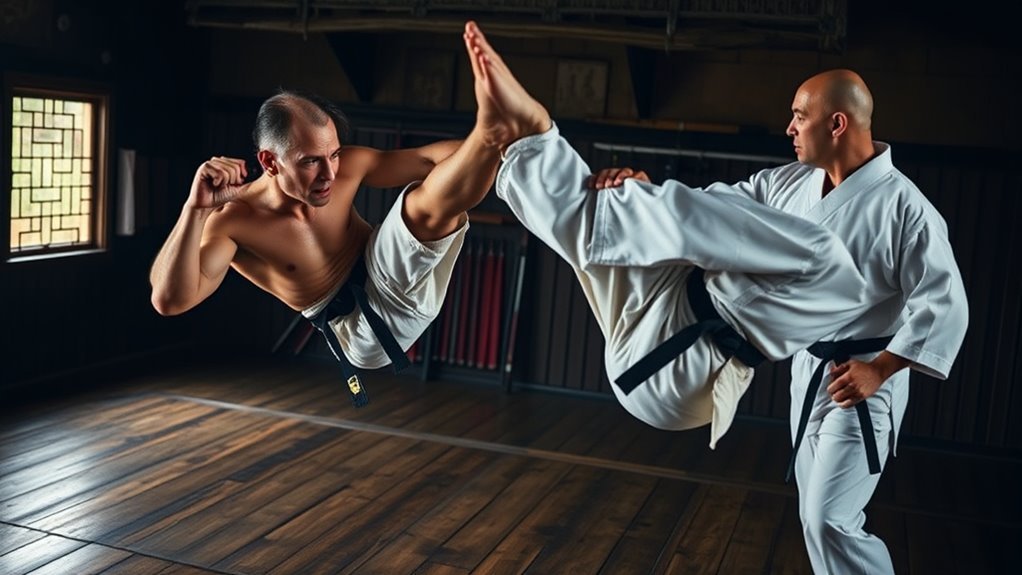
Although every martial art demands dedication, some are harder to learn because they combine intense physical challenges with complex techniques and constant resistance from live opponents.
When you train in martial arts with high technical complexity, like Tai Chi or Hapkido, you face deep internal complexity and technical depth that require longer training duration to master.
Physical demands also play a huge role; arts such as Kendo can be extremely taxing on your body, especially during your teenage years.
Resistance training and live sparring further increase difficulty because you’re not just drilling moves—you’re applying them against resisting opponents who force you to adapt quickly.
Wrestling highlights this brutal combination of explosive strength and live grappling resistance.
The harder martial arts challenge you to balance mastering intricate techniques with enduring physical strain and constant resistance, making progress slower but ultimately more rewarding.
Understanding these factors can help you appreciate why some martial arts take years of committed practice to truly master.
Why Brazilian Jiu-Jitsu Is One of the Hardest Martial Arts to Master
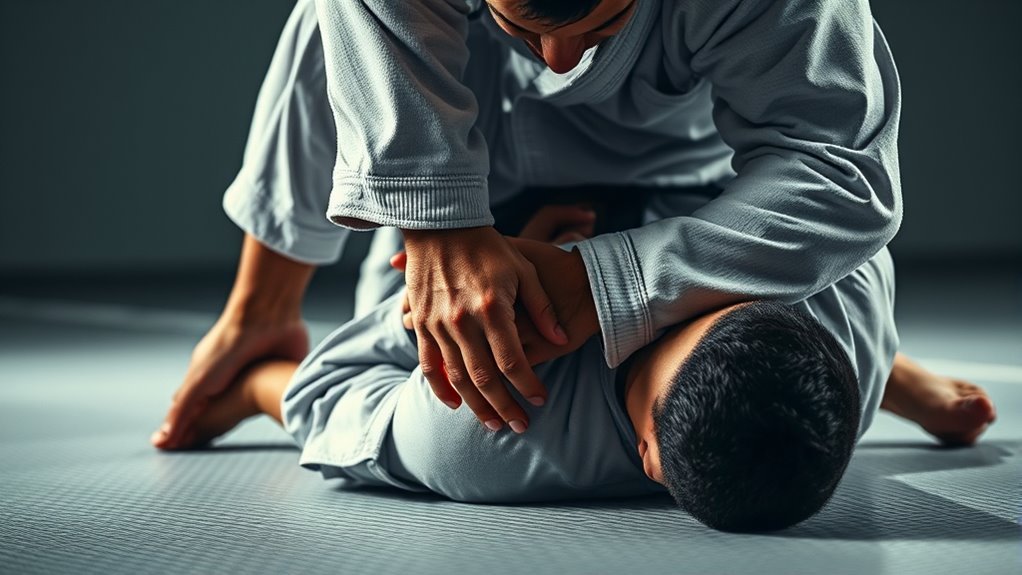
When you look at martial arts that demand both technical mastery and relentless physical challenge, Brazilian Jiu-Jitsu stands out. To reach mastery, you’ll need over 8–10 years of consistent training, tackling an extensive technical syllabus filled with hundreds of positions, progressions, and submissions.
Brazilian Jiu-Jitsu demands years of consistent training to master its vast, intricate techniques and physical challenges.
This isn’t just about memorizing moves—you’ll refine your precision and execution constantly, especially under resistance from live, resisting opponents. Success in BJJ depends on pressure-tested skills, where timing, leverage, and body mechanics trump brute strength.
Less than 1% of practitioners earn the black belt, underscoring the discipline’s difficulty and the dedication required to progress. You’ll face a demanding journey where every technique is tested in real-time against opponents who won’t just cooperate, pushing you to perfect your craft.
Brazilian Jiu-Jitsu’s complexity and need for ongoing adaptation make it one of the hardest martial arts to master, rewarding those who commit fully to the process.
Why Muay Thai Martial Art Demands High Physical and Mental Toughness
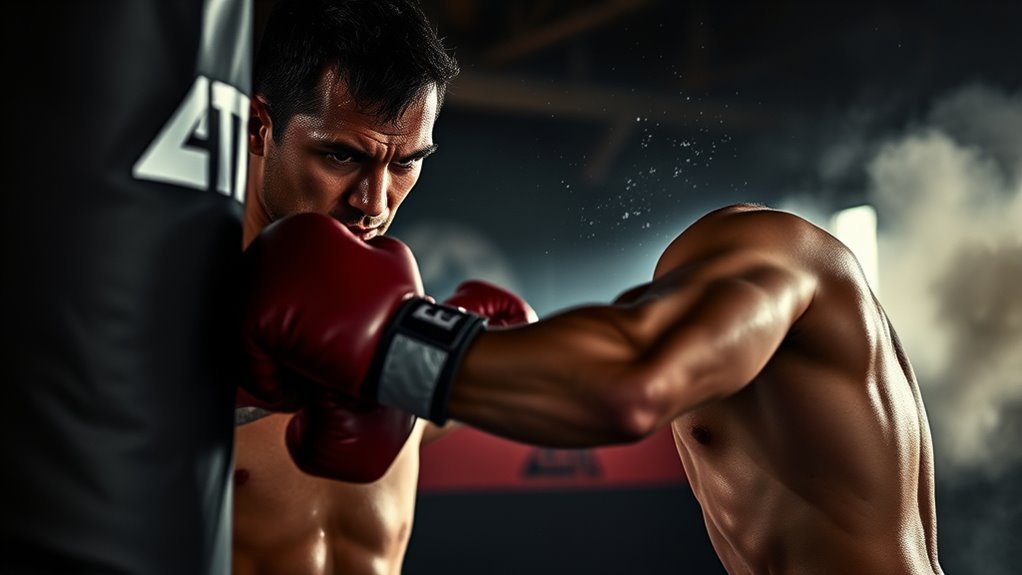
Because Muay Thai demands you master strikes from fists, elbows, knees, and shins, it pushes your body and mind to the limit. Achieving technical mastery means enduring relentless training intensity through bag work, pad rounds, and sparring sessions.
This builds the physical toughness and conditioning necessary to deliver powerful, precise strikes while withstanding your opponent’s attacks. Clinch fighting adds another layer of challenge—it requires strength, endurance, and sharp technique, testing your mental resilience under pressure.
The sport’s high injury risk, including broken bones and severe bruising, forces you to develop exceptional pain tolerance and focus. Every aspect of Muay Thai demands you stay committed despite fatigue and discomfort, sharpening both your body and mind.
If you want to succeed, you must embrace this grueling process, knowing that your physical and mental limits will be pushed further than in many other martial arts. It’s tough, but that’s what makes Muay Thai so rewarding.
Why Traditional Karate Training Is Technically Challenging
You’ll need years to refine your techniques because Karate demands both precision and power in every move. Mastering each punch and kick with exact timing and strength isn’t something you can rush.
This long-term commitment is what makes traditional Karate training so technically challenging. It really takes patience and consistent effort to get it right.
Precision And Power Development
Although mastering traditional Karate demands years of dedication, you quickly realize that developing the precision and power behind each strike is what makes the training truly challenging. You must refine your muscle control and coordination to execute techniques with perfect timing and alignment.
Building internal strength through rigorous training enhances both speed and explosive power. It demands technical mastery and mental discipline.
| Aspect | Challenge | Focus Area |
|---|---|---|
| Precision | Accurate strikes | Muscle control |
| Power | Explosive force | Internal strength |
| Coordination | Smooth stance progression | Timing & balance |
This triad of precision, power, and coordination shapes your ability to master Karate’s complex techniques with efficiency and control. It’s all about blending these elements seamlessly.
Years Of Technique Refinement
Mastering traditional Karate demands at least 4 to 5 years of consistent practice to reach a black belt, but true technical mastery often takes a decade or more. You’ll need years of training to develop the precision and muscle memory required for complex techniques like spinning kicks and joint locks.
This isn’t just about physical strength—it demands intense internal focus and continuous technique refinement. Each stance, strike, and kata requires dedicated practice to perfect timing and execution.
As you progress, you’ll realize that mastery hinges on subtle body awareness and internal strength, making the journey technically challenging. With patience and commitment, your skills will evolve through disciplined repetition, transforming your movements into precise, fluid actions that only years of training can achieve.
How Judo’s Throws and Timing Test Practitioners’ Skills
In Judo, your success depends on nailing the perfect timing to execute throws that lean on precision and power. You’ll need to develop sharp body awareness and explosive coordination to off-balance your opponent quickly.
Mastering these skills takes years, but they’re essential for delivering throws that can end a match instantly. It’s all about practice and patience, really.
Mastering Timing Precision
When you practice judo, timing becomes your most critical skill because a poorly timed throw can leave you off balance or open to counterattacks. Mastering timing precision requires you to synchronize your technique and execution with your opponent’s movements.
Through focused training, you learn to anticipate shifts in balance, reacting instantly to exploit those fleeting moments of vulnerability. Drilling kuzushi techniques sharpens your instinct for timing, helping you recognize when to initiate a throw with minimal hesitation.
This blend of anticipation and rapid reaction is what sets expert judokas apart, allowing them to control the flow of a match. Achieving such precision isn’t easy—it demands relentless practice to align your timing perfectly with your technique and maintain balance throughout every move.
Executing Powerful Throws
How do you turn precise timing into a powerful judo throw? You harness your understanding of timing and leverage to disrupt your opponent’s balance at just the right moment.
Executing judo throws demands sharp body awareness to sense shifts in your opponent’s weight and movement. You must coordinate your hip rotation, grip, and foot placement seamlessly, even when facing resistance.
Mastering this technique means refining your body mechanics to maximize efficiency and power. It’s not just about strength; speed and agility play vital roles in adapting your throws as your opponent reacts.
Through relentless practice, you develop the coordination needed to execute throws fluidly. This way, you turn split-second timing into a decisive advantage on the mat.
Why Aikido’s Sensitivity and Flow Make It Tough to Learn
Although Aikido looks graceful and effortless, you’ll quickly realize that developing the sensitivity to sense an opponent’s subtle movements and the flow to respond fluidly takes years of practice. You need to cultivate heightened body awareness and internal control to perceive even the slightest shifts in your attacker’s energy.
This sensitivity is essential because Aikido isn’t about brute force but blending with your opponent’s momentum.
Achieving the necessary coordination and timing requires consistent, focused practice. Your movements must be precise, yet fluid and natural, which can feel counterintuitive at first.
The art’s emphasis on flow means you can’t rely on rigid techniques—you must adapt instantly, reading and reacting to minimal cues. This complexity makes mastering Aikido challenging; it demands patience and dedication to refine your internal control, timing, and precision.
Without these, you’ll struggle to perform the seamless, flowing techniques that define Aikido’s unique approach.
Why Internal Martial Arts Like Tai Chi and Hapkido Require Deep Patience
Building on the subtle sensitivity and fluidity required in Aikido, internal martial arts like Tai Chi and Hapkido take patience to a whole new level. You’ll need patient practice to develop internal awareness and grasp the intricate internal mechanics that govern energy flows within your body.
Unlike external styles, these arts emphasize mental discipline and internal development. This means you have to cultivate internal strength gradually.
Internal martial arts focus on mental discipline and gradual cultivation of inner strength over time.
Progress isn’t measured by quick physical feats but by your growing ability to sense and control subtle forces. This demands a long-term commitment—often spanning over a decade—to truly embody their principles.
As you deepen your understanding, you’ll realize that mastering these arts means integrating mind and body through consistent, focused effort. The journey challenges your patience but rewards you with profound self-mastery and refined coordination.
If you’re ready to embrace this slow, demanding path, internal martial arts will transform not just your skills but your entire approach to martial practice.
Frequently Asked Questions
What Martial Art Is the Hardest?
You’ll find Brazilian Jiu-Jitsu the hardest. It demands over a decade to master, with less than 1% reaching black belt.
Its complexity and mental toughness really push you beyond most other martial arts’ challenges. It’s not just about physical skill—it’s a serious mental game too.
What Is the Most Powerful Martial Arts to Learn?
You’ll find Krav Maga the most powerful for self-defense, focusing on quick, aggressive techniques.
Brazilian Jiu-Jitsu and Muay Thai also pack a punch, offering effective ground fighting and striking skills.
These arts help you handle real threats confidently. It’s all about what works best for you in the moment.
Which Martial Art Is Difficult to Learn?
You’ll grapple with Brazilian Jiu-Jitsu’s endless techniques, endure wrestling’s brutal intensity, and face Kendo’s punishing strikes.
You’ll push through stick fighting’s fear and master Tai Chi’s flow.
Each demands time, sweat, and unyielding commitment.
Which Is Harder, Karate or Jiu-Jitsu?
You’ll find Brazilian Jiu-Jitsu harder because it demands mastering complex techniques, live resistance, and leverage over many years.
Karate’s strikes and forms are quicker to learn, though both require dedication and consistent practice to excel.
Conclusion
You’ll find mastering martial arts means meeting many mental and muscle challenges. Whether it’s Brazilian Jiu-Jitsu’s baffling battles, Muay Thai’s mighty mental and physical demands, or Aikido’s artful and agile flow, each style stresses skill, stamina, and sensitivity.
So, stay steady, stay strong, and stay savvy—success in these strenuous systems stems from steadfast spirit and sharp strategy. Embrace every effort, and you’ll discover unparalleled understanding and unstoppable unity of body and mind.
When tackling the hardest martial arts to learn, remember it’s all about persistence and passion. The journey tests your limits but also builds your confidence and resilience. Keep pushing, and you’ll find that mastering these arts brings not just physical strength, but mental clarity and emotional balance too.