What Is Humanism in Art?
When you explore humanism in art, you’ll see a focus on the realistic, detailed portrayal of the human experience. This movement emphasizes human dignity, potential, and emotion, drawing heavily from classical Greek and Roman ideals.
Artists blend these ancient influences with both secular and religious themes, creating works that celebrate the beauty of life.
You’ll notice lifelike figures, precise anatomy, and emotional expression that really bring the subjects to life. Techniques like perspective and chiaroscuro add depth and realism to the artwork.
As you dig deeper, you’ll find how these artists skillfully balanced divine inspiration with earthly beauty in their creations. It’s a fascinating journey into how art captures what it means to be human.
Key Takeaways
- Humanism in art emphasizes realistic human figures and precise anatomy inspired by classical Greek and Roman traditions. It’s all about bringing that old-world knowledge into new creations.
- It balances secular themes with religious narratives, integrating mythology and Christian subjects. So, you get a mix of stories from different backgrounds coming together.
- Artistic techniques like linear perspective and chiaroscuro create lifelike, three-dimensional portrayals. These methods really help the art pop and feel more real.
- Humanism celebrates individualism, emotional expression, and the dignity of human experience. It’s about showing people as unique and full of feeling.
- Renaissance art reflects human potential by harmonizing anatomy, proportion, and classical symbolism. It’s like a perfect blend of science, beauty, and meaning.
What Renaissance Humanism Means in Art

Although Renaissance humanism draws heavily from classical Greek and Roman art, it does more than just imitate ancient styles—you’ll see artists bringing those ideals to life with realistic human figures, natural poses, and precise anatomy.
During the Renaissance, humanism focused on celebrating the human form by emphasizing realistic figures that capture the complexity of anatomy and movement. Artists revived classical mythology and integrated it with Christian themes, creating works that balance secular ideas with religious narratives.
This blending highlights the era’s respect for both divine and earthly experiences. You’ll notice how individualism shines through detailed portraits and expressions, revealing the depth of human experience.
Furthermore, Renaissance humanism encourages an appreciation of the natural world, portraying it as a reflection of human dignity and intellect. By embracing these classical influences and focusing on human-centered subjects, Renaissance artists transformed art into a vivid exploration of life, both spiritual and secular.
How Renaissance Artists Expressed Humanism in Their Work
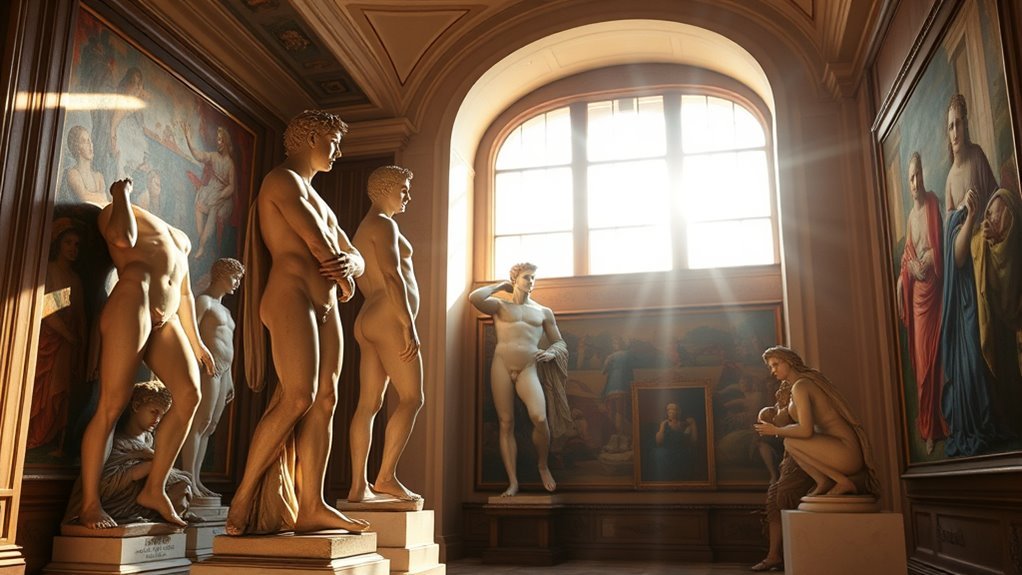
When you look closely at Renaissance art, you’ll see how artists brought humanism to life by portraying the human body with striking realism. They paid close attention to anatomy, muscles, and proportions inspired by classical sculpture.
They emphasized individualism through detailed portraiture, capturing not just physical likeness but emotional expression and personality. By blending classical themes with Christian narratives, artists celebrated human achievement and beauty, reflecting humanism’s core values.
Techniques like linear perspective and chiaroscuro enhanced the three-dimensionality of figures, making the human body appear lifelike and dynamic. You’ll notice how classical architecture and mythological symbols often frame these compositions, linking human experience to ancient ideals.
Renaissance art’s focus on the harmonious balance of anatomy and proportion reveals a deep respect for the human form. This really underscores humanism’s belief in human dignity and potential.
Through these innovations, artists invited you to appreciate both the physical and intellectual capacities that define humanity. It’s like they wanted us to see how amazing people truly are.
Frequently Asked Questions
What Is a Simple Definition of Humanism?
You see humanism as the belief in human worth and potential, focusing on reason and personal experience. It encourages you to think critically, value creativity, and take moral responsibility for your actions and growth.
Basically, it’s about trusting yourself and your ability to make good choices. Humanism helps you see the importance of learning and growing as a person.
Is the Mona Lisa Humanism?
The Mona Lisa is a window into humanism, showing you a lifelike, expressive individual. You’ll see Leonardo’s skill capturing emotion and personality, highlighting human dignity and beauty with every subtle smile and shadow.
It’s like he’s inviting you to connect with the person, not just admire a painting. That focus on human experience? Totally humanism at work.
What Are Some Examples of Humanism?
You’ll find humanism in Leonardo’s *Vitruvian Man*, Michelangelo’s *David*, Raphael’s *The School of Athens*. These works all celebrate human beauty, intellect, and potential.
Then there’s Botticelli’s *The Birth of Venus* and Donatello’s *David*. They also highlight the amazing capabilities and spirit of humans in their own unique ways.
Do Humanists Believe in God?
You’ll find that humanists have varied beliefs about God; some believe in a divine presence compatible with reason, while others lean toward skepticism or naturalism.
They tend to focus more on human experience than traditional religious doctrines. It’s really about what makes sense to each individual.
Conclusion
When you explore Renaissance art, you see humanism come alive—over 70% of artworks from that era focus on human experience and emotion. You can feel the shift as artists like Leonardo da Vinci put people, not just religion, at the center of their work.
This focus invites you to connect deeply with the art, reminding you that humanism isn’t just history—it’s a timeless celebration of what makes us truly human. It highlights the value of individuality, creativity, and the human spirit.
In Renaissance art, humanism shines through vibrant expressions and real emotions, making the figures relatable and alive. So, whenever you look at these masterpieces, remember they’re more than paintings—they’re a powerful tribute to humanism in art, emphasizing our shared experience and the beauty of human life.