How to Understand the Definition of Line in Art
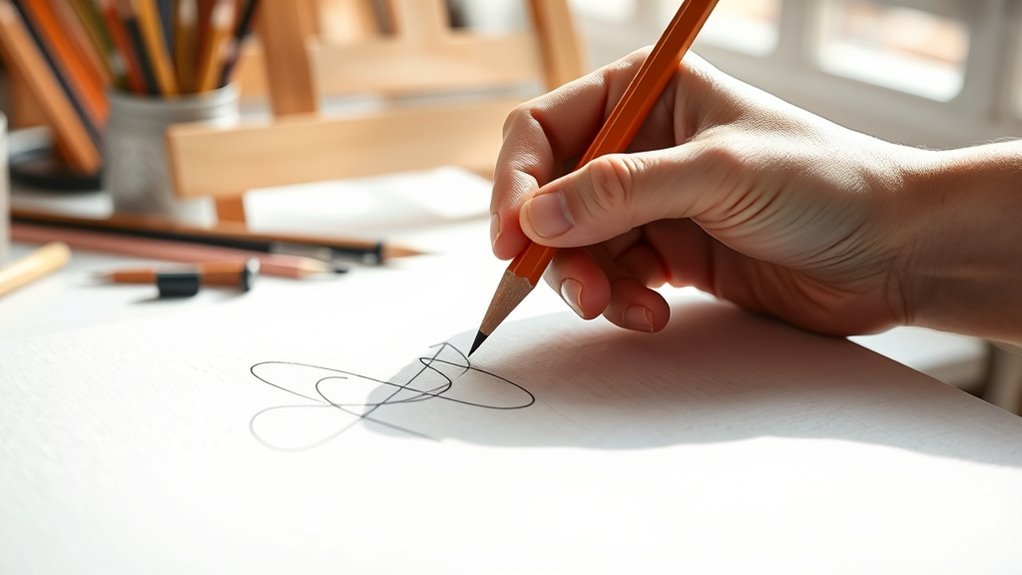
To understand the definition of line in art, think of it as the essential mark that tracks a moving point. It’s what shapes forms and defines edges in any artwork. Lines can be thick or thin, straight or curved, and each variation changes how they express mood and guide your eye.
Lines come in different types—straight, curved, zigzag—and each brings a different feeling. Straight lines suggest stability, curved lines offer softness, and zigzag lines add excitement.
Getting a handle on line quality is key to communicating your ideas clearly.
When you master lines, you add life and energy to your work. It’s a solid foundation that helps you create more expressive pieces down the road. So, playing with lines is a great way to boost your art skills and make your creations stand out.
Key Takeaways
- A line in art is the path of a moving point that creates shapes and forms. Lines define edges and provide structure and clarity to objects in artwork.
- Line characteristics such as thickness, direction, and quality influence visual meaning. They really help bring the artwork to life.
- Different types of lines—like straight, curved, or zigzag—evoke distinct emotions and effects. It’s pretty interesting how just a line can change the whole feel.
- Mastering line quality enhances expression, adds depth, and guides the viewer’s eye. Once you get the hang of it, lines become a powerful tool in your art.
What Line Means in Art : And Why It’s Important
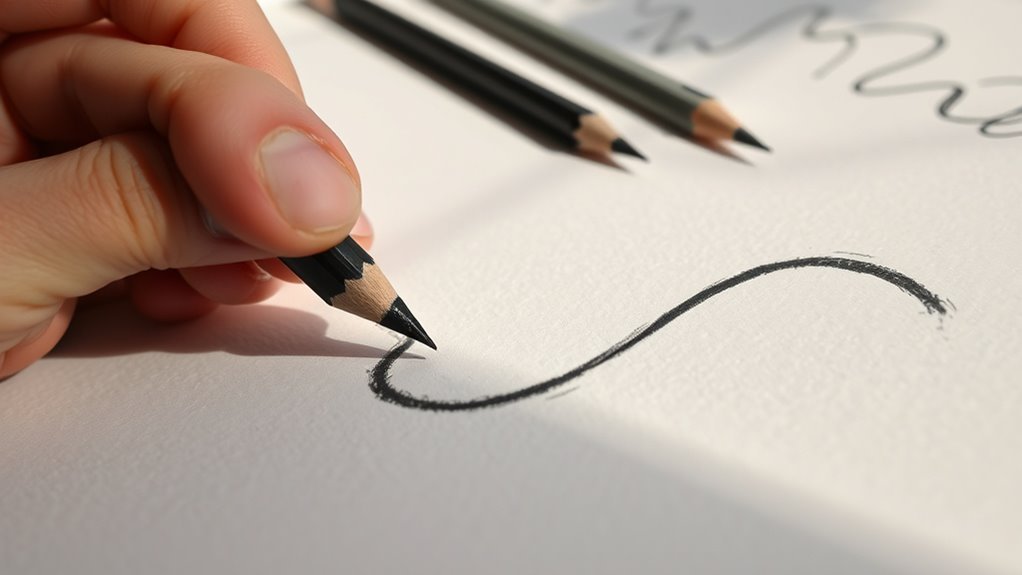
Although you might not always notice them, lines are the building blocks of every artwork. As a fundamental art element, a line marks the path of a moving point and is used to create shapes and forms.
Lines, the essential building blocks of art, trace movement to form shapes and breathe life into creations.
You use contour lines to define the edges of objects, giving your art structure and clarity. The characteristics of the line—its thickness, direction, and quality—play a vital role in how your artwork communicates visually.
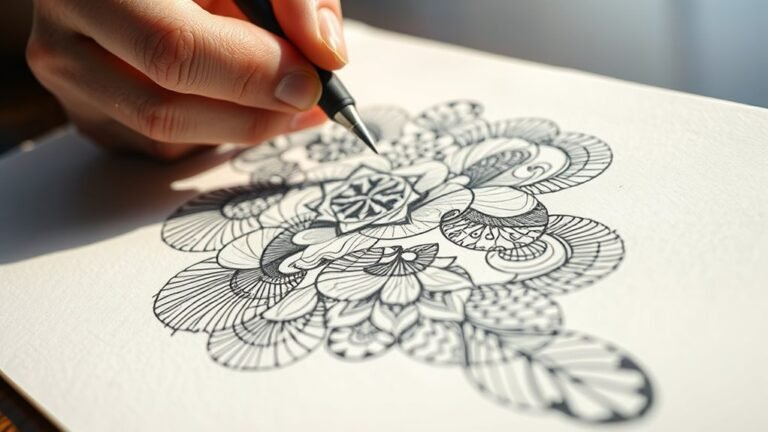
These lines create not just outlines but also help develop value and texture through techniques like hatching. When you focus on line quality, you control the mood and expression within your piece.
Even a simple line drawing becomes powerful when you understand how to use lines effectively. By mastering lines, you build the foundation to convey your ideas clearly and bring depth and life to your compositions.
How Different Types of Lines Create Meaning in Art
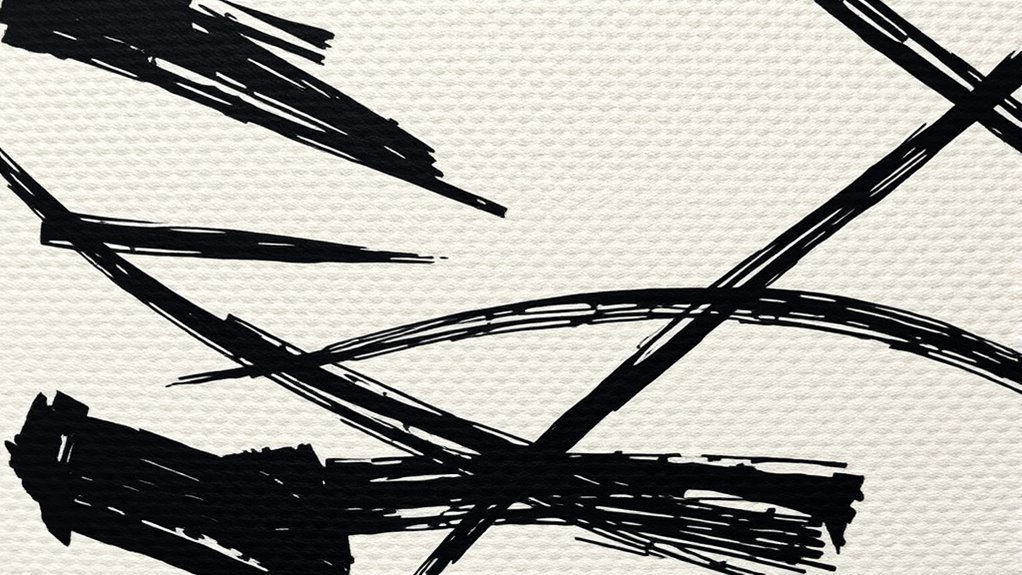
When you explore different types of lines—straight, curved, zigzag, or broken—you reveal powerful ways to express emotions and movement in your art. Each type of line is used to create distinct effects and convey specific emotional responses.
For example, straight lines often suggest stability, while curved lines bring fluidity and softness. Zigzag lines can evoke tension or excitement, and broken or implied lines hint at motion or uncertainty.
By varying line thickness and texture, you can emphasize energy or weight, further shaping the mood of your piece. Contour lines help define shapes clearly, while cross contour lines add depth and a sense of three-dimensionality.
These varieties of lines don’t just outline forms—they actively engage viewers by guiding their eyes and stirring feelings. Understanding how different types of lines work together lets you create more dynamic, expressive art that truly communicates your vision.
Frequently Asked Questions
How Is a Line Defined in Art?
A line in art is a mark you create by moving a point, forming paths or outlines. You’ll find it straight, curved, or broken.
It helps you define shapes, edges, and express movement or emotion within your artwork. Lines are really versatile and can change the whole feel of a piece.
What Is the Simplest Definition of a Line?
The simplest definition of a line is a moving point tracing a path on a surface. When you draw, your tool leaves marks that create direction, shape, and movement.
Lines are the foundation of all visual art. They help bring your ideas to life in a way that’s easy to see and understand.
How to Interpret Line Drawings?
You interpret line drawings by analyzing line quality, direction, and type. Notice thickness, texture, and continuity to grasp emotion and movement.
Pay attention to implied lines and how they shape forms, depth, and energy in the artwork. It’s pretty cool how just lines can convey so much feeling and motion, don’t you think?
What Are the 5 Types of Line in Art?
Before smartphones, you’d spot five types of lines in art: straight, curved, zigzag, broken, and implied. Each one shapes your emotions differently, guiding your eye and sparking feelings from calm to chaos with every stroke.
It’s pretty cool how just a simple line can do all that, right? Lines really are the unsung heroes of art!
Conclusion
Now that you understand how lines shape meaning in art, you can see them as more than just marks on a page.
Each line, whether bold or delicate, tells a story—like a telegram from the past, connecting you to the artist’s intention.
So next time you look at a painting or sketch, let your eyes follow the lines and discover the hidden messages waiting to unfold before you.
Lines truly bring art to life. They guide your view, create emotion, and reveal the artist’s creative vision.
By paying attention to line in art, you unlock a deeper connection to the work. Lines aren’t just shapes; they are powerful tools that shape meaning and emotion.
Understanding the definition of line in art helps you appreciate how artists communicate beyond color and form. It’s all in the lines!